
A week of ordinary plates
A week of ordinary plates describes balance better than one perfect day. CDC suggests logging food, drinks, activity, sleep, and stress and setting two or three specific goals, while WHO looks at energy meeting expenditure across a run of days.
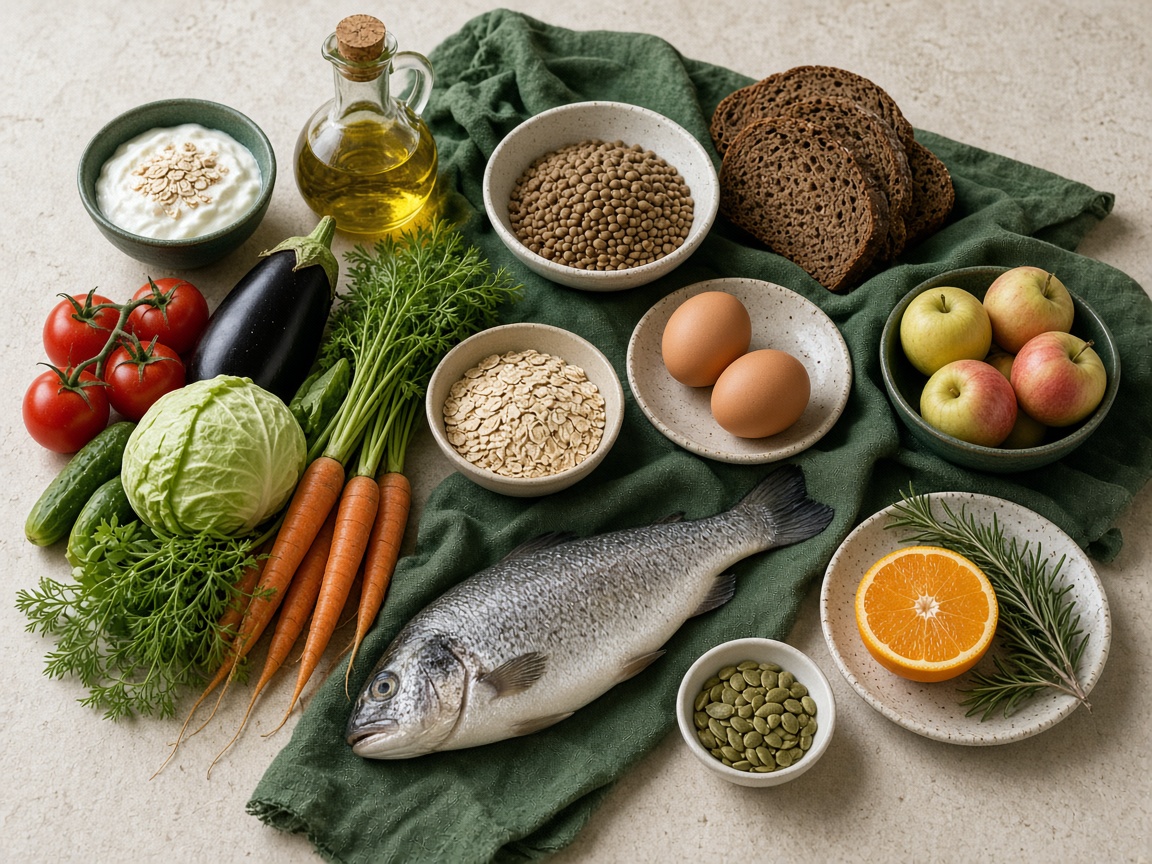
Why one successful day is not enough
The WHO fact sheet ties a stable weight to energy from food and drinks meeting expenditure. A Tuesday with a careful soup does not describe the week if the other days had a clearly different intake. A light supper on Sunday does not rewrite the days that already missed expenditure.
Drinks enter the same intake. A week whose plates were logged and whose sweet coffee was not looks calmer than it was. Oil poured into cooking belongs here too. FoodData Central helps with a food per 100 g, but a dry-rice row is not a cooked spoon, and this page does not insert a “it triples” factor.
Two or three goals a log can recognize
CDC’s examples are specific: water instead of a sugary drink, a fifteen-minute walk, a vegetable with supper. The goal “eat properly” is invisible in a log. The goal “a vegetable at supper on four days out of seven” is visible. The text calls setbacks expected, so one missed day does not zero the week and does not require a punishment plate.
The reward for those goals is not food. The Dietary Guidelines still leave room for culture and budget: goals are set on the food that actually appears at home, not on a showcase basket. Half the plate as vegetables and fruit, half the grains whole, and varied protein foods are a check of the pattern, not a separate contest for every supper.
Sleep, walking, and the plate in one week
CDC includes sleep and stress in the same log, not only food. On the weight-loss page, sleep is advised as a regular bedtime and waking time, caffeine kept out of the afternoon and evening, and screens off at least thirty minutes before bed. Those tips do not replace the plate and are not a hormone diagnosis.
Movement in the same week is described by WHO and CDC: at least 150 minutes of moderate activity and strength on two or more days. Some activity is better than none, and sedentary time is worth limiting. Minutes of walking do not become a coupon for food. They show the expenditure that intake either met or missed.
What a week does not have to prove
If a person wants to lose weight, CDC treats a pace of about 1 to 2 pounds a week as more likely to be kept and calls losing 20 pounds in two weeks an unrealistic goal. A modest example from the same text: 5% of 200 pounds is 10 pounds, and that can help blood pressure, cholesterol, and blood sugar, but it is not a personal guarantee. A week of ordinary plates does not promise that example.
Medicines, illness, stress, genes, hormones, environment, and age affect weight. A week of logging is there to see the food, not to cancel treatment on one’s own. Questions of weight and medicines go to a clinician. Pregnancy, adolescents, and eating disorders are not copied from an adult week.
What this text draws on
- CDC, Steps for Losing Weight (January 17, 2025): a gradual pace of about 1 to 2 pounds a week is more likely to be kept than quicker loss; losing 20 pounds in 2 weeks is the example of an unrealistic goal. Modest loss, CDC’s example: 5% of 200 pounds is 10 pounds, can improve blood pressure, cholesterol, and blood sugar and could lower risk of heart disease, prediabetes, and type 2 diabetes — not a personal guarantee. Log food and drinks, activity, sleep, and stress. Goals are specific, two or three at a time; examples include water instead of a sugary drink, a 15-minute walk, a vegetable with supper. Setbacks are expected. Rewards are not food. Medicines, illness, stress, genes, hormones, environment, and age affect weight. Weight and medicine questions go to a clinician. Medicines and bariatric surgery are clinical options, not DIY.
- WHO Healthy diet fact sheet: energy intake in balance with expenditure; fruit and vegetables ≥400 g/day; free sugars <10% of energy (below 5% for further benefit); fat <30%; saturated fat <10%; trans fat <1%; salt <5 g/day; unsaturated fats (fish, avocado, nuts, vegetable oils) preferred to saturated and industrial trans fats.
- Dietary Guidelines for Americans, 2020–2025, and USDA MyPlate: a nutrient-dense pattern shaped by culture and budget; added sugars <10% of calories from age 2; saturated fat <10%; sodium <2,300 mg/day; half the plate fruits and vegetables; half of grains whole; varied protein foods; low-fat or fat-free dairy or fortified soy. Drinking less is better than drinking more; not drinking is an option.
- WHO Physical activity fact sheet: adults 18–64 at least 150–300 minutes of moderate aerobic activity a week, or 75–150 minutes vigorous, plus muscle-strengthening on 2 or more days; some activity is better than none; sedentary time should be limited. From age 65, the same plus balance and coordination on 3 or more days.
- USDA FoodData Central: guides per 100 g; brands differ. A dry-food row is not a cooked portion, because water changes the weight. Do not use a “rice triples” factor.
A short paraphrase of open guides and reviews (WHO, national recommendations, peer‑reviewed summaries). Not a quotation and not a treatment protocol.
Short answers
Is one perfect day in the week enough?
No. Both WHO and a CDC log look at a run of days. One careful lunch does not describe the intake of the rest of the week, especially if drinks and oil stayed out of the log.
How many goals at once?
CDC talks about two or three specific ones, such as water instead of a sugary drink, a short walk, and a vegetable with supper. A goal with no recognizable action is invisible in a log.

