
Home · Balance
Balanced eating in an ordinary week
A week rather than a perfect lunch: cooking, snacks, budget, family, shifts, and travel.
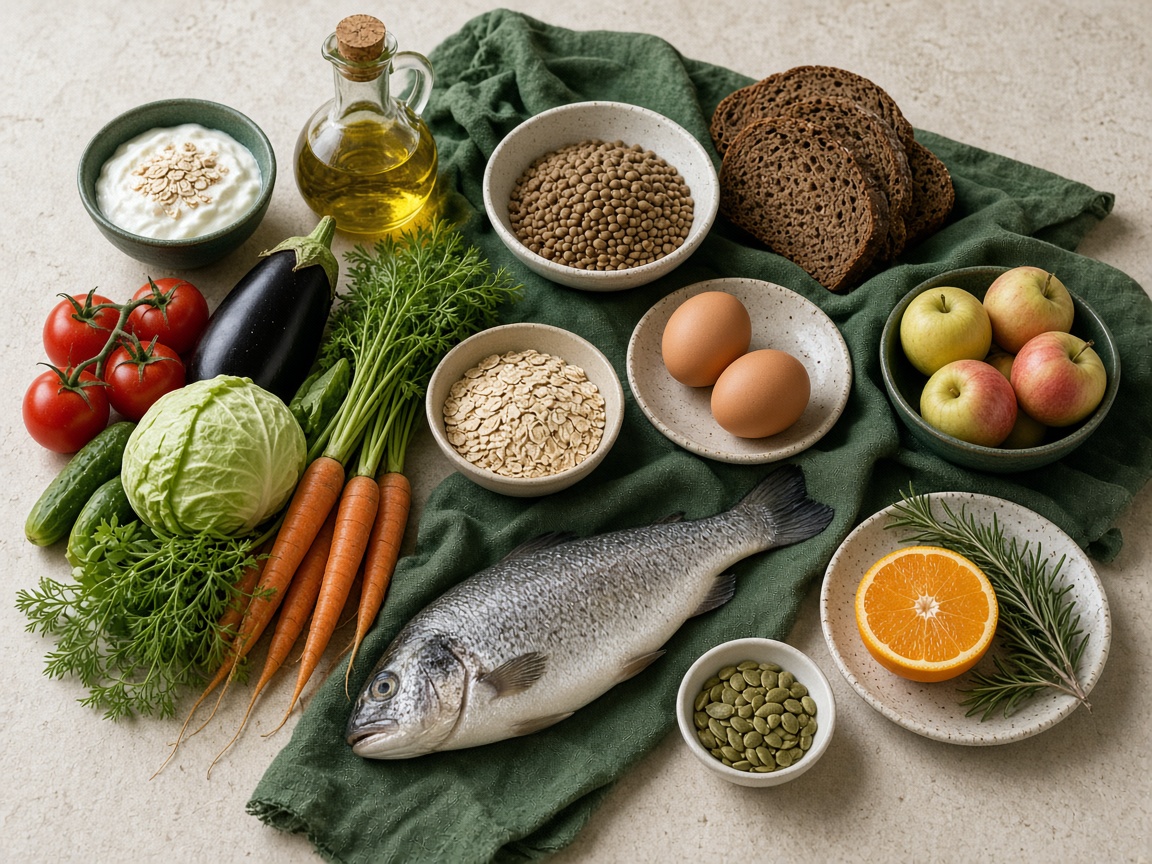
48 pieces. The topics are slices: one piece can sit in more than one.
What the WHO fact sheet means by a healthy diet
Energy with expenditure, and the limits of one sheet
MyPlate in an ordinary meal
An ordinary meal in the MyPlate shape
Free sugars, added sugars, and drinks
A sugary drink sits inside the sugar share
Salt and sodium: two separate limits
Salt and sodium stay two limits
Fat quality: the shift the WHO fact sheet describes
Which fat, inside the same limits
Fiber: 25 g a day from food
25 g of fiber from ordinary food
Cooking and budget: a pattern you customize
Ordinary vegetables count toward 400 g
A week of ordinary plates
A week of plates you repeat
Energy balance, as WHO states it
Intake meets expenditure across days, not in a single lunch.
Half the plate
MyPlate shares live in an ordinary meal, with culture and budget.
Free sugars and added sugars
Free sugars and added sugars limit a share, and drinks belong in it.
Salt and sodium apart
Salt under 5 g and sodium under 2,300 mg are different lines, with no conversion of one into the other.
Which fat
Three fat ceilings leave room for unsaturated sources and narrow saturated and trans fats.
25 g from food
An adult’s 25 g of fiber a day comes from food, not from a powder on an empty plate.
400 g of fruit and vegetables
At least 400 g of fruit and vegetables a day, and starchy tubers do not substitute for that line.
Half the grains whole
Make half the grains whole, rather than banning all white grain.
Varied protein
Varied protein foods hold the plate, and 0.83 g per kg stays a daily guide, not a target for every meal.
Dairy or soy
The dairy group is low-fat dairy or fortified soy, not a sweet drink.
Budget and culture
One’s own budget and cuisine are allowed in the guidelines, and the limits on salt, sugar, and fat do not depend on price.
Ordinary cooking
Ordinary cooking that repeats describes a diet more honestly than one model lunch.
Snacks
A snack enters the same day as lunch: fruit, plain yogurt, or a small handful of nuts, not a free zone.
Drinks in the balance
A drink enters the day’s energy alongside the plate, and an unlogged glass does not leave the day unchanged.
Alcohol
Alcohol in these sources is a reason to drink less or not at all, not a separate allowance of glasses.
Sweetness without sugar
A non-sugar sweetener is not a weight-control plan: WHO conditionally recommends against using it for that purpose.
Fried and packaged
Fried food and packages spend salt, saturated fat, and industrial trans fat, rather than living outside the limits of the diet.
A week of ordinary plates
A week of ordinary plates and two or three specific goals describe balance more honestly than one model day.
A family at one table
A shared table holds one nutrient-dense pattern, not a separate punishment plate for one person.
A shift and a trip
A shift and a trip do not cancel the limits of the diet: they apply to the food and the drinks that were actually there.
Breakfast as part of the day
Breakfast is not a duty, but a morning share of the same day’s foods.
A lunch you can repeat
A lunch meant to be repeated has a vegetable, a grain, a protein food, and the oil written down.
Dinner does not have to repair the day
Dinner adds food to a day that already has a sum, and it does not subtract earlier meals.
Canteen and cafe
At a canteen, take the plate closest to the ordinary frame and log the drink.
Guests
One specific goal is enough for guests, and then ordinary days resume.
The market and the cupboard
The week is cooked from vegetables, beans, whole grains, and oil, inside an ordinary budget.
Comparing two labels
Two labels are compared by serving, sodium, and added sugars, without a moral score.
How to use oil
Vegetable oil is preferred, and it still stays inside the fat share.
Fish in an ordinary week
Fish in the week is a protein food and a shift toward unsaturated fat, not a diet of its own.
Beans
Beans bring protein, fiber, and a budget-friendly repeat, if the amount rises calmly.
A handful of nuts
A handful of nuts is unsaturated fat and energy, not an unlimited extra.
Soup
Soup helps with vegetables, and salt in the broth still counts toward 5 g.
Bread
Bread can be the day’s grain, whole grain joins the half, and salt on the label still counts.
Fruit instead of juice
Whole fruit carries fiber and joins the 400 g, while the sugars in juice stay free sugars.
Water
Water is an example of a goal in place of a sugary drink, not a ban on every other drink.
Food and movement together
Movement belongs to energy balance and is not exchanged for an extra plate.
Strength in ordinary life
Two strength days are part of an ordinary week, not a sporting title.
Sitting
Sedentary time is limited, with no hour ceiling and no trade of the chair for food.
Sleep and ordinary food
Sleep is logged beside food, with no hour count and no hormone figures.
When balance is no longer about the plate
Medicines, illness, pregnancy, adolescence, and an eating disorder are a conversation with a clinician.