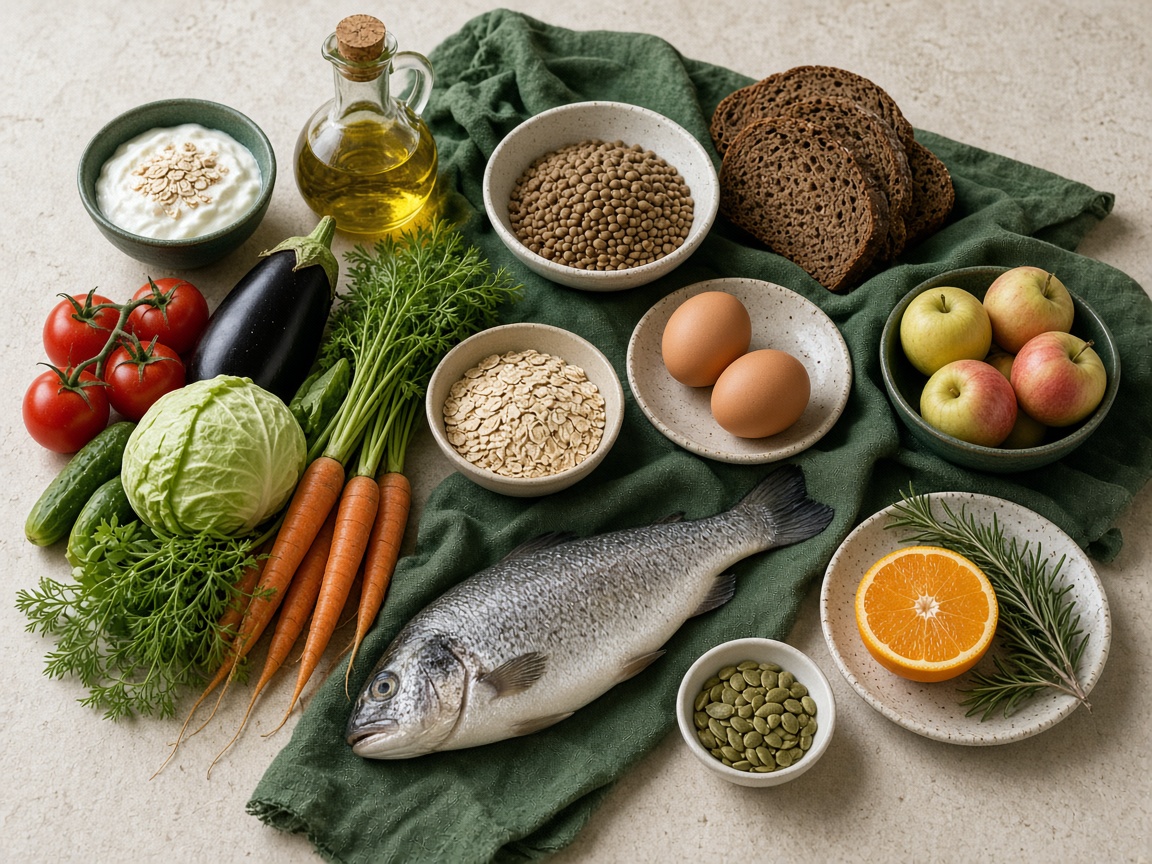
A line you can actually read: food, amount, drink, oil
A useful diary line names the food, the amount, the drink, and the oil or sauce. The word “dinner” does not do that job. CDC asks you, for a few days, to write down everything you ate and drank, and oil and the drink are the parts of that “everything” that fall out first. A photo can remind you of the plate. It does not measure grams by itself.
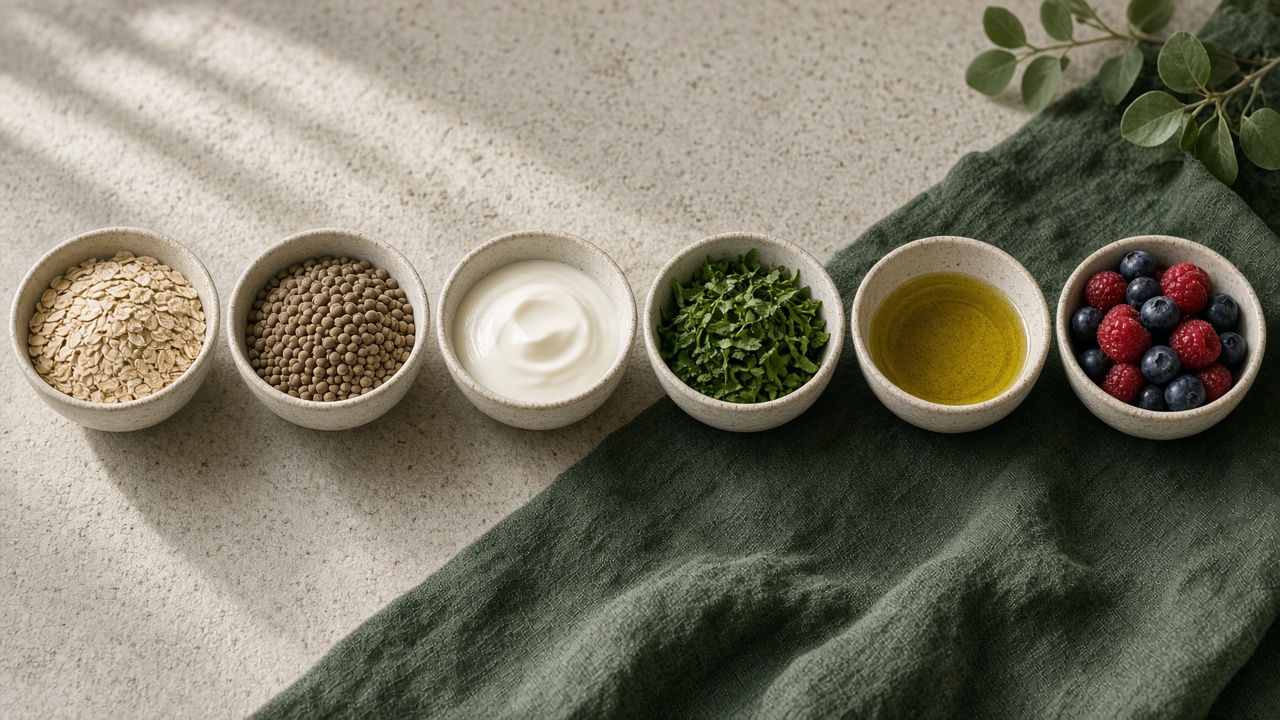
What the line is made of
Name the food, not the name of the meal. “Buckwheat and chicken” is already closer than “dinner” if an amount sits beside it: grams from a scale, a spoon, a bowl, or a count. The same method across those few days matters more than changing the rules in the middle of the run.
The drink is its own part of the line, even when it is “just tea.” With sugar and without sugar you have two different lines. Oil in the pan and sauce on the plate get named too, rather than hiding inside the word “fried.” Without them the food in the diary is lighter than the plate that was there.
An amount without a laboratory
Write grams when you weighed the food. When there was no scale, write the measure you did use: a tablespoon of oil, half a bowl of rice, a glass of juice. CDC’s step 2 does not assign you to weigh every leaf. It asks that what you ate and drank can be seen.
The line “a lot of salad” shows neither the foods nor the amount. The line “salad, a bowl, one spoon of dressing, water” can already be read at the weekly review. You can tighten it later. A spoon you name is more honest than a word with no amount in it.
The drink and the oil
CDC includes everything you drank in the nutrition for those days. A sugary drink, juice, milk, alcohol if it was there, do not hide in a note that says “almost nothing.” A day without that part is a different day, even if the plate in memory is the same.
Oil and sauce change the line while the food’s name stays the same. Boiled potato and potato with a spoon of oil are two records. A photo can remind you that the sauce was on the plate. Grams do not appear from the picture itself. A person writes them in.
A draft before the slot is chosen
If the bot built the line from a photo, the number stays a draft until the person chooses the meal slot and the day. That is how ScanDish works. Choosing the slot is not a scientific check, and it does not show that the estimate matched a laboratory scale.
Before that choice it is worth correcting the amount, the drink, and the oil if the frame did not hold them. The diary receives the line the person accepted. An unaccepted draft is not written back into the few days CDC is talking about.
What this text draws on
- CDC, Steps for Losing Weight (January 17, 2025): step 2, for a few days write down everything you eat and drink, physical activity (what, when, how long), hours of sleep, and stress. Step 3, two or three specific realistic goals; examples include water instead of a sugary drink, a 15-minute walk, a vegetable with supper; “lose 20 pounds in 2 weeks” is unrealistic. Setbacks are expected; return to the plan. Step 5, review progress regularly and change the parts that are not working. Rewards should not be food: flowers, an outing, a bath. Talk with a clinician about weight or medicines.
- ScanDish: a number from a photo stays a draft until the person chooses the meal slot and the day. That is a product rule, not a scientific check of the estimate.
A short paraphrase of open guides and reviews (WHO, national recommendations, peer‑reviewed summaries). Not a quotation and not a treatment protocol.
Short answers
Is “pasta for dinner” already a line?
It still needs an amount, a drink, and the oil or sauce. “Pasta, a bowl, a spoon of oil, water” can already be read at the review.
Does a photo replace the amount?
A photo reminds you of the plate. It does not measure grams by itself. The bot’s number stays a draft until you choose the meal and the day. That is a product rule, not a check of the estimate.