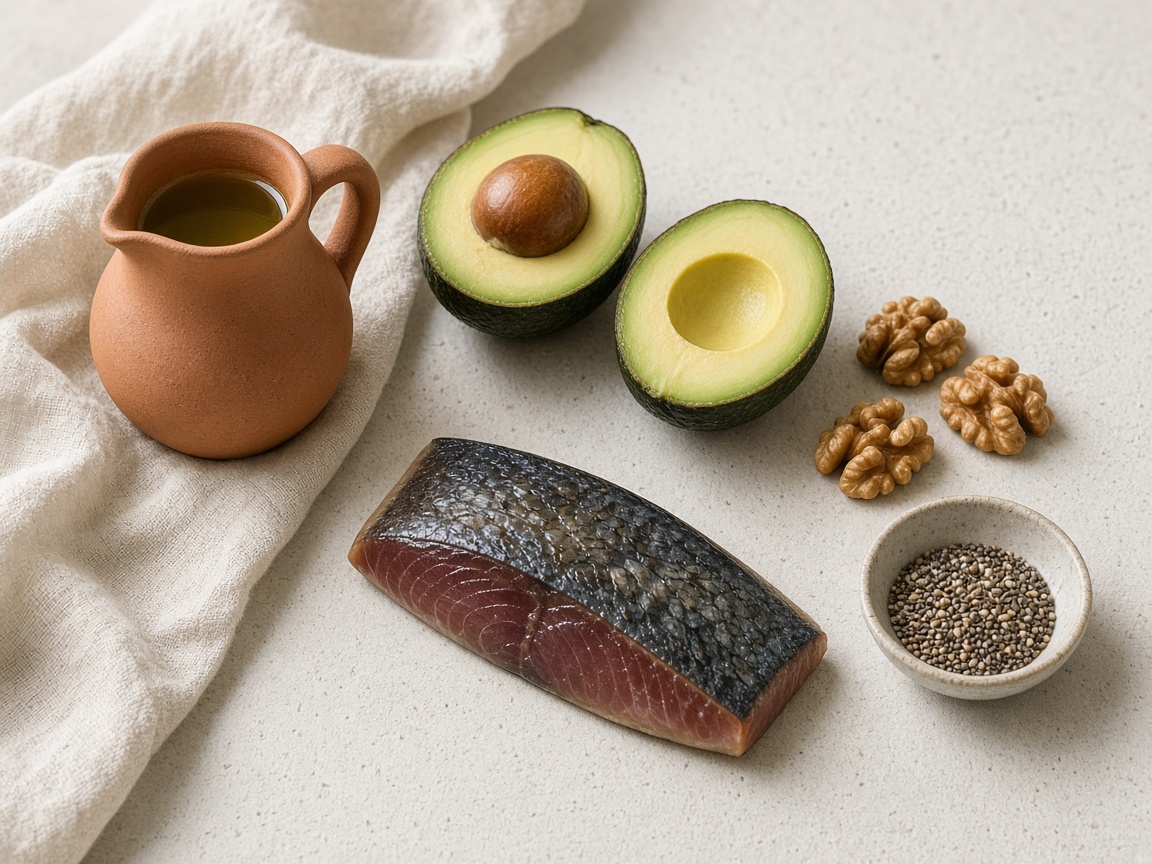
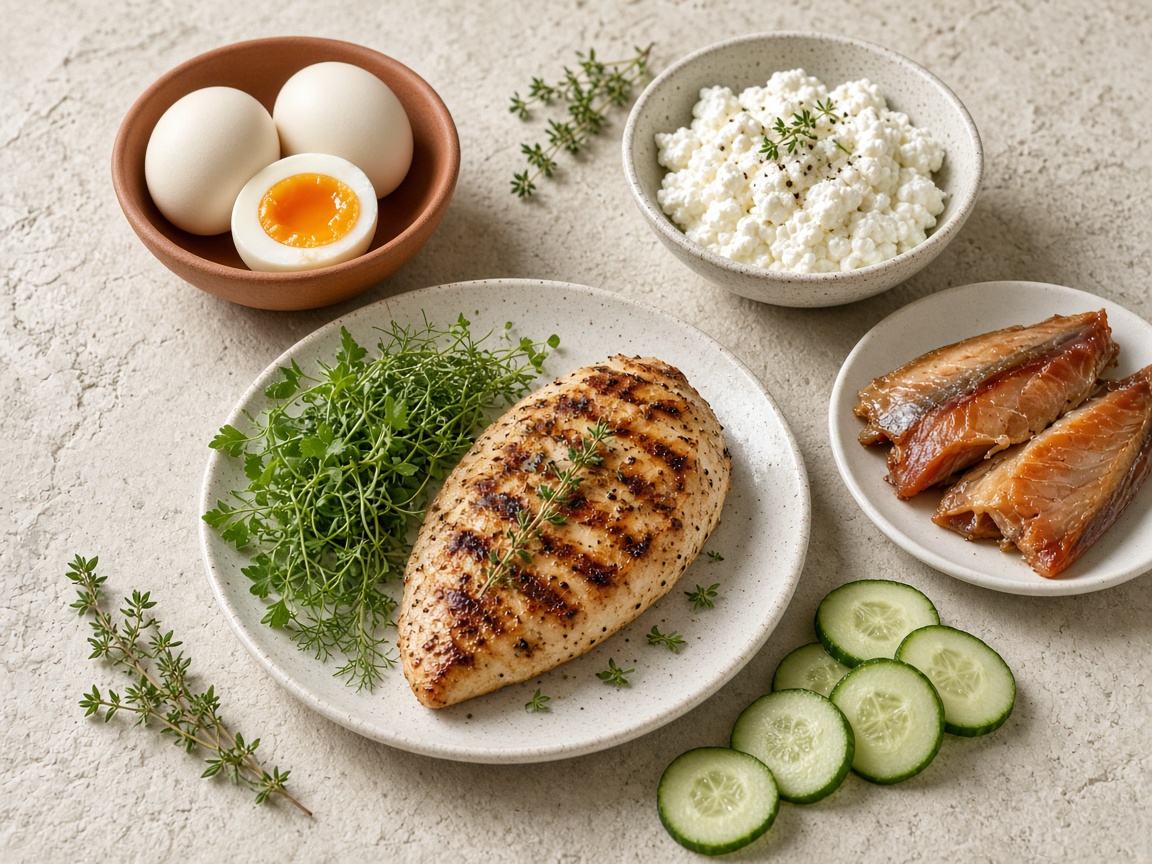
A plate with protein made explicit
Protein is set higher than habit so fullness and muscle hold up when calories are lower, or when you train. It is not permission to eat only cottage cheese.
Which numbers are actually discussed
Ordinary life often does fine around 1.2–1.6 g per kilogram of body weight. While losing weight and lifting, reviews often land around 1.6–2.2 g per kg. Above that is a special case and a talk with a clinician, especially if the kidneys are unwell.
Count from the body weight you have, and remember: at a very high weight, grams “per actual kg” can become huge. Then the guide belongs with a professional, not with extra tubs of powder.
How ScanDish calculates it
The “more protein” style starts at 2.0 g of protein and 0.8 g of fat per kilogram. Carbohydrate takes the remaining calories. If protein and fat together would eat more than 85% of calories, the bot scales them down so carbohydrate still has room. On a low target you may see less than 2 g per kg. That is the plate being protected, not a bug.
The bot’s ordinary plate is about 1.6 g of protein per kg while losing or maintaining, about 1.8 while gaining, and about 0.9 g of fat per kg.
Where to get it without getting tired of it
Fish, poultry, eggs, cottage cheese and skyr, legumes, tofu. Protein powder is food in a convenient form, not a duty. Vegetables stay. A protein plate with no volume gets old fast, and it ends badly for the gut if fiber disappears.
Kidneys with reduced function are a reason not to invent a high-protein plan alone. For healthy kidneys, ordinary high protein from food is not drawn in studies as an everyday threat. That is not an invitation to experiment on kidneys that are already sick.
What this text draws on
- Morton R. W. et al., Br J Sports Med, 2018 — meta-analysis: ~1.6 g protein/kg/day with resistance training.
- ISSN position stand: protein and exercise — 1.4–2.0 g/kg for active adults (review, not prescription).
A short paraphrase of open guides and reviews (WHO, national recommendations, peer‑reviewed summaries). Not a quotation and not a treatment protocol.
Short answers
Does protein damage kidneys?
With kidney disease, a clinician sets the protein load. For a healthy person, ordinary protein foods are not the same ban. A checkup beats a forum.
Do you need powder?
No. It is convenient when food is not closing the gap. The powder’s calories still belong to the day.