
Calories in Mixed berries: 43 kcal per 100 g
A guide for blueberry, raspberry, and currant. Sugar in jam is a separate line.
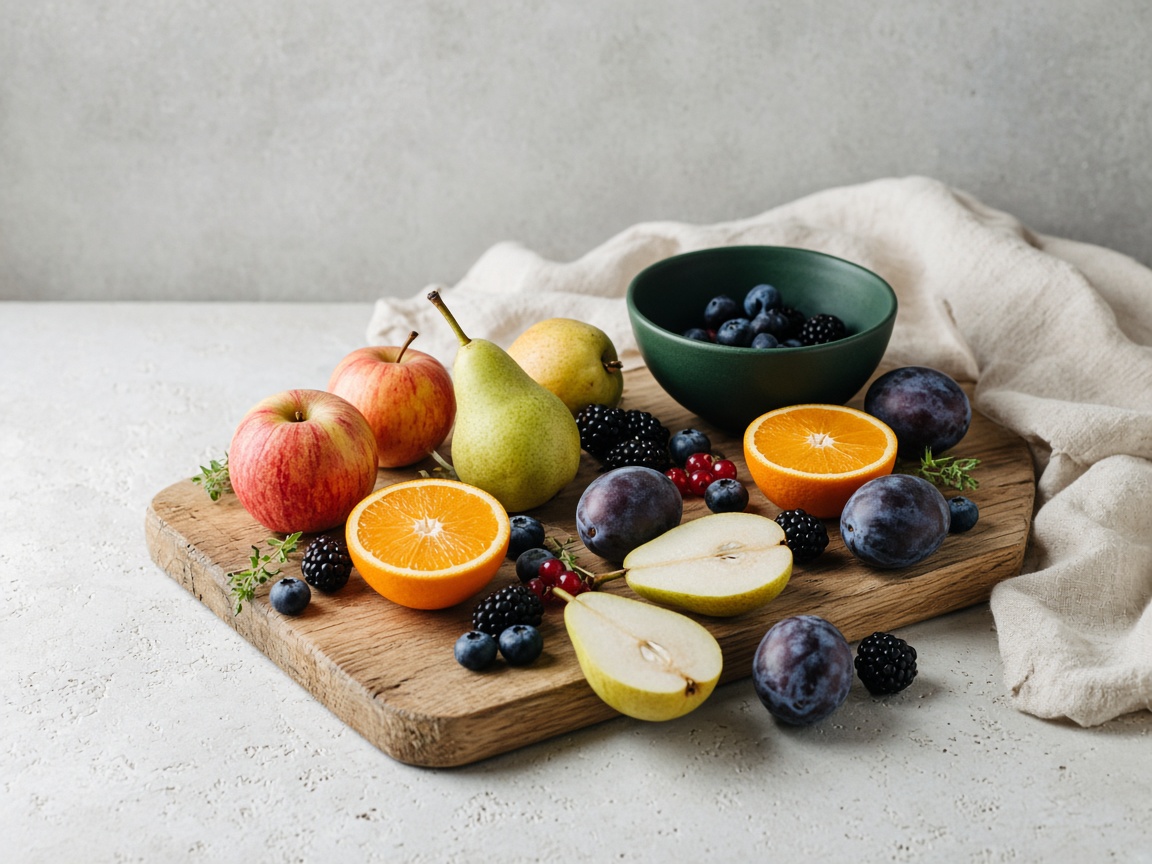
Fruit is food, even when it is “healthy.” Fiber and chewing keep the portion in check. Juice and smoothies remove part of that work, and a glass goes down faster than three pieces of fruit. Dried fruit is several times denser per 100 g: the water has already left.
Protein and carbohydrate times 4, and fat times 9, come to about 3, 40, and 3 kcal. The card keeps the table’s figure: 43 kcal per 100 g.
Fiber is 4.0 g per 100 g. The line is marked: raw weight.
“Fruit” has 10 lines. The lightest is Watermelon (30 kcal), the densest is Dried dates (282 kcal). Next to this line are Watermelon (30 kcal) and Orange (47 kcal).
Protein is 0.7 g per 100 g. More protein in this group sits in Dried dates: 2.5 g.
This line is used in: Skyr with berries (128 kcal), Cottage cheese with honey (234 kcal), Yogurt with granola (255 kcal).
Short answers
How many calories are in Mixed berries?
43 kcal per 100 g. The line is marked: raw weight. A guide for blueberry, raspberry, and currant. Sugar in jam is a separate line.
How much protein, fat, and carbohydrate are in Mixed berries?
Per 100 g: protein 0.7 g, fat 0.3 g, carbohydrate 10.0 g, fiber 4.0 g.
How do I count a portion of Mixed berries?
Multiply 43 by the weight in grams and divide by 100.
Which dishes on the site use Mixed berries?
Skyr with berries, Cottage cheese with honey, Yogurt with granola.
Figures are rounded guides from USDA FoodData Central; check your brand’s label. Calorie chart · How to count · Calculator