
Home · Foods · Fats, nuts, and sauces
Calories in Butter: 748 kcal per 100 g
A sandwich portion is often 10 g, about 75 kcal. The “knob” in porridge is sometimes more.
Ordinary measures
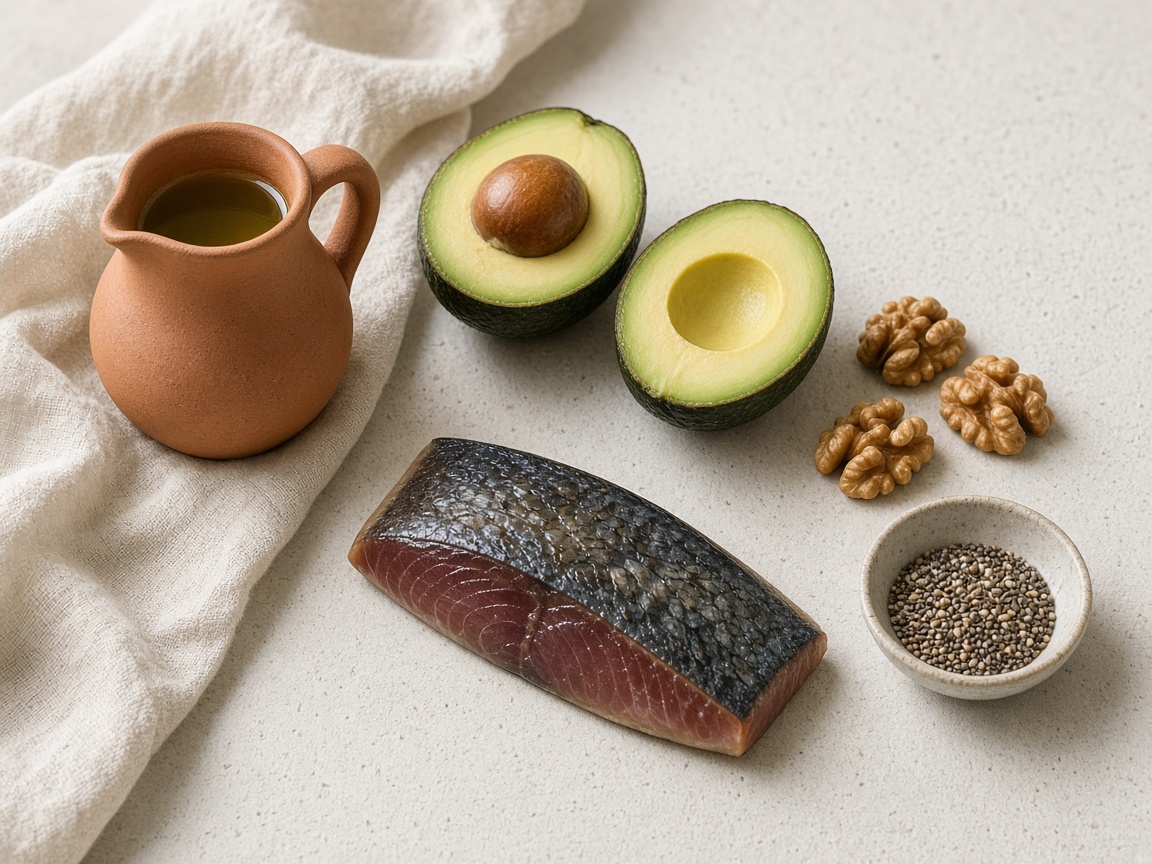
A plate needs fat: flavor, fullness, and the absorption of some vitamins. Fat does not need much volume to add calories. If a day “does not add up,” check oil, nuts, cheese, and sauce before you blame the bread.
Protein and carbohydrate times 4, and fat times 9, come to about 2, 3, and 742 kcal. The card keeps the table’s figure: 748 kcal per 100 g.
Fiber is 0.0 g per 100 g. The line is marked: as eaten.
“Fats, nuts, and sauces” has 12 lines. The lightest is Avocado (160 kcal), the densest is Rapeseed oil (884 kcal). Next to this line are Mayonnaise (680 kcal) and Olive oil (884 kcal).
Protein is 0.5 g per 100 g. More protein in this group sits in Peanut butter: 25.0 g.
Portions from this line: a thin smear (5 g) — 37 kcal.
This line is used in: Egg and rye toast (211 kcal), Omelette (242 kcal).
Short answers
How many calories are in Butter?
748 kcal per 100 g. The line is marked: as eaten. A sandwich portion is often 10 g, about 75 kcal. The “knob” in porridge is sometimes more.
How much protein, fat, and carbohydrate are in Butter?
Per 100 g: protein 0.5 g, fat 82.5 g, carbohydrate 0.8 g, fiber 0.0 g.
How do I count a portion of Butter?
Multiply 748 by the weight in grams and divide by 100. For example, a thin smear (5 g) is 37 kcal.
Which dishes on the site use Butter?
Egg and rye toast, Omelette.
Figures are rounded guides from USDA FoodData Central; check your brand’s label. Calorie chart · How to count · Calculator