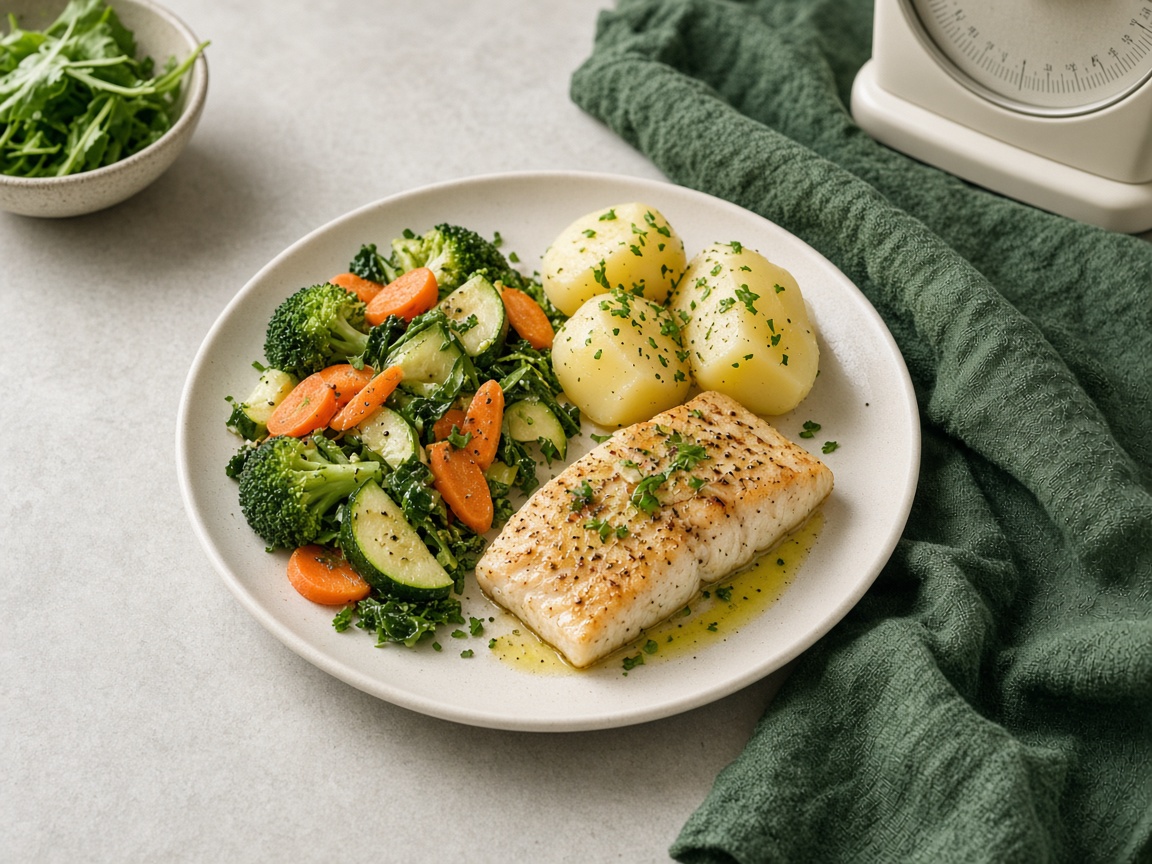
When to stop cutting
It is time to stop cutting when energy intake meets expenditure: that is how the WHO fact sheet describes a stable weight. Keeping is that meeting, not a permanent deficit, which these pages do not prescribe to anyone personally.
Balance is a meeting, not a permanent minus
WHO places a stable weight on one idea: energy coming in is in balance with energy going out. While intake sits clearly below expenditure, weight across a run of mornings usually falls, and that is still a cutting phase. When the run of mornings stops creeping down beside an honest log, the meeting is already happening, and cutting further “just in case” means holding a different plan.
A permanent deficit is not written into the fact sheet as the definition of keeping. Personal amounts, such as a separate minus for every adult’s day, are not written there either. This article does not add those amounts. Keeping is checked by whether the run of mornings holds still beside the food that was logged, not by whether a hole remains in a draft.
A resting formula does not order a cut
Mifflin estimates expenditure at rest: men (10 × kg) + (6.25 × cm) − (5 × age) + 5, women the same with −161 instead of +5. It is an estimate, not a measurement of what was eaten and not an order to continue a deficit after weight has settled. If the formula and the plate disagree, the log is checked first, and the person is not declared obliged to eat less.
Activity factors of 1.2, 1.375, 1.55, and 1.725, if they appear in ScanDish, are product settings, not WHO or CDC tables. The activity floor at those organizations is different: minutes across a week, not a multiplier on rest. Floors of 1,500 kcal for a male profile and 1,200 kcal for a female profile in the same product are settings too, not a WHO order to cut down to them or to stay under them.
What the meeting looks like in practice
An honest log of food and drinks across a run of days, and mornings that do not travel in one direction, are the practical look of balance. CDC also asks for activity, sleep, and stress to be kept, so that a shift, if it starts, has something to explain it. One salty morning neither cancels the meeting nor proves that the cut must return.
The plate in that meeting stays nutrient-dense. Fruit and vegetables at least 400 g a day, free sugars under 10% of energy, fat under 30%, salt under 5 g. Stopping the cut does not mean cancelling those limits and declaring a sugary drink free.
Loss and keeping are different tasks
CDC ties a gradual pace of about 1 to 2 pounds a week to habits that are more likely to be kept when the task is loss. The example of an unrealistic goal on the same page is losing 20 pounds in 2 weeks. When the task is already a different one, keeping, that pace of loss is not left running “a little longer” out of habit of a minus.
Modest loss in CDC’s example, 5% of 200 pounds is 10 pounds, can improve blood pressure, cholesterol, and blood sugar, and that is not a personal guarantee and not a duty to keep losing. Questions about weight and medicines go to a clinician. A decision to stop cutting is not a substitute for a clinical plan if illness sits behind the weight.
What this text draws on
- WHO Healthy diet fact sheet: energy intake in balance with expenditure; fruit and vegetables ≥400 g/day; free sugars <10% of energy (below 5% for further benefit); fat <30%; saturated fat <10%; trans fat <1%; salt <5 g/day; unsaturated fats (fish, avocado, nuts, vegetable oils) preferred to saturated and industrial trans fats.
- Mifflin M. D. et al., Am J Clin Nutr, 1990; 51(2):241-247: a resting estimate. Men (10 × kg) + (6.25 × cm) − (5 × age) + 5. Women the same with −161 instead of +5. Not a measurement of what was eaten and not a prescription.
- CDC, Steps for Losing Weight (January 17, 2025): a gradual pace of about 1 to 2 pounds a week is more likely to be kept than quicker loss; losing 20 pounds in 2 weeks is the example of an unrealistic goal. Modest loss, CDC’s example: 5% of 200 pounds is 10 pounds, can improve blood pressure, cholesterol, and blood sugar and could lower risk of heart disease, prediabetes, and type 2 diabetes — not a personal guarantee. Log food and drinks, activity, sleep, and stress. Goals are specific, two or three at a time; examples include water instead of a sugary drink, a 15-minute walk, a vegetable with supper. Setbacks are expected. Rewards are not food. Medicines, illness, stress, genes, hormones, environment, and age affect weight. Weight and medicine questions go to a clinician. Medicines and bariatric surgery are clinical options, not DIY.
A short paraphrase of open guides and reviews (WHO, national recommendations, peer‑reviewed summaries). Not a quotation and not a treatment protocol.
Short answers
Is keeping a small deficit forever?
No. WHO describes a stable weight as intake in balance with expenditure. These pages do not personally prescribe a permanent deficit.
Is the app’s calorie floor a WHO standard?
No. 1,500 kcal for a male profile and 1,200 kcal for a female profile, like the activity steps 1.2, 1.375, 1.55, and 1.725, are ScanDish settings, not WHO or CDC tables.