Keeping is the same habits
Keeping weight continues the habits CDC ties to a result you can hold, rather than the day a diet is declared finished. The gradual pace, the log, and specific goals stay in an ordinary week, beside the energy balance in the WHO fact sheet.

A date does not close the habit
On the page about steps for losing weight, CDC ties a result you can keep to the habits of a gradual pace, about 1 to 2 pounds a week, not to an announcement that the limits are lifted. The page’s example of an unrealistic goal is losing 20 pounds in 2 weeks: that kind of rush is the one less likely to be kept. Once a comfortable number is already on the scale, the repeatable steps are how it stays.
Closing the diary on the day of “the goal” is already a change of plan, even if it is called a rest from the diet. CDC asks for a log of food and drinks, activity, sleep, and stress, and for a look at whether the plan is happening. The reward in that text is not food: a walk, a conversation, or a quiet evening marks a week that followed the pattern.
There is no separate after-diet menu
The WHO fact sheet does not issue a second menu for the keeping period. A stable weight is described there as energy intake in balance with expenditure, with fruit and vegetables at least 400 g a day and free sugars under 10% of energy, a share below 5% called a further benefit. Fat stays under 30%, saturated fat under 10%, trans fat under 1%, salt under 5 g a day.
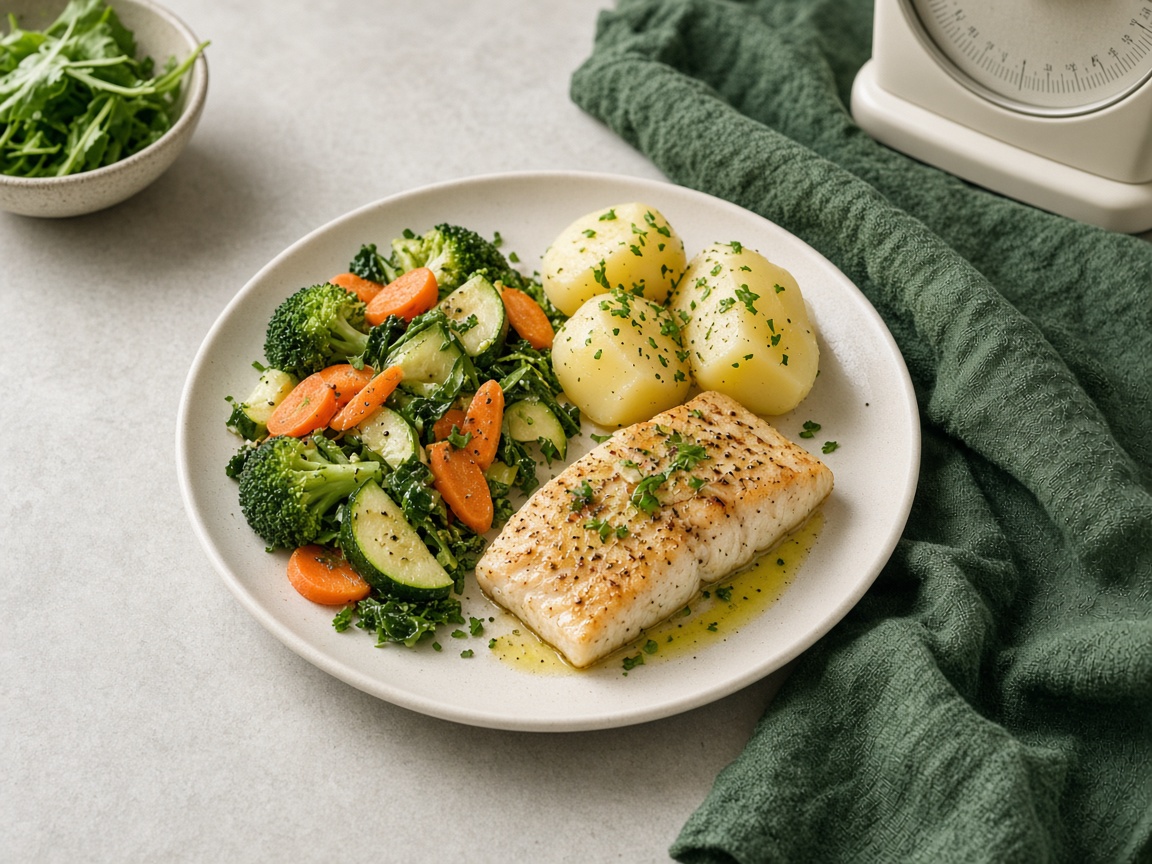
The 2020–2025 Dietary Guidelines and MyPlate ask for a nutrient-dense pattern that can continue, shaped by culture and budget. Half the plate is fruits and vegetables, half of grains are whole, protein foods are varied, and dairy is low-fat or fat-free, or fortified soy. Added sugars stay under 10% of calories from age 2, saturated fat under 10%, sodium under 2,300 mg a day.
Two or three specific goals
CDC advises specific goals, two or three at a time. The examples on the page are water instead of a sugary drink, a 15-minute walk, and a vegetable with supper. That list can be seen in a week of the log, unlike a general line that “I eat like everyone now.”
Setbacks on the same page are called expected, so one hard Saturday does not declare the habits finished. An expected setback is a reason to keep what already repeats and to narrow only the empty spot in the log. The plan is rewritten while the bundle of food, movement, and a record is still alive.
Weight is not one trait
CDC states outright that medicines, illness, stress, genes, hormones, environment, and age affect weight. Keeping is therefore not reduced to willpower on one Monday, and it is not read as a verdict on character. Questions about weight and medicines go to a clinician.
Medicines and bariatric surgery in that same text are clinical options, not a do-it-yourself project from an article. This page does not prescribe personal calories and does not set a date after which the plate, the movement, and the log are no longer needed. The steps that have already proved repeatable are the ones that stay.
What this text draws on
- CDC, Steps for Losing Weight (January 17, 2025): a gradual pace of about 1 to 2 pounds a week is more likely to be kept than quicker loss; losing 20 pounds in 2 weeks is the example of an unrealistic goal. Modest loss, CDC’s example: 5% of 200 pounds is 10 pounds, can improve blood pressure, cholesterol, and blood sugar and could lower risk of heart disease, prediabetes, and type 2 diabetes — not a personal guarantee. Log food and drinks, activity, sleep, and stress. Goals are specific, two or three at a time; examples include water instead of a sugary drink, a 15-minute walk, a vegetable with supper. Setbacks are expected. Rewards are not food. Medicines, illness, stress, genes, hormones, environment, and age affect weight. Weight and medicine questions go to a clinician. Medicines and bariatric surgery are clinical options, not DIY.
- WHO Healthy diet fact sheet: energy intake in balance with expenditure; fruit and vegetables ≥400 g/day; free sugars <10% of energy (below 5% for further benefit); fat <30%; saturated fat <10%; trans fat <1%; salt <5 g/day; unsaturated fats (fish, avocado, nuts, vegetable oils) preferred to saturated and industrial trans fats.
- Dietary Guidelines for Americans, 2020–2025, and USDA MyPlate: a nutrient-dense pattern shaped by culture and budget; added sugars <10% of calories from age 2; saturated fat <10%; sodium <2,300 mg/day; half the plate fruits and vegetables; half of grains whole; varied protein foods; low-fat or fat-free dairy or fortified soy. Drinking less is better than drinking more; not drinking is an option.
A short paraphrase of open guides and reviews (WHO, national recommendations, peer‑reviewed summaries). Not a quotation and not a treatment protocol.
Short answers
Does keeping start the day the weight goal is reached?
That day the food, the movement, and the log continue. CDC ties a kept result to the habits of a gradual pace, not to announcing that the diet is over.
Can a cake be the reward for a kept weight?
CDC says the reward is not food. A week can be marked with a walk, a visit, or a quiet evening, and sweets still sit inside the free-sugar share.