Strength without a gym
Strength work during maintenance stays on two or more days of the week, and neither WHO nor CDC names a gym as a condition. Aerobic minutes stay beside it, and protein at 0.83 g per kg is not turned into a powder or into a reason to eat more without those days.

Two days, not a building
WHO asks for muscle-strengthening on two or more days a week for adults aged 18 to 64, beside the aerobic minutes. CDC states the same for strength: two or more days. Neither line requires a membership, a gym, or a trainer. Work at home for the large muscles of the legs, back, chest, and shoulder girdle meets the sense of those days when it actually loads the muscles, rather than shrinking into a stretch between chores.
This article does not prescribe a number of sets and repetitions and does not assemble a routine. Pain or illness is a reason to stop and ask a clinician, not to add food for recovery from an encyclopedia. From age 65, WHO adds balance and coordination on three or more days a week to those same days, and that does not require a gym either.
The walking minutes do not disappear
Two strength days do not replace the aerobic part. WHO names at least 150–300 minutes of moderate activity a week, or 75–150 minutes of vigorous activity. CDC speaks of at least 150 minutes of moderate aerobic activity a week. Walking at home, on stairs, or outside sits inside those minutes, and some activity is better than none.
The minutes can be gathered in pieces across the week, because the sources speak of a weekly sum, not of one long outing. Sedentary time is worth limiting on a day without strength work as well. A 15-minute walk from the CDC examples remains a specific goal beside the two strength days, not instead of them.
Protein does not order a powder
The safe protein level for adults is 0.83 g per kg of body weight per day in FAO/WHO/UNU. That is a population figure, not a muscle-gain plan and not proof that strength work at home requires a separate shake. Fish, eggs, beans, dairy, or soy on an ordinary plate remain the protein foods of MyPlate.
Kidney disease changes protein through a clinician. Extra food without the two strength days is only extra energy in the balance of intake and expenditure, not “construction” of muscle. Maintenance does not cancel those two days and does not turn them into a reason to widen sugar: free sugars stay under 10% of energy.
The plate on those same days
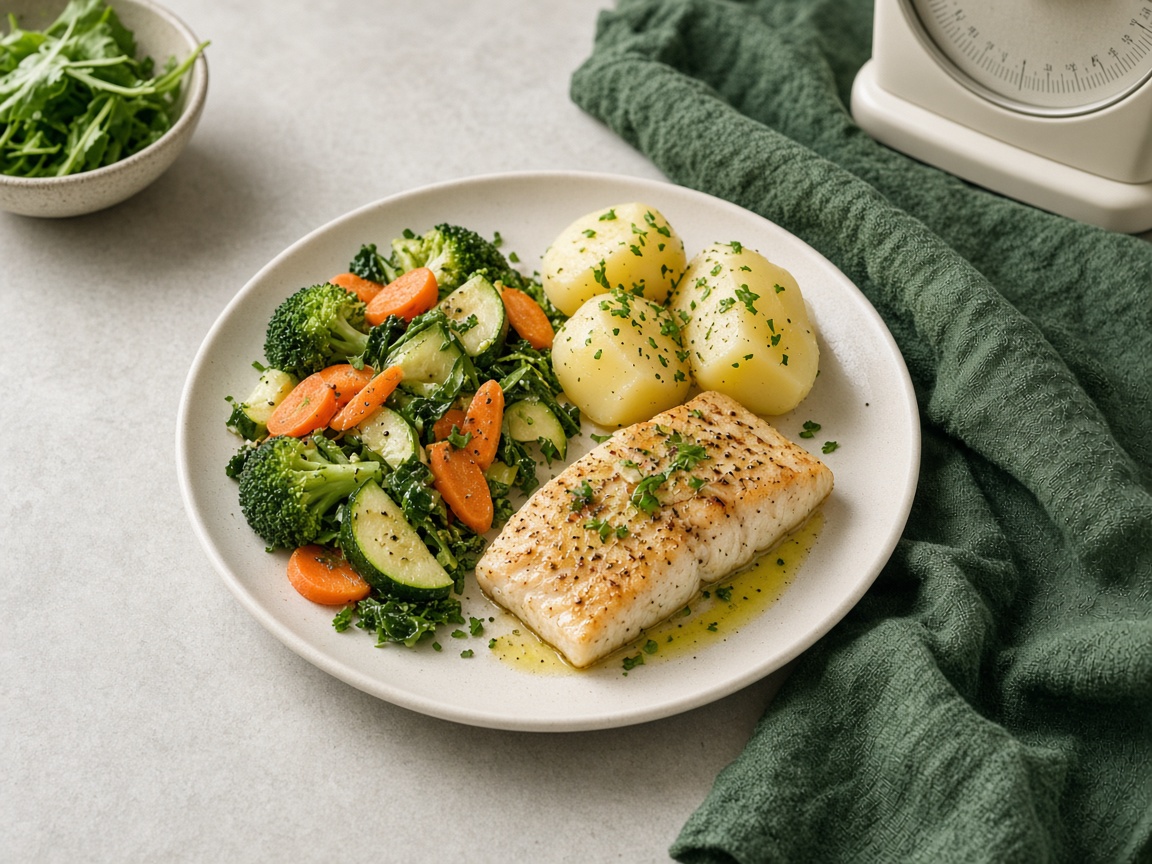
On a strength day the plate does not change its layout to “meat only.” Half is still fruit and vegetables, and half of the grains are whole when grain is there. At least 25 g of fiber from food is not cancelled by training at home. Oil and nuts, if they are added, sit in the fat share under 30% of energy and in the log.
A lapse in training is expected, as is a lapse in food, and the reward becomes neither cake nor skipping the next meal. Sleep, stress, medicines, and illness affect weight, so a question about a sudden change goes to a clinician, not into an extra home routine. A photo draft is not grams eaten until the meal and the day are confirmed.
What this text draws on
- WHO Physical activity fact sheet: adults 18–64 at least 150–300 minutes of moderate aerobic activity a week, or 75–150 minutes vigorous, plus muscle-strengthening on 2 or more days; some activity is better than none; sedentary time should be limited. From age 65, the same plus balance and coordination on 3 or more days.
- CDC, Adult Activity: at least 150 minutes of moderate aerobic activity a week and muscle-strengthening on 2 or more days.
- FAO/WHO/UNU, 2007: the safe protein level for adults is 0.83 g per kg body weight per day. A population figure, not a muscle-gain plan. Kidney disease changes it through a clinician.
- WHO Healthy diet fact sheet: energy intake in balance with expenditure; fruit and vegetables ≥400 g/day; free sugars <10% of energy (below 5% for further benefit); fat <30%; saturated fat <10%; trans fat <1%; salt <5 g/day; unsaturated fats (fish, avocado, nuts, vegetable oils) preferred to saturated and industrial trans fats.
- WHO carbohydrate guideline, 2023: at least 25 g of fiber a day for adults, from food.
A short paraphrase of open guides and reviews (WHO, national recommendations, peer‑reviewed summaries). Not a quotation and not a treatment protocol.
Short answers
Do strength days not count without a gym?
They count when the work strengthens muscles on two or more days. WHO and CDC do not name a gym. This article does not issue a routine with sets. Pain and illness are a reason to see a clinician, not a reason for a larger plate.
Does protein need to rise above 0.83 g per kg for strength work at home?
No. 0.83 g per kg per day is the safe level for adults as a population figure, not a muscle plan. Kidney disease changes it through a clinician. Food beyond the ordinary plate, without the strength days themselves, remains only extra energy.