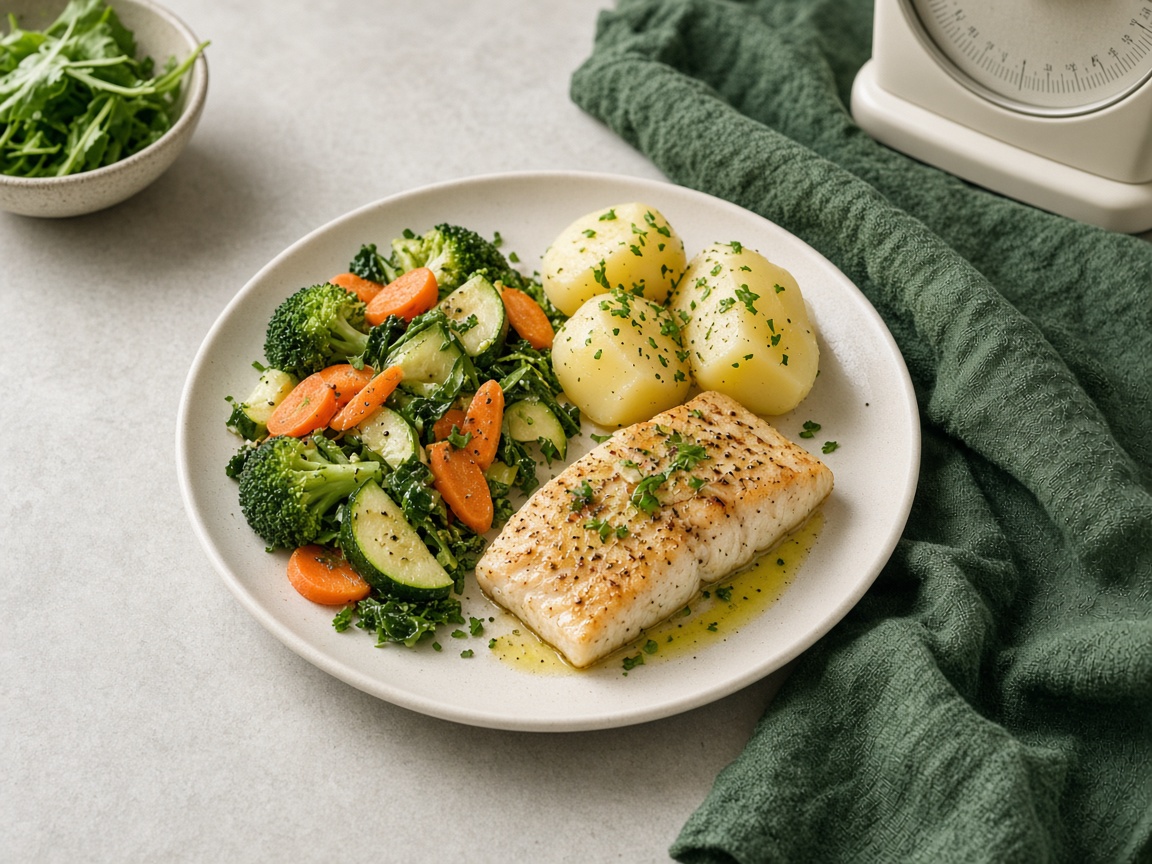
MyPlate as the standing plate
The standing plate for maintenance is MyPlate, not a separate “after the diet” plate. Half is fruit and vegetables, half of the grains are whole, the protein foods are varied, with low-fat dairy or fortified soy beside them.
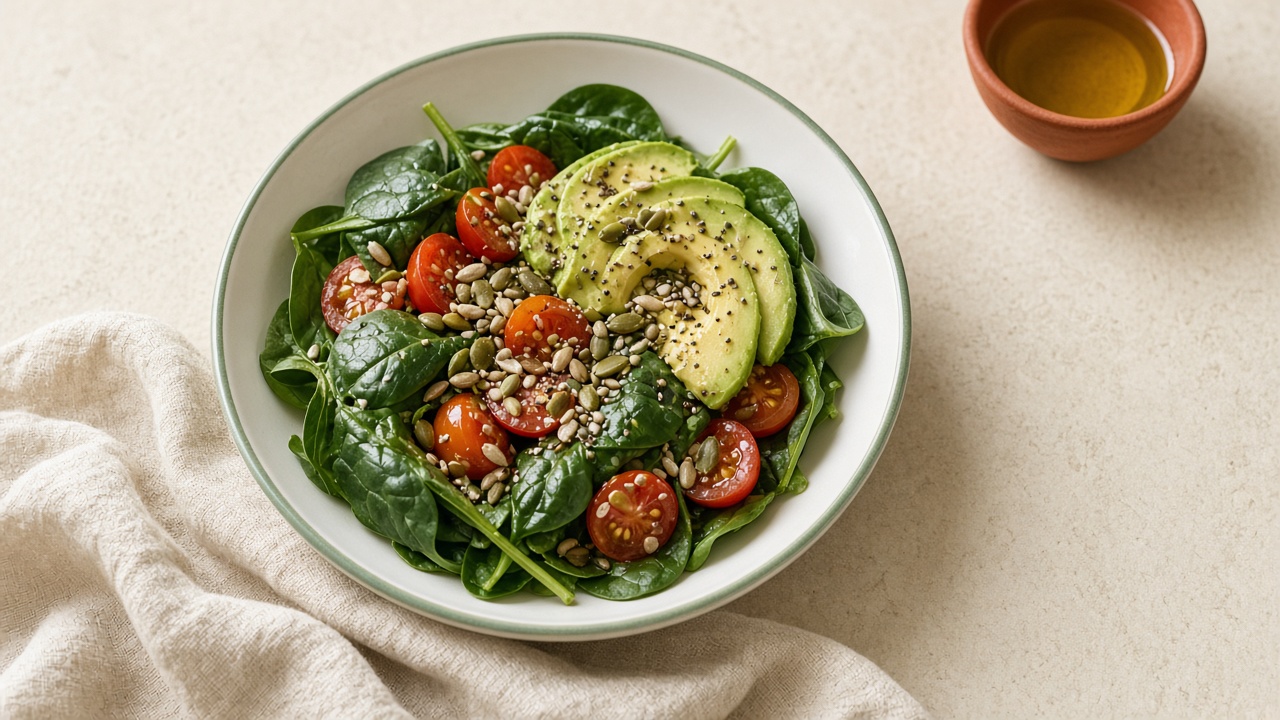
Half fruit and vegetables
MyPlate gives half the plate to fruit and vegetables on an ordinary day, not on the day of a control photograph. That picture is not the same measurement as the WHO line of at least 400 g of fruit and vegetables: one is the look of a plate, the other is a daily amount, and this article does not glue them into one unit. Both guides can be met across a day, and neither is cancelled once weight is steady rather than falling.
A single side dish does not occupy that whole half. Other vegetables and fruit stay beside it, or the half plate turns into one spoonful of garnish. Culture and budget allow cabbage, carrots, a frozen mix, or a familiar salad, without a duty to buy rare leaves.
Grain and protein in their places
Half of the grains are whole: oats, whole bread, brown rice, and other whole grains. That is not a ban on every pale grain. The other part of the grain can be ordinary, as long as the whole-grain half did not disappear across the day.
MyPlate protein foods are varied: fish, poultry, meat, eggs, beans, nuts, soy. The safe protein level for adults is 0.83 g per kg of body weight per day in FAO/WHO/UNU. That is a population figure, not a target to close at every plate, and not a muscle-gain plan. Kidney disease changes protein through a clinician.
The dairy group and the fat on the plate
Low-fat or fat-free dairy, or fortified soy, is its own group, not a sugary drink. A yogurt with a large amount of added sugar spends the sugar share and does a poor job of that group. Added sugars stay under 10% of calories from age 2, and free sugars under 10% of energy.
Vegetable oil, nuts, avocado, and fish are preferred to saturated fats and industrial trans fats. Fat still stays under 30% of energy, saturated fat under 10%, and trans fat under 1%. Oil on the standing plate is counted, not treated as invisible because the vegetables are already there.
Why the plate does not change for maintenance
Maintenance differs in energy relative to expenditure, as WHO states it, not in a swap of the food list for an “allowed after the diet” list. The same plate remains when weight is no longer a loss project. Salt under 5 g a day and sodium under 2,300 mg a day continue as two different limits.
At least 25 g of fiber a day from food supports that standing plate with vegetables, beans, and whole grain. A lapse at one lunch is expected and does not cancel the next. If a weight question is tied to medicines or illness, it is not solved by rearranging the quarters of the plate. It goes to a clinician.
What this text draws on
- Dietary Guidelines for Americans, 2020–2025, and USDA MyPlate: a nutrient-dense pattern shaped by culture and budget; added sugars <10% of calories from age 2; saturated fat <10%; sodium <2,300 mg/day; half the plate fruits and vegetables; half of grains whole; varied protein foods; low-fat or fat-free dairy or fortified soy. Drinking less is better than drinking more; not drinking is an option.
- WHO Healthy diet fact sheet: energy intake in balance with expenditure; fruit and vegetables ≥400 g/day; free sugars <10% of energy (below 5% for further benefit); fat <30%; saturated fat <10%; trans fat <1%; salt <5 g/day; unsaturated fats (fish, avocado, nuts, vegetable oils) preferred to saturated and industrial trans fats.
- FAO/WHO/UNU, 2007: the safe protein level for adults is 0.83 g per kg body weight per day. A population figure, not a muscle-gain plan. Kidney disease changes it through a clinician.
- WHO carbohydrate guideline, 2023: at least 25 g of fiber a day for adults, from food.
A short paraphrase of open guides and reviews (WHO, national recommendations, peer‑reviewed summaries). Not a quotation and not a treatment protocol.
Short answers
Are half the plate and 400 g the same thing?
No. Half the plate is the MyPlate picture at a meal. At least 400 g of fruit and vegetables is the daily line in the WHO fact sheet. This article does not convert one into the other and does not ask anyone to guess the half plate in grams by eye.
Does every plate need to deliver 0.83 g of protein per kg?
No. 0.83 g per kg per day is the safe level for adults as a population figure across the day, not a target for a single lunch and not a muscle plan. Kidney disease changes this subject through a clinician. Varied protein foods on the plate are a separate, kitchen part of MyPlate.