Protein while keeping
While keeping weight, the safe protein level for adults stays 0.83 g per kg of body weight per day, and that is not a cut “because the diet is over” and not a coaching target. The FAO/WHO/UNU 2007 figure is a population guide, and the plate is still built from varied protein foods.

One guide for an adult day
In 2007 FAO/WHO/UNU named the safe protein level for adults: 0.83 g per kg of body weight per day. Keeping does not issue a second, smaller figure and does not issue a larger one “to preserve muscle.” The same guide stands both while weight was being lost and while it is being held: the phase does not rewrite the population line.
The guide describes a level for a population, not a menu for a particular gym and not a personal prescription from an article. Kidney disease changes it through a clinician, and that is the only caveat the source gives here. This article does not teach cutting protein “for the kidneys” or raising it “for shape” on your own.
Foods, not a powder as the plan
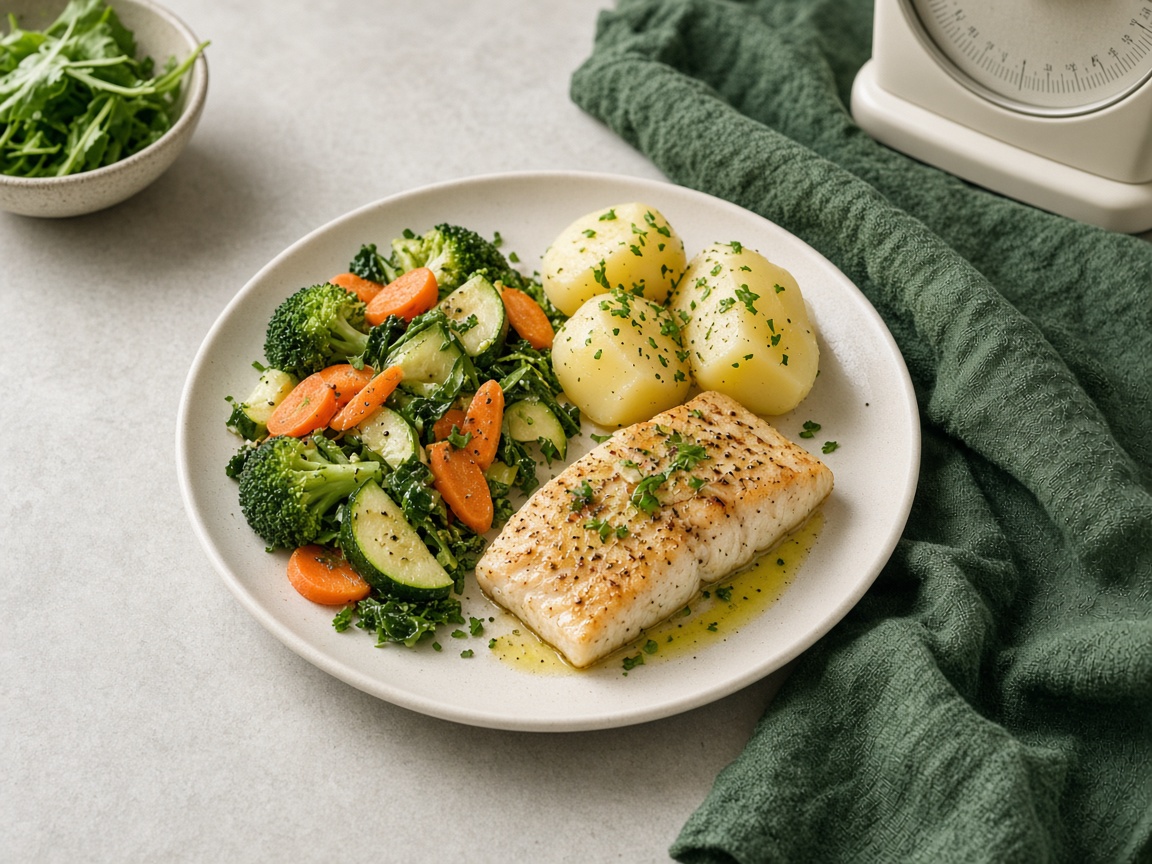
MyPlate asks for varied protein foods: fish, poultry, beans, nuts, and low-fat or fat-free dairy or fortified soy sit inside the nutrient-dense pattern of the US guidelines. Half the plate still belongs to fruits and vegetables, and half of grains are whole. Protein does not push those shares aside just because weight is now being kept.
WHO prefers unsaturated fats — fish, avocado, nuts, vegetable oils — to saturated fats and industrial trans fats. Fish and nuts therefore sit both on the protein line and on the fat line, and fat is still kept under 30% of energy, saturated fat under 10%. Sausage does not become “keeping protein” just because of the word on the package.
Little animal food is a separate B12 line
If animal food is scarce or absent, the NIH Office of Dietary Supplements notes that a reliable vitamin B12 source is needed, a fortified food or a supplement. Plants do not contain B12. Beans, soy, nuts, and grains cover part of the plate and do not cover that line.
This article does not prescribe a supplement dose. A fortified food or a supplement is the fact of a source, not a scheme of “how many capsules while keeping.” A question about dose, especially with illness, stays with a clinician, in the same spirit in which CDC sends weight and medicine questions to one.
Keeping neither cuts the line nor inflates it
Sometimes after a loss the protein foods are dropped “because eating as before is allowed now,” and the plate is left without fish, beans, and dairy. Sometimes the line is inflated to a homemade athletic target that is not in the 2007 source. Both moves replace the same guide of 0.83 g per kg.
The food log CDC asks for shows whether protein foods were in the days, without turning every dish into a coaching plan. Goals are specific and there are two or three of them: for example fish or beans at lunch, not a new grams-per-kilogram. Setbacks are expected, and one day without a dairy portion neither cancels the guide nor demands a penalty serving.
What this text draws on
- FAO/WHO/UNU, 2007: the safe protein level for adults is 0.83 g per kg body weight per day. A population figure, not a muscle-gain plan. Kidney disease changes it through a clinician.
- Dietary Guidelines for Americans, 2020–2025, and USDA MyPlate: a nutrient-dense pattern shaped by culture and budget; added sugars <10% of calories from age 2; saturated fat <10%; sodium <2,300 mg/day; half the plate fruits and vegetables; half of grains whole; varied protein foods; low-fat or fat-free dairy or fortified soy. Drinking less is better than drinking more; not drinking is an option.
- WHO Healthy diet fact sheet: energy intake in balance with expenditure; fruit and vegetables ≥400 g/day; free sugars <10% of energy (below 5% for further benefit); fat <30%; saturated fat <10%; trans fat <1%; salt <5 g/day; unsaturated fats (fish, avocado, nuts, vegetable oils) preferred to saturated and industrial trans fats.
- NIH Office of Dietary Supplements, vitamin B12: people who eat little or no animal food need a reliable B12 source, a fortified food or a supplement. Plants do not contain B12. This article does not prescribe a dose.
- CDC, Steps for Losing Weight (January 17, 2025): a gradual pace of about 1 to 2 pounds a week is more likely to be kept than quicker loss; losing 20 pounds in 2 weeks is the example of an unrealistic goal. Modest loss, CDC’s example: 5% of 200 pounds is 10 pounds, can improve blood pressure, cholesterol, and blood sugar and could lower risk of heart disease, prediabetes, and type 2 diabetes — not a personal guarantee. Log food and drinks, activity, sleep, and stress. Goals are specific, two or three at a time; examples include water instead of a sugary drink, a 15-minute walk, a vegetable with supper. Setbacks are expected. Rewards are not food. Medicines, illness, stress, genes, hormones, environment, and age affect weight. Weight and medicine questions go to a clinician. Medicines and bariatric surgery are clinical options, not DIY.
A short paraphrase of open guides and reviews (WHO, national recommendations, peer‑reviewed summaries). Not a quotation and not a treatment protocol.
Short answers
Is protein lowered while keeping, since weight is no longer falling?
No. The safe level for adults stays 0.83 g per kg a day. It is not a cut for a phase and not a muscle-gain plan.
Does a plant plate cover B12 by itself?
No. Plants do not contain B12. With little or no animal food a fortified food or a supplement is needed, and this article does not prescribe a dose.