PREDIMED did not measure training
PREDIMED compared a Mediterranean pattern with extra-virgin olive oil or with nuts, and advice to eat less fat, in adults whose cardiovascular risk was already high. It is not a training protocol and not a weight-loss trial. Minutes of activity live in another document, at WHO and CDC.
What the trial compared
What was compared was a way of eating, not a way of training. The Mediterranean groups had fewer major cardiovascular events than the advice to eat less fat. The 2013 paper was retracted and republished in 2018 because of randomization problems. The republication kept the finding of fewer events. This paraphrase does not give a percent or a hazard ratio, because the source asks that they be left out.
The participants already had high risk. The text does not allow the finding to be carried over to a person without that risk and called the result of “sport plus oil.” Oil and nuts in the trial were part of the pattern, not a reward for the gym.
Why this is not about weight loss or the gym
The source says outright that this is not a weight-loss trial. CDC’s pace of about 1 to 2 pounds a week and the example of 5 percent of 200 pounds live on another page. They are not read out of PREDIMED. A gym, a pulse, and kilometers are not in the account of the trial this article uses.
Aerobic minutes and strength days are not cancelled by that. WHO still speaks of 150–300 moderate minutes or 75–150 vigorous minutes and of strength on two or more days. A Mediterranean pattern does not close those lines. Sedentary time does not become allowed because of olive oil.
How to read the trial’s food in a diary
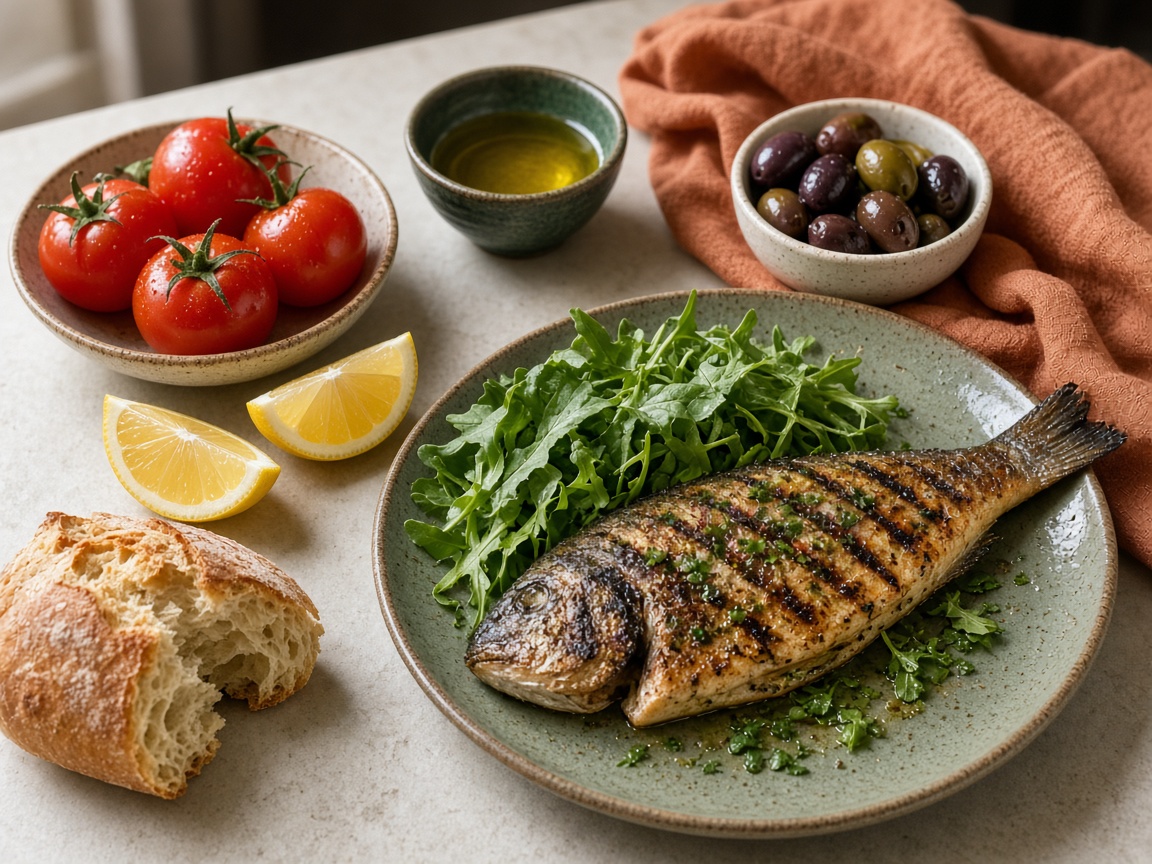
Olive oil and nuts are food with energy. WHO prefers unsaturated fat to saturated fat and industrial trans fat, and it still keeps a share for total fat. A spoon of oil on a salad enters the log even if the salad is “Mediterranean.” A photo without the oil is an incomplete plate.
A sugary drink does not become part of that pattern just because vegetables sit beside it. Free sugars stay in their share. The reward for a “correct” week is not food: that is a CDC sentence, and it does not clash with the fact that oil in the trial was part of the food, not a prize.
The edge of the paraphrase
This article does not tell you to repeat the trial on your own and does not promise fewer heart events for you personally. High risk, the randomization problems, and the republication are part of an honest paraphrase. They are not hidden to make the pattern easier to advertise. Clinical decisions stay with a clinician.
Beside that, an ordinary log can hold what was eaten, including oil, and whether there were minutes of activity. One does not prove the other. A person confirms a ScanDish draft from a photo by choosing the meal and the day. The trial does not replace that step.
What this text draws on
- PREDIMED, Estruch et al., NEJM: adults who already had high cardiovascular risk. A Mediterranean pattern with extra-virgin olive oil or with nuts was compared with advice to eat less fat. The Mediterranean groups had fewer major cardiovascular events. The 2013 paper was retracted and republished in 2018 because of randomization problems; the republication kept the finding of fewer events. Not a weight-loss trial. Do not give a percent or a hazard ratio.
- WHO Physical activity fact sheet: adults 18–64 at least 150–300 minutes of moderate aerobic activity a week, or 75–150 minutes vigorous, plus muscle-strengthening on 2 or more days; some activity is better than none; sedentary time should be limited. From age 65, the same plus balance and coordination on 3 or more days.
- CDC, Steps for Losing Weight (January 17, 2025): a gradual pace of about 1 to 2 pounds a week is more likely to be kept than quicker loss; losing 20 pounds in 2 weeks is the example of an unrealistic goal. Modest loss, CDC’s example: 5% of 200 pounds is 10 pounds, can improve blood pressure, cholesterol, and blood sugar and could lower risk of heart disease, prediabetes, and type 2 diabetes — not a personal guarantee. Log food and drinks, activity, sleep, and stress. Goals are specific, two or three at a time; examples include water instead of a sugary drink, a 15-minute walk, a vegetable with supper. Setbacks are expected. Rewards are not food. Medicines, illness, stress, genes, hormones, environment, and age affect weight. Weight and medicine questions go to a clinician. Medicines and bariatric surgery are clinical options, not DIY.
A short paraphrase of open guides and reviews (WHO, national recommendations, peer‑reviewed summaries). Not a quotation and not a treatment protocol.
Short answers
Does PREDIMED prove you do not need to train?
No. The trial was about a pattern of eating in people who already had high cardiovascular risk, not about cancelling minutes of activity. The minutes are still described by WHO and CDC.
Can the result be stated as a percent?
This paraphrase does not give a percent or a hazard ratio. The source asks that they be left out. The finding that remains is that the Mediterranean groups had fewer major cardiovascular events.