The log beats the equation
A few days of logging, as CDC suggests, show the oil, sauce, and drinks that the Mifflin equation does not contain and cannot contain. Until those lines are on paper, tuning the equation only hides the gap.

Why a few days are the point
A single smooth day is easy to mistake for a whole life, but a log exists so that what happened is visible, not a display piece. CDC treats setbacks as expected, so days that came out differently are not thrown out of the notebook. A few days in a row hold both a successful supper and a day with another shape. The equation compresses both days into one resting estimate from weight, height, age, and the constant.
Along with food, CDC suggests noting activity, sleep, and stress. Those are not Mifflin terms, and they cannot be dropped into the parentheses by eye. The log is needed because those things belong to the days that were lived, while the equation is silent about the day. A short run of days is already more useful than an argument about which constant looks neater.
Oil with nowhere to hide
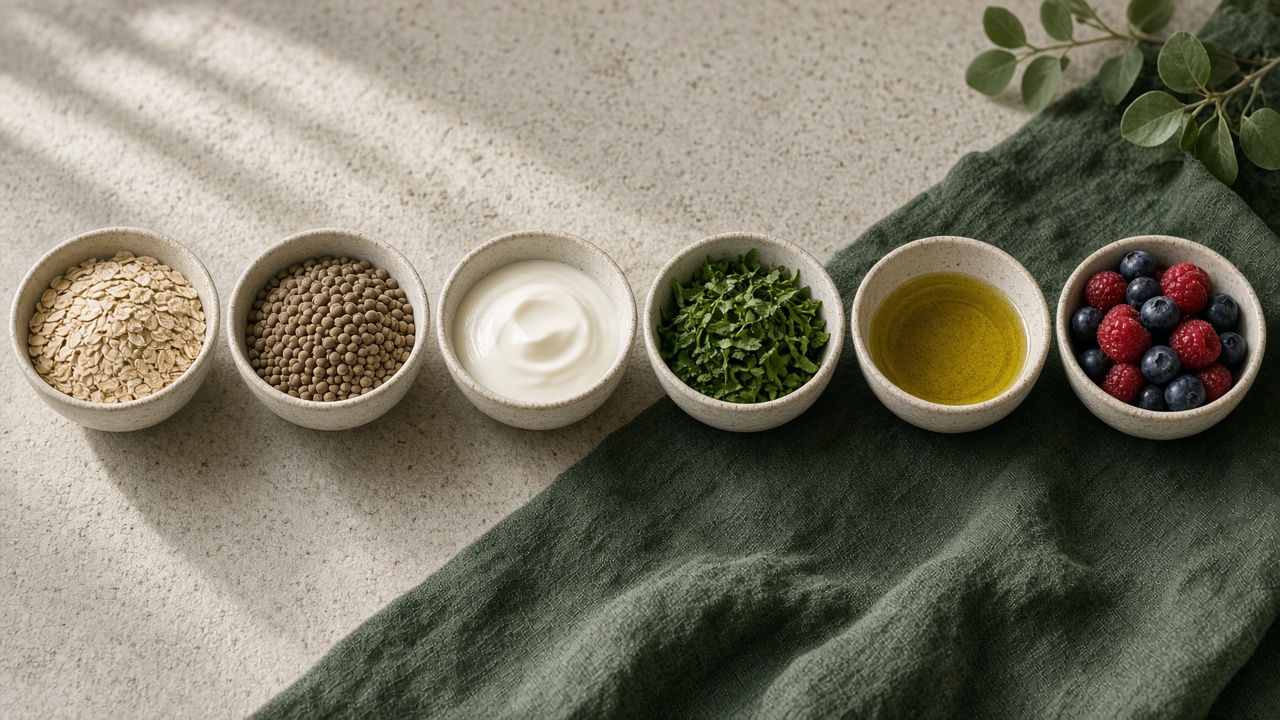
A spoon of oil in the pan is often not remembered as a food of its own, though it is what changes a dish that otherwise looks like vegetables alone. The equation does not ask whether the food was fried in oil or whether sauce was on the plate. The diary asks, because CDC includes everything eaten in the log, not only what a person thinks of as the main item. The difference between “vegetables” and “vegetables and oil” appears the moment the oil is named as a line.
Sauce, dressing, and the words “a little for flavor” work the same way. While they are missing from the list, the day on paper is lighter than the day at the table. The resting equation does not correct that optical trick: it has no field for dressing. The repair is to write the spoon in, not to replace plus 5 or minus 161 with some other number.
The drink in the same notebook
CDC writes food and drinks together, not as an optional extra. A sugary drink, juice, and coffee with additions belong in the log if they were there. An unlogged glass is a hole of the same kind as unlogged oil. The equation does not reconstruct the glass: milliliters are not among its inputs.
One of CDC’s specific examples is water instead of a sugary drink, beside a short walk and a vegetable with supper, and the advice is to take two or three goals, not all of them at once. The swap is visible only if the drink was noted at all. A day on which drinks “do not count” gives that goal nothing to work with. A few honest days do.
What is revised first
The holes in the log are closed first: oil, sauce, a second piece, a drink, a snack remembered as accidental. Only then does anyone look at whether the resting draft resembles the life those lines describe. The reverse order, turning the equation while the diary is empty, creates a look of precision. CDC offers specific goals, not an endless revision of the equation.
The reward for a step taken, in that same text, should not be food. That rule belongs to the diary, and the equation does not know it. The equation also does not know stress and sleep, though those are worth noting too. The log beats the equation wherever the question is “what happened,” rather than “what is the resting estimate.”
What this text draws on
- CDC, Steps for Losing Weight (January 17, 2025): a gradual pace of about 1 to 2 pounds a week is more likely to be kept than quicker loss; losing 20 pounds in 2 weeks is the example of an unrealistic goal. Modest loss, CDC’s example: 5% of 200 pounds is 10 pounds, can improve blood pressure, cholesterol, and blood sugar and could lower risk of heart disease, prediabetes, and type 2 diabetes — not a personal guarantee. Log food and drinks, activity, sleep, and stress. Goals are specific, two or three at a time; examples include water instead of a sugary drink, a 15-minute walk, a vegetable with supper. Setbacks are expected. Rewards are not food. Medicines, illness, stress, genes, hormones, environment, and age affect weight. Weight and medicine questions go to a clinician. Medicines and bariatric surgery are clinical options, not DIY.
- Mifflin M. D. et al., Am J Clin Nutr, 1990; 51(2):241-247: a resting estimate. Men (10 × kg) + (6.25 × cm) − (5 × age) + 5. Women the same with −161 instead of +5. Not a measurement of what was eaten and not a prescription.
A short paraphrase of open guides and reviews (WHO, national recommendations, peer‑reviewed summaries). Not a quotation and not a treatment protocol.
Short answers
Why not refine the equation instead of logging for a few days?
Because the equation contains neither oil nor drinks. Refining coefficients does not write into the parentheses what is not there.
Is one perfectly logged day enough?
It is useful, but CDC treats setbacks as expected and wants food and drinks seen as they happened. A few days show both a smooth day and a day that came out differently.