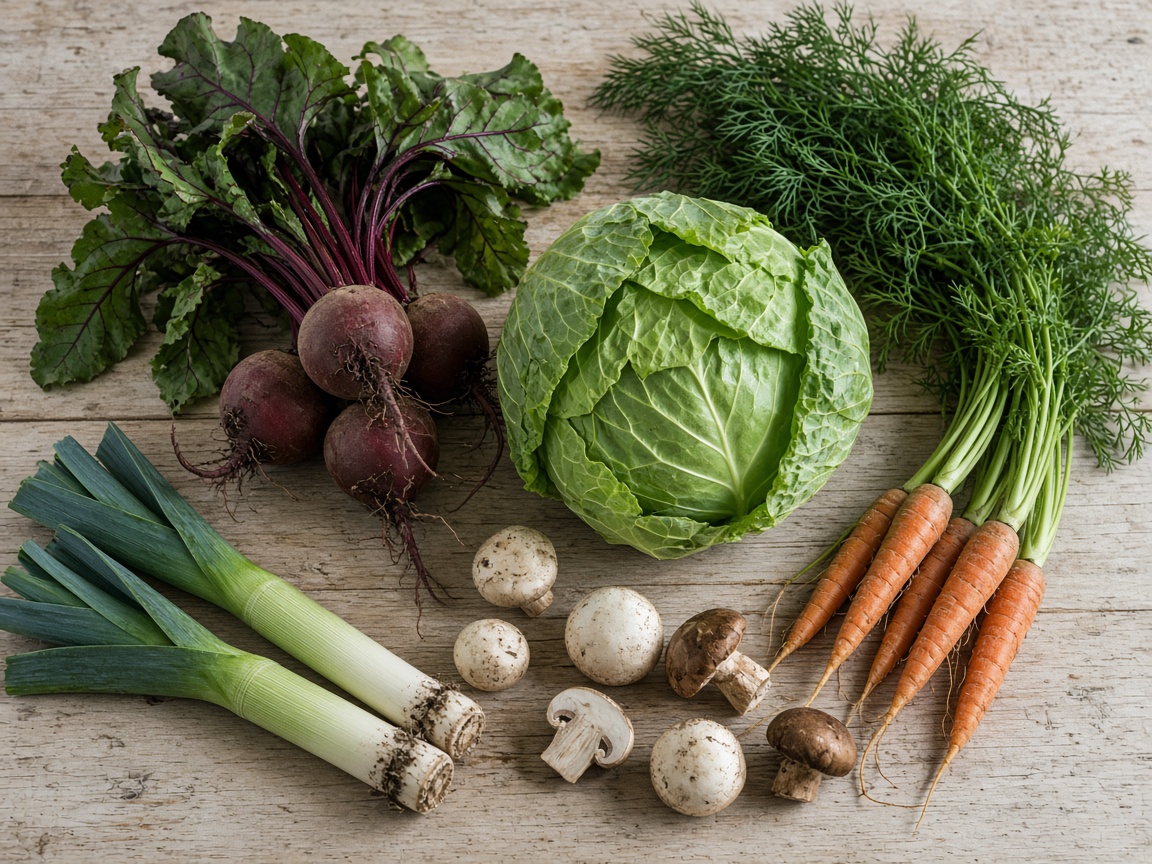
A low-cost plate
The Dietary Guidelines explicitly build a nutrient-dense pattern with budget in mind, so a low-cost plate does not have to be an accident. Beans, eggs, oats, seasonal or frozen vegetables, and vegetable oil cover groups the texts have already named.

Which foods build it
Beans and eggs sit among MyPlate protein foods beside fish, meat, poultry, nuts, and soy. Oats are a grain, and grains like these are how a day reaches the share in which half of grains are whole. A seasonal or frozen vegetable takes a place on the half of the plate given to fruits and vegetables, and it enters the WHO line of at least 400 g.
Vegetable oil belongs with the unsaturated fats the fact sheet prefers to saturated fats and industrial trans fats. It is not free of energy: total fat stays under 30% of energy, saturated fat under 10%, trans fat under 1%. A low price does not take a spoon of oil out of that share or make the spoon unlimited.
Protein without an expensive plan
The safe protein level for adults in the FAO, WHO, and UNU report is 0.83 g per kg of body weight per day. That is a population guide, not a list of delicacies and not a muscle-gain plan. Beans and eggs can be part of a day that moves toward that guide, without a powder and without a separate sports menu.
Kidney disease changes that figure, and a clinician changes it, not the price tag in the shop. A day of sausage alone can be cheap and still fit the saturated-fat limit poorly. Varied protein foods in the Dietary Guidelines are there so protein does not arrive only with a fatty cut.
Vegetables, fiber, and the sweet bargain
Frozen and seasonal vegetables are an ordinary way to keep a vegetable on the plate when fresh greens are costly. WHO recommends at least 25 g of fiber a day for adults, from food, and vegetables with oats and beans belong to that food. This article does not assign how many grams of fiber are in a given bag, because the guideline states no such figure.
A sugary drink and cheap biscuits often sit beside low-cost food and still spend a different line. WHO keeps free sugars under 10% of energy, with further benefit under 5%, and the Dietary Guidelines keep added sugars under 10% of calories from age two. A low price does not move a sweet into the vegetable group.
When animal food is scarce
Eggs are animal food and a protein food. If animal food in the pattern is scarce or absent, plants do not themselves contain B12. A reliable source is then a fortified food or a supplement, and this article does not prescribe a dose.
The salt in low-cost food does not disappear either. WHO keeps it under 5 g a day, and the Dietary Guidelines keep sodium under 2,300 mg. A stock cube, a salty can, and a ready sauce can spend that share faster than the beans themselves. A low-cost plate stays a plate with the same limits, not a separate diet for a tight purse.
What this text draws on
- Dietary Guidelines for Americans, 2020–2025, and USDA MyPlate: a nutrient-dense pattern shaped by culture and budget; added sugars <10% of calories from age 2; saturated fat <10%; sodium <2,300 mg/day; half the plate fruits and vegetables; half of grains whole; varied protein foods; low-fat or fat-free dairy or fortified soy. Drinking less is better than drinking more; not drinking is an option.
- WHO Healthy diet fact sheet: energy intake in balance with expenditure; fruit and vegetables ≥400 g/day; free sugars <10% of energy (below 5% for further benefit); fat <30%; saturated fat <10%; trans fat <1%; salt <5 g/day; unsaturated fats (fish, avocado, nuts, vegetable oils) preferred to saturated and industrial trans fats.
- WHO carbohydrate guideline, 2023: at least 25 g of fiber a day for adults, from food.
- FAO/WHO/UNU, 2007: the safe protein level for adults is 0.83 g per kg body weight per day. A population figure, not a muscle-gain plan. Kidney disease changes it through a clinician.
- NIH Office of Dietary Supplements, vitamin B12: people who eat little or no animal food need a reliable B12 source, a fortified food or a supplement. Plants do not contain B12. This article does not prescribe a dose.
A short paraphrase of open guides and reviews (WHO, national recommendations, peer‑reviewed summaries). Not a quotation and not a treatment protocol.
Short answers
Do beans replace the whole plate?
No. They are a protein food and they help with fiber, while vegetables, grain, and the fat, sugar, and salt limits stay where they are.
Is low-cost food automatically far from WHO?
No. Vegetables, oats, eggs, beans, and vegetable oil fit the named groups, provided sugar, salt, and saturated fat do not take over the day.