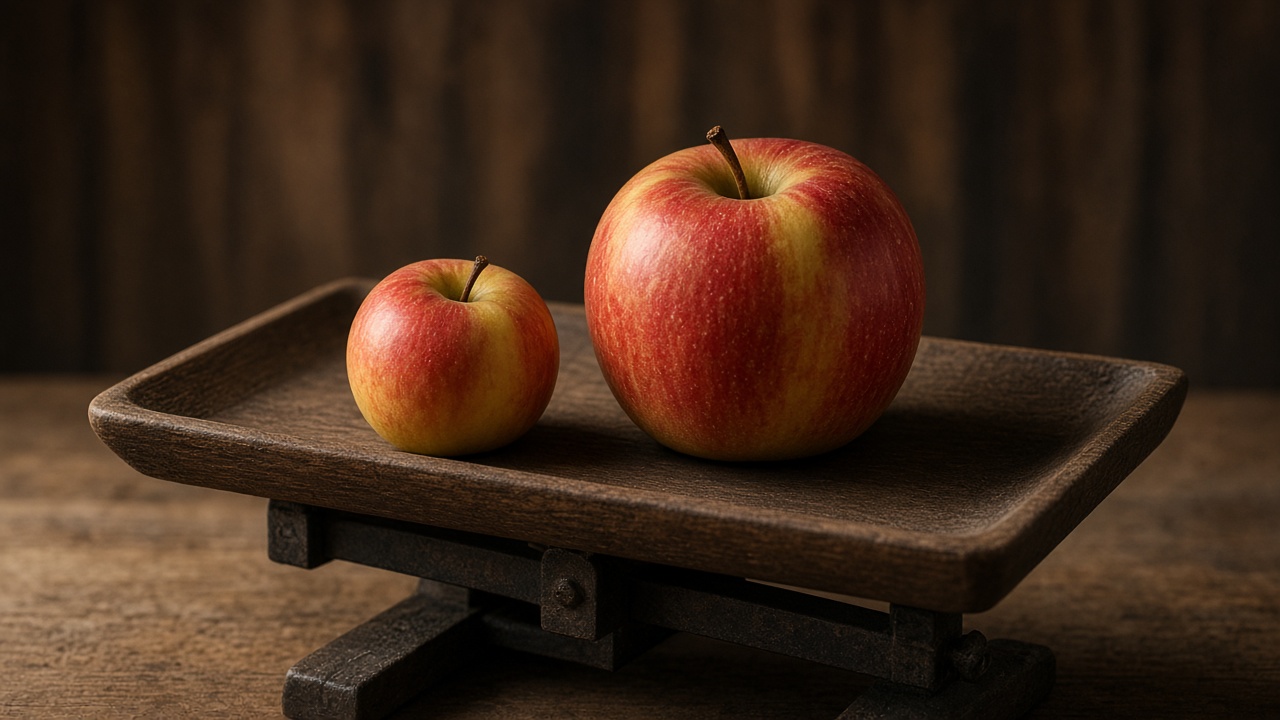
An adult plate and children
The weight-loss pace on the CDC page for adults is not transferred to a child: neither 1 to 2 pounds a week, nor the modest-loss example of 5% of 200 pounds. Shared food at the table can still be MyPlate food: vegetables, fruit, grain, varied protein foods, and dairy.

Which figures stay adult
CDC writes that a gradual pace of about 1 to 2 pounds a week is more likely to be kept than a quicker loss, and gives an unrealistic goal: losing 20 pounds in 2 weeks. The modest-loss example on the same page is 5% of 200 pounds, which is 10 pounds, and it speaks of possible improvements in blood pressure, cholesterol, and blood sugar at that scale, not of a child. Those illustrations do not become a child's assignment.
The safe protein level of 0.83 g per kg per day in the FAO, WHO, and UNU report is named for adults. Fiber of at least 25 g a day in the 2023 guideline is also stated for adults. The WHO activity minutes in the fact sheet are given for ages 18 to 64 and separately from age 65. This article does not copy them onto a child.
What can be shared at one table
The Dietary Guidelines describe nutrient-dense food shaped by culture and budget. Half the plate is fruits and vegetables, half of grains are whole, protein foods are varied, and dairy is low-fat or fat-free or fortified soy. A family can eat that food together without turning a child's portion into a cut-down adult deficit.
Added sugars in the same guidelines stay under 10% of calories from age two. WHO free sugars stay under 10% of energy, under 5% for further benefit. A sugary drink does not become a child's standard only because an adult gave it up inside a personal loss plan. Water instead of such a drink is an example of a short CDC goal, and as a table habit it does not require a child's loss pace.
Calorie floors in an app are not a child's plan
In the ScanDish product, a floor of 1,500 kcal for a male profile and 1,200 kcal for a female profile are product settings, not a WHO table and not a CDC page. They are adult profiles. This article does not assign them to a child or tune them downward so that an adult goal looks stricter.
A photo draft in the same product does not become grams until the person confirms the meal and the day. For a child's plate that is even less a diagnosis and not an energy prescription. CDC sends weight and medicine questions to a clinician. A child's weight, growth, and appetite are seen by a clinician, not by an adult profile's calculator.
Shared food without an adult deficit
An adult can keep a personal pace and a personal log without laying them onto a child's portion. Vegetables on the shared table still belong to the line of at least 400 g for the person that line was written for, and they simply remain ordinary food for everyone. Salt under 5 g at WHO and sodium under 2,300 mg in the Dietary Guidelines are limits of a pattern, not a reason to salt a child's plate into a diet blank or, in the other direction, to remove the protein food from it.
Saturated fat under 10% and the preference for unsaturated fats belong to the quality of food that is shared, not to a ban on a family dish. If a child has an illness, an unusual appetite, or a question about weight, that is a conversation with a clinician. This article does not compose a child's menu and does not promise that an adult plate treats anything.
What this text draws on
- CDC, Steps for Losing Weight (January 17, 2025): a gradual pace of about 1 to 2 pounds a week is more likely to be kept than quicker loss; losing 20 pounds in 2 weeks is the example of an unrealistic goal. Modest loss, CDC’s example: 5% of 200 pounds is 10 pounds, can improve blood pressure, cholesterol, and blood sugar and could lower risk of heart disease, prediabetes, and type 2 diabetes — not a personal guarantee. Log food and drinks, activity, sleep, and stress. Goals are specific, two or three at a time; examples include water instead of a sugary drink, a 15-minute walk, a vegetable with supper. Setbacks are expected. Rewards are not food. Medicines, illness, stress, genes, hormones, environment, and age affect weight. Weight and medicine questions go to a clinician. Medicines and bariatric surgery are clinical options, not DIY.
- Dietary Guidelines for Americans, 2020–2025, and USDA MyPlate: a nutrient-dense pattern shaped by culture and budget; added sugars <10% of calories from age 2; saturated fat <10%; sodium <2,300 mg/day; half the plate fruits and vegetables; half of grains whole; varied protein foods; low-fat or fat-free dairy or fortified soy. Drinking less is better than drinking more; not drinking is an option.
- WHO Healthy diet fact sheet: energy intake in balance with expenditure; fruit and vegetables ≥400 g/day; free sugars <10% of energy (below 5% for further benefit); fat <30%; saturated fat <10%; trans fat <1%; salt <5 g/day; unsaturated fats (fish, avocado, nuts, vegetable oils) preferred to saturated and industrial trans fats.
- FAO/WHO/UNU, 2007: the safe protein level for adults is 0.83 g per kg body weight per day. A population figure, not a muscle-gain plan. Kidney disease changes it through a clinician.
- WHO carbohydrate guideline, 2023: at least 25 g of fiber a day for adults, from food.
- WHO Physical activity fact sheet: adults 18–64 at least 150–300 minutes of moderate aerobic activity a week, or 75–150 minutes vigorous, plus muscle-strengthening on 2 or more days; some activity is better than none; sedentary time should be limited. From age 65, the same plus balance and coordination on 3 or more days.
A short paraphrase of open guides and reviews (WHO, national recommendations, peer‑reviewed summaries). Not a quotation and not a treatment protocol.
Short answers
Can a child be given a goal of losing 1 to 2 pounds a week?
No. That is a pace illustration from the CDC page for adults. A child's weight is discussed with a clinician, not copied from a text about adult loss.
Must the family eat different food from an adult following MyPlate?
The shared foods can be the same: vegetables, fruit, grain, varied protein foods, dairy. What is not transferred is the adult loss pace and the adult calorie profiles.