One table for everyone
A family does not need three different diets. It needs one meal and different portions: less oil and grain for one person, a second helping for another, and a child’s food for a child, not a shrunk adult diet.

How to divide the pot
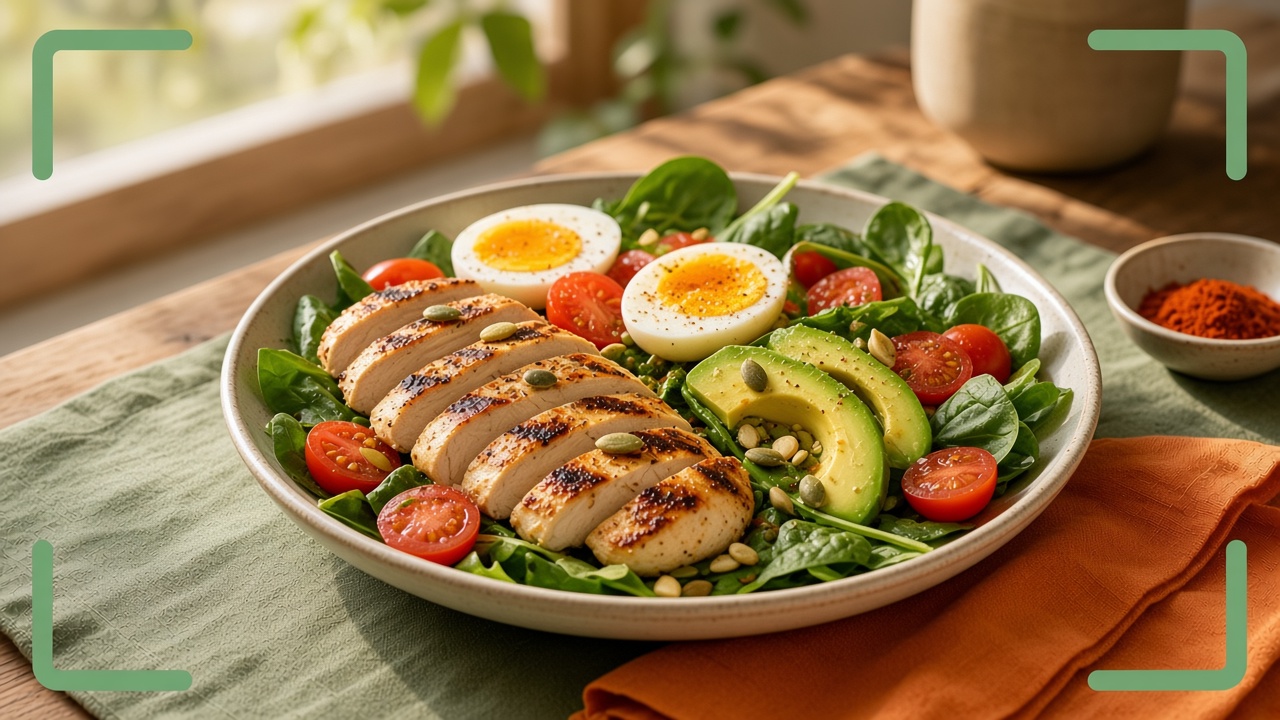
Vegetables and protein are shared. Grain and oil go onto the plate per person. Sauce stays in a boat, not poured over everyone’s food in advance. One dinner stays a dinner, and the diaries diverge honestly.
A child, a pregnancy, and an illness do not live on an adult deficit. Their portion is not shrunk “to keep company.” That is a separate conversation with their own clinician.
Guests
A table for guests is a celebration inside the week, not the collapse of balance. The host can eat their own portion and not finish the leftovers at night out of politeness to themselves. Leftovers are tomorrow’s lunch if they are logged.
What this text draws on
- WHO: Healthy diet fact sheet — sugars <10% energy, fat ≤30%, salt <5 g/day, vegetables and fruit.
- WHO carbohydrate guideline, 2023 (NCBI Bookshelf NBK594788) — fiber ≥25 g/day for adults.
- USDA and HHS: Dietary Guidelines for Americans (periodic editions).
A short paraphrase of open guides and reviews (WHO, national recommendations, peer‑reviewed summaries). Not a quotation and not a treatment protocol.
Short answers
Do you have to cook separately for yourself?
Usually no. The portion is served separately. A separate pot is optional.