Protein in reviews, not in a powder advertisement
When people train and eat less, a higher protein intake more often helps keep muscle. A tub advertisement and a review are not the same thing.
Where the reviews tend to land
Reviews of trials that include lifting often land near 1.6–2.2 g of protein per kilogram a day. Below that, muscle in a deficit suffers more often. Above that, the extra benefit for muscle in an ordinary person is small, and the plate becomes only cottage cheese. Sick kidneys are not handed this range by an article.
Without training, high protein does not build muscle by itself. It can help fullness while losing. That is a different job, and more modest grams, about 1.2–1.6 per kg, are enough unless you have your own reason to eat more.
Where the bot’s grams come from
“More protein” starts at 2 g per kg and 0.8 g of fat, then shrinks if the pair does not fit inside 85% of calories. That sits in the neighborhood of the reviews and at the same time refuses to wipe out carbohydrate. The ordinary plate is about 1.6 g while losing. Both numbers are a product guide, not a quotation from one paper.
What this text draws on
- Morton R. W. et al., Br J Sports Med, 2018 — meta-analysis: ~1.6 g protein/kg/day with resistance training.
- ISSN position stand: protein and exercise — 1.4–2.0 g/kg for active adults (review, not prescription).
A short paraphrase of open guides and reviews (WHO, national recommendations, peer‑reviewed summaries). Not a quotation and not a treatment protocol.
Short answers
Do you need powder to match the reviews?
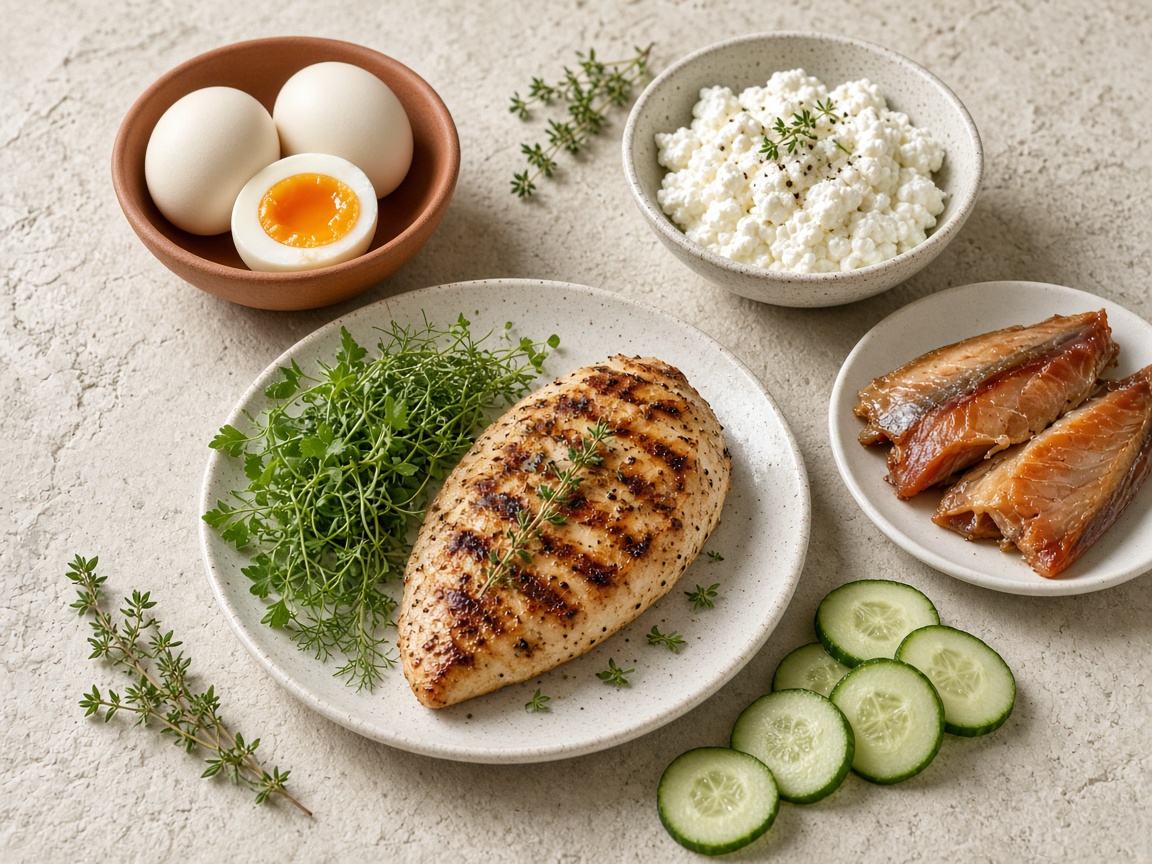
No. The reviews look at grams, not a brand. Eggs, fish, cottage cheese, and legumes cover those grams.