The “more protein” style
The math starts at 2.0 g of protein and 0.8 g of fat per kilogram. Carbohydrate gets the rest. If protein and fat do not fit inside 85% of calories, both shrink.
Why fat is lower here
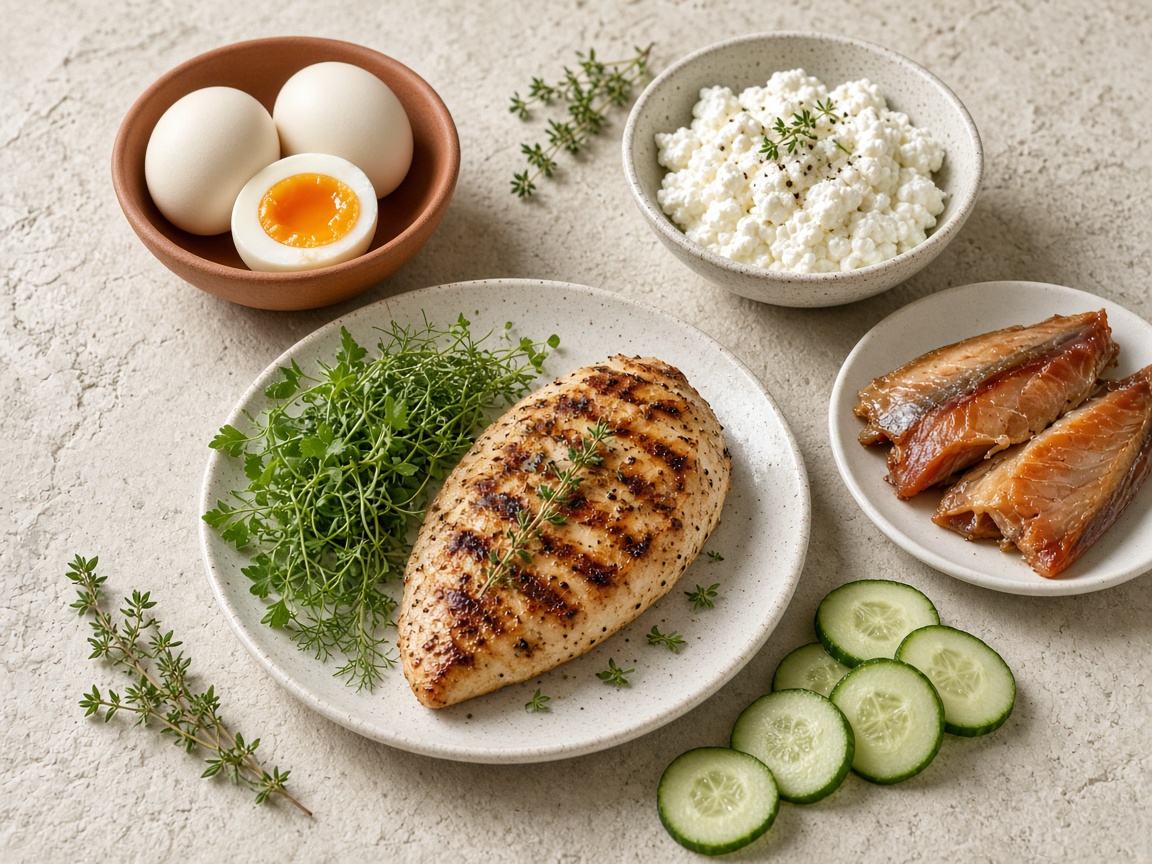
With protein this high, fat is deliberately not inflated. Otherwise carbohydrate would have no room and the plate would become only cottage cheese and oil. Fat at 0.8 g per kg is not a low-fat therapeutic plan. For 70 kg it is 56 g of fat, about 500 kcal, a visible kitchen amount.
Vegetables and grain from the remaining calories are there so the day is still chewed. The style does not cancel volume.
When the number shrinks by itself
On a target near 1,500 kcal and a smaller body weight, 2 g of protein can hit the 85% ceiling. The bot then gives a little less protein than 2 g and keeps a share of carbohydrate. Read the final grams in the profile, not only the name of the style.
Protein as a nutrient is covered in the plate section. This page is only what the program does.
What this text draws on
- ScanDish: equation and factors in the Mifflin, Activity, and Pace articles on this site.
- USDA FoodData Central — macro guides in the diary.
- Morton R. W. et al., Br J Sports Med, 2018 — meta-analysis: ~1.6 g protein/kg/day with resistance training.
A short paraphrase of open guides and reviews (WHO, national recommendations, peer‑reviewed summaries). Not a quotation and not a treatment protocol.
Short answers
Is this keto?
No. Carbohydrate remains the rest of the calories and is protected down to at least 15%.