Sugar
Sugar is a carbohydrate, about 4 kcal per gram, with almost no fullness and no vitamins. It knows how to hide in a drink, a sauce, and a “healthy” bar.
Added and naturally present
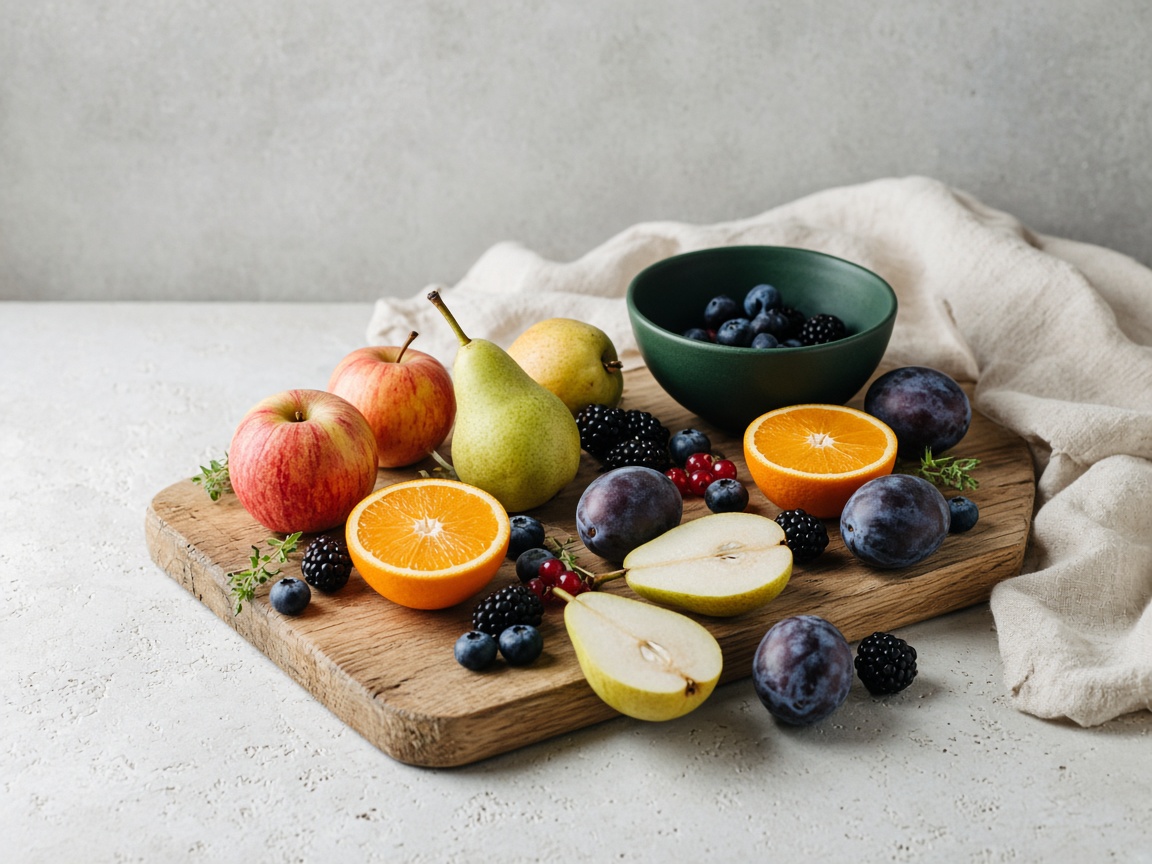
The sugar in a whole apple arrives with fiber and chewing. The sugar in juice, honey, syrup, and biscuits was added, or freed from fiber. Per gram the calories are similar. For fullness and for teeth the difference is real. Honey is not “not sugar.”
Sweet yogurt, teriyaki sauce, granola, and smoothies often carry more added sugar than a sweet you would have noticed. The per-100 g line restores the scale.
What gets discussed
Guidance often asks to keep free sugars under about 10% of energy, and better under 5%. On 1,800 kcal, ten percent is about 45 g. That is already many spoons and one drink. This site does not turn that into a personal ban: it is a population guide.
A total zero is not required for ordinary life and often breaks a person’s relationship with food. A portion of dessert inside the day is more honest than a ban and the biscuit packet that follows.
What this text draws on
- WHO: Healthy diet fact sheet — sugars <10% energy, fat ≤30%, salt <5 g/day, vegetables and fruit.
- WHO carbohydrate guideline, 2023 (NCBI Bookshelf NBK594788) — fiber ≥25 g/day for adults.
A short paraphrase of open guides and reviews (WHO, national recommendations, peer‑reviewed summaries). Not a quotation and not a treatment protocol.
Short answers
Is fructose from fruit a poison?
No. Whole fruit is food. The problem is more often sweet drinks and large doses of added sugar, not an apple.