
Meal timing
The day’s sum matters more than a perfect hour. Timing still affects hunger, training, and sleep if the evening becomes the only large meal.
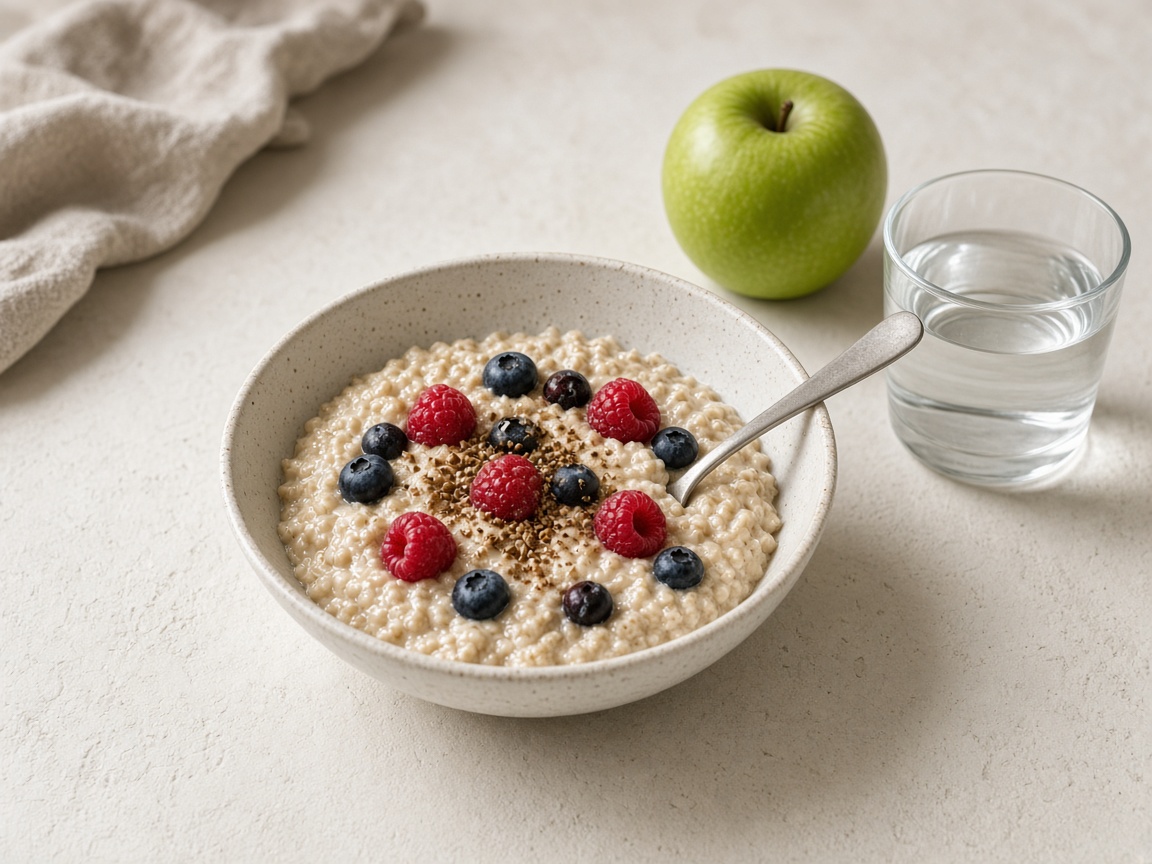
Protein through the day, not only at night
Three or four meals with protein are usually easier than one late one. The bot has breakfast, lunch, dinner, and a snack for that. Skipping the morning does not burn fat by itself. It often moves hunger into the night.
An eight-hour window is a schedule that helps some people with the sum. The article on windows is enough: there is no magic beyond the deficit.
Sleep
Short sleep is tied to stronger hunger the next day. A heavy late dinner can get in the way of sleep. That is not a ban on carbohydrate after six. It is an argument against making midnight the main meal if the morning is early.
Coffee after the middle of the day delays sleep for some people. Black coffee has no calories. An effect on tomorrow’s appetite through sleep does happen.
What this text draws on
- WHO: Healthy diet fact sheet — sugars <10% energy, fat ≤30%, salt <5 g/day, vegetables and fruit.
- WHO carbohydrate guideline, 2023 (NCBI Bookshelf NBK594788) — fiber ≥25 g/day for adults.
- USDA and HHS: Dietary Guidelines for Americans (periodic editions).
A short paraphrase of open guides and reviews (WHO, national recommendations, peer‑reviewed summaries). Not a quotation and not a treatment protocol.
Short answers
How many meals are best?
As many as help you land the week. The bot can sketch a plan for 3, 4, or 5 meals, and that is an intention, not a diary entry.

