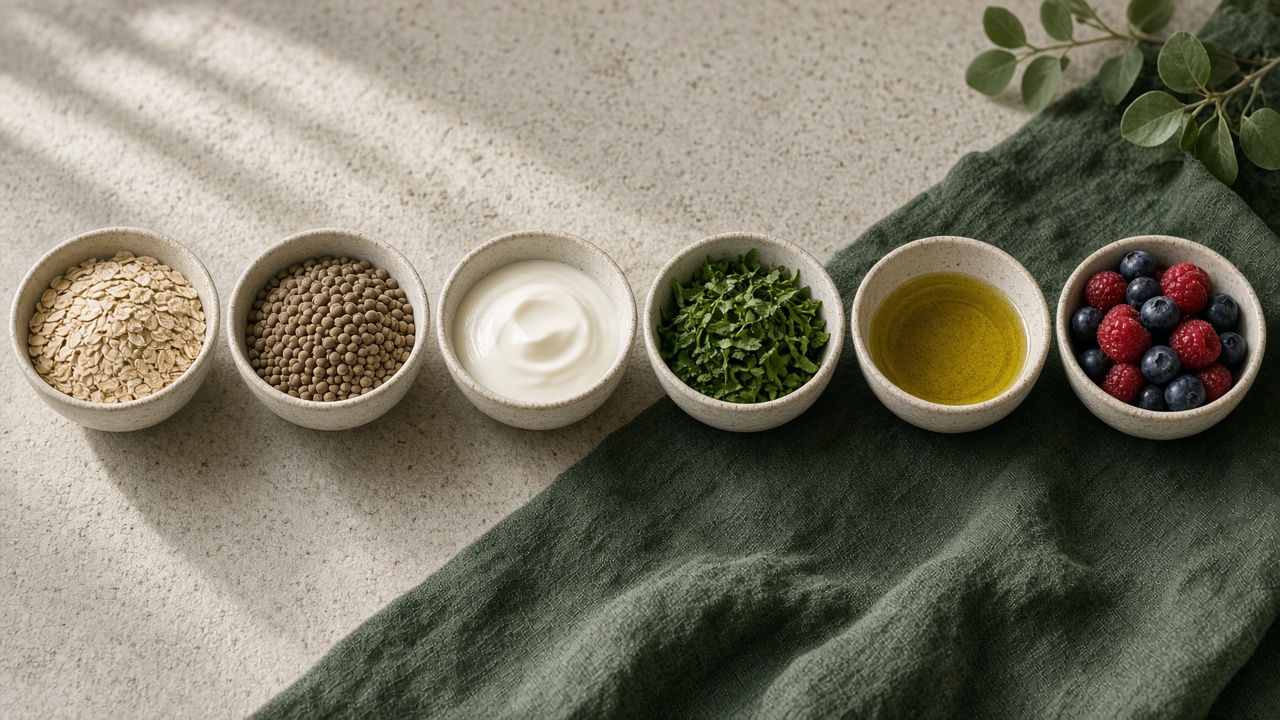
A scale for food
A kitchen scale removes the loudest noise in a diary: the eye sees a “spoon” of oil and a “piece” of cheese differently on different days.

What to weigh first
Oil, nuts, cheese, bread, grain in its dry form, peanut butter, honey. These are dense foods, where 10 g is already meaningful calories. Cucumber and lettuce can be estimated more roughly: an error of 30 g decides almost nothing.
A finished plate can go on the scale whole if you know the recipe and you are dividing a pot. Otherwise the weight of a mixture without a composition says little. A ScanDish photo helps when the composition is visible and the scale is not there.
How not to make it heavy
For a week, weigh dense foods, memorize your usual spoons and slices, then weigh what is new and what is from a restaurant. A scale on holiday is unnecessary if the eye was calibrated at home. Checking the oil spoon once a month restores honesty.
Serve the plate, then weigh what you will eat, rather than remembering what you served and what you left. Bones, peel, and pits are not part of the food’s weight.
What this text draws on
- USDA FoodData Central — per-100 g guides (brands differ).
A short paraphrase of open guides and reviews (WHO, national recommendations, peer‑reviewed summaries). Not a quotation and not a treatment protocol.
Short answers
Does a photo replace a scale?
A photo narrows the guess. A caption with grams narrows it further. A scale is more precise than both when the food is dense.