Fat is three different limits
The WHO fact sheet holds three different limits: total fat under 30% of energy, saturated fat under 10%, trans fat under 1%. Folding them into one sentence that fat is simply bad means missing the sheet’s separate preference for unsaturated fats over saturated fats and industrial trans fats.
Three numerators
The first limit covers all fat in the day’s energy and stands at 30%. The second covers saturated fat and stands at 10% of energy. The third covers trans fat and stands under 1%. Each has its own numerator, so a food can sit inside one line and outside another; This article takes them one at a time and does not pass a single verdict on the word fat.
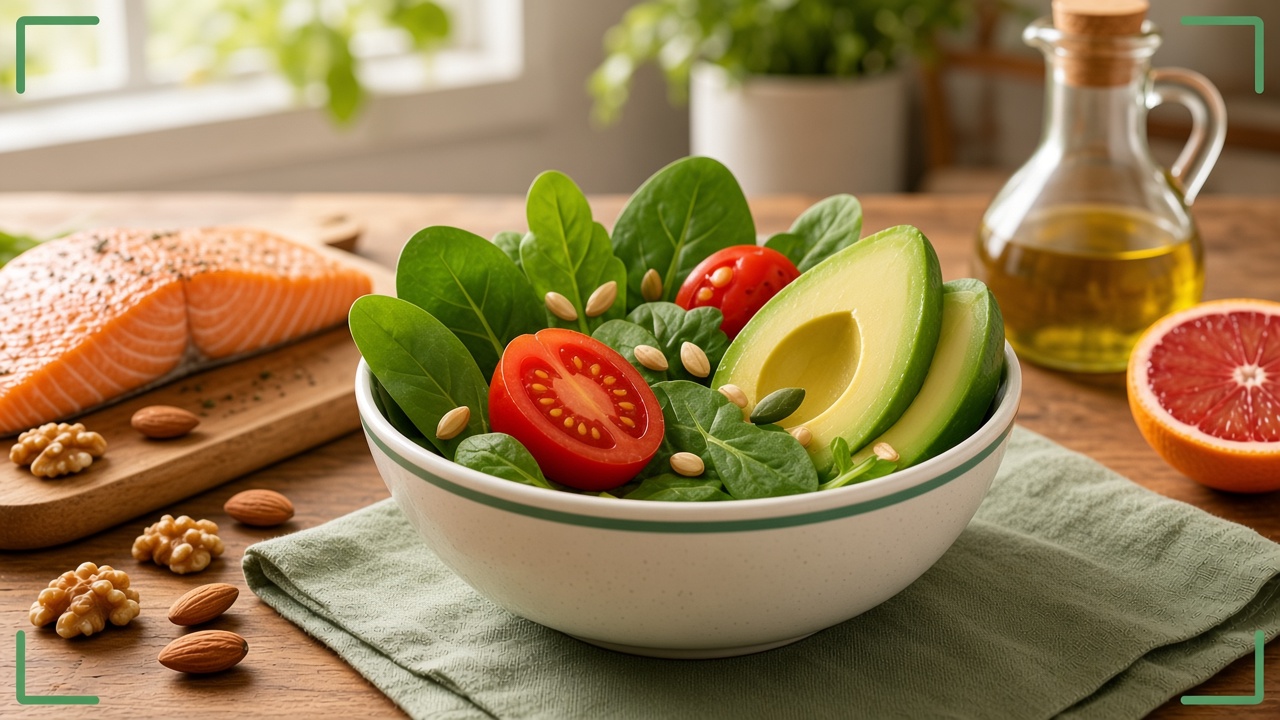
On the same sheet, unsaturated fats are preferred to saturated fats and industrial trans fats. Fish, avocado, nuts, and vegetable oils are named. That is a choice of quality, not an order to remove every fat from the plate. Olive oil and nuts enter this talk as food; The limit on total fat and the preference for unsaturated fat live in one document at the same time.
What the trial did with oil
PREDIMED studied adults whose cardiovascular risk was already high. A Mediterranean pattern with extra-virgin olive oil or with nuts was compared with advice to eat less fat. The Mediterranean groups had fewer major cardiovascular events. It was not a weight-loss trial; This article gives neither a percent nor a hazard ratio.
The 2013 paper was retracted and republished in 2018 because of randomization problems. The republication kept the finding of fewer events. Oil in that work sat inside a Mediterranean pattern and inside a comparison, not as a separate capsule. The control was advice to eat less fat, and fewer events fell to the groups in which oil or nuts belonged to the whole pattern; The sentence “fat is bad” does not describe that comparison.
Parallel lines from other publishers
The Dietary Guidelines set saturated fat under 10% of calories, in the same direction as the WHO’s second limit. That is a parallel population guide, not a retelling of PREDIMED and not the trans-fat limit. Sodium under 2,300 mg, added sugars under 10% of calories from age 2, and half the plate as fruit and vegetables remain their own MyPlate lines. Low-fat or fat-free dairy or fortified soy again speaks about the type of food, not about a ban on every fatty food.
The NHLBI DASH plan gathers fish, nuts, and vegetable oils and suggests less fatty meat, sweets, and sugary drinks. Sodium in the plan is 2,300 mg or a 1,500 mg version. The plan was studied for blood pressure. It is not a crash plan and not permission to eat everything; The overlap of “less saturated fat, more vegetable oils” does not make the plan a retelling of the WHO’s three limits and does not make it the PREDIMED trial.
How to read a plate that contains fat
A day can be checked against the three limits in order: the share of all fat, the share of saturated fat, the share of trans fat. Fish, avocado, nuts, and vegetable oil support the preference for unsaturated fat, while the talk about the whole fat share still remembers the 30% limit. This article does not assign a number of spoons of oil. The fact sheet gives shares of energy, not a recipe.
The heart discussion in PREDIMED applies to adults who already had high risk and to major events, not to a promise about weight. If the heart is already under treatment, the page explains documents and does not replace a clinician. A food log can show the oil and the sauce that were already in the dish. It does not switch on the trial and does not assign the person a percent of events.
What this text draws on
- WHO Healthy diet fact sheet: energy intake in balance with expenditure; fruit and vegetables ≥400 g/day; free sugars <10% of energy (below 5% for further benefit); fat <30%; saturated fat <10%; trans fat <1%; salt <5 g/day; unsaturated fats (fish, avocado, nuts, vegetable oils) preferred to saturated and industrial trans fats.
- PREDIMED, Estruch et al., NEJM: adults who already had high cardiovascular risk. A Mediterranean pattern with extra-virgin olive oil or with nuts was compared with advice to eat less fat. The Mediterranean groups had fewer major cardiovascular events. The 2013 paper was retracted and republished in 2018 because of randomization problems; the republication kept the finding of fewer events. Not a weight-loss trial. Do not give a percent or a hazard ratio.
- Dietary Guidelines for Americans, 2020–2025, and USDA MyPlate: a nutrient-dense pattern shaped by culture and budget; added sugars <10% of calories from age 2; saturated fat <10%; sodium <2,300 mg/day; half the plate fruits and vegetables; half of grains whole; varied protein foods; low-fat or fat-free dairy or fortified soy. Drinking less is better than drinking more; not drinking is an option.
- NHLBI DASH Eating Plan: vegetables, fruits, whole grains, low-fat dairy, fish, poultry, beans, nuts, vegetable oils; less fatty meat, sweets, and sugary drinks; sodium 2,300 mg or a 1,500 mg version. Studied for blood pressure, not as a crash plan and not as permission to eat everything.
A short paraphrase of open guides and reviews (WHO, national recommendations, peer‑reviewed summaries). Not a quotation and not a treatment protocol.
Short answers
Does WHO treat every fat as harmful?
No. The sheet has three limits: total fat under 30% of energy, saturated fat under 10%, trans fat under 1%. Separately, unsaturated fats from fish, avocado, nuts, and vegetable oils are preferred.
Does olive oil in PREDIMED prove that fat helps weight?
The trial looked at major cardiovascular events in adults who already had high risk, and it was not a weight-loss trial. Oil belonged to a Mediterranean pattern compared with advice to eat less fat. This article gives neither a percent nor a hazard ratio.