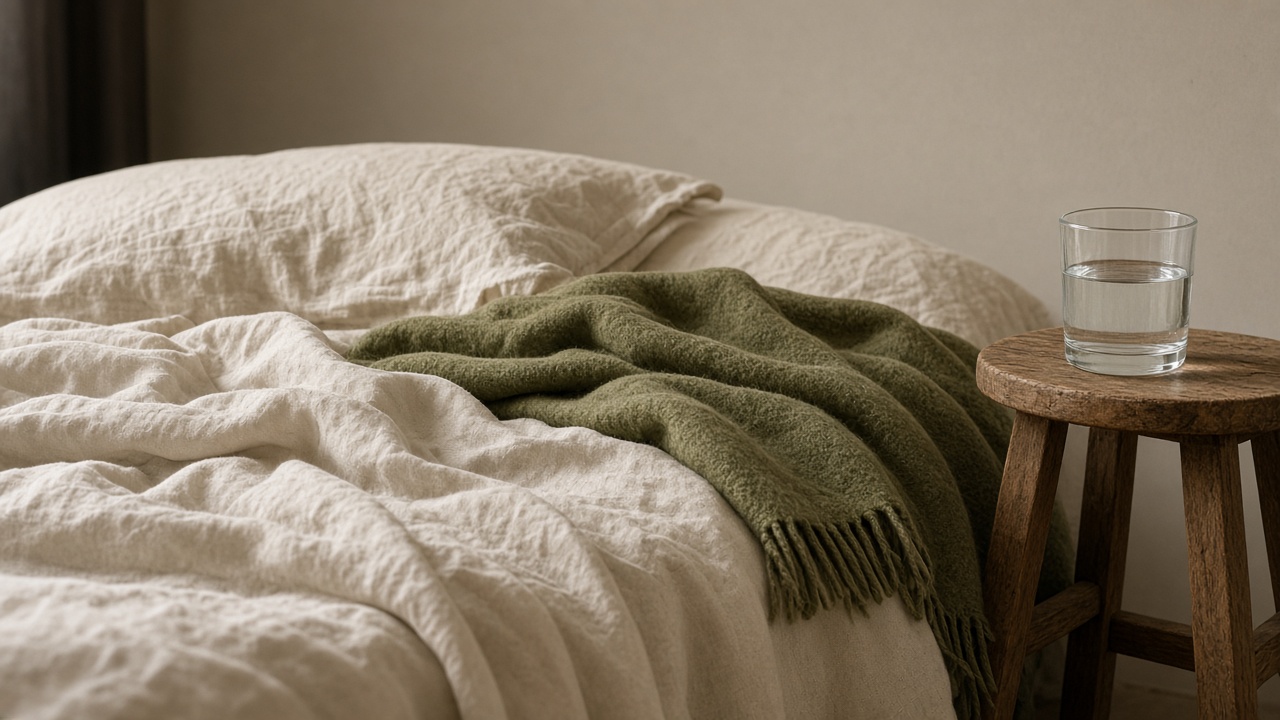
Sleep quality: not only the figure on the clock
The CDC separates sleep quality from the number of hours. Quality is uninterrupted, refreshing sleep. Trouble falling asleep, repeated waking, and sleepiness after a sleep that already looks sufficient are named as signs of poor quality.
What the list of signs does not do
It does not make a diagnosis. If the signs repeat, the CDC points to a clinician, and a clinician may order a sleep study. This article does not name apnea, does not choose a sleeping pill, and does not promise that a dark screen will cure the night.
The number of hours is not cancelled by that. For ages 18–60 it is still 7 or more, for 61–64 it is 7–9, for 65 and older 7–8. Poor quality can exist even with a “correct” figure. A good figure does not prove the sleep was uninterrupted.
Sleep beside food, not inside it
In the weight steps the CDC asks for sleep to be written together with food, activity, and stress — four columns. A bad night is not paid for with a smaller supper and does not permit “making up” calories. The reward on that page is not food anyway, and setbacks are expected.
People who sleep fewer than 7 hours are more likely to report heart attack, asthma, and depression. That is about people who do not reach the hours, and it is what people report, not the mechanism of one plate. Quality and short duration sit beside each other in the text and are not reduced to each other.
Activity and sleep do not trade places
The WHO fact sheet names sleep among the outcomes of higher activity in adults. That is an association in the review, not a rule that a walk replaces the night. 150 moderate minutes are not converted into pillow hours. A light replacement for sitting is not a sleeping pill either.
For children aged 5–17 WHO asks to limit screens, linking sitting among other things with shorter sleep. This adult article does not carry the children’s line onto an adult laptop as a minute quota: adults do not have such a screen minute in these paragraphs.
What to note, without holding court
An honest mark is enough: how many hours resulted and whether there was waking, if the person wants to see it. One bad night is not called an illness in the CDC text. Repetition is a reason to see a clinician, not a reason for shame.
A photo of breakfast in ScanDish does not know how the person slept. A draft confirms food. Sleep stays a separate note.
What this text draws on
- CDC, About Sleep: ages 18–60, 7 or more hours a day; ages 61–64, 7–9 hours; age 65 and older, 7–8 hours. Quality means uninterrupted, refreshing sleep, not hours alone. Signs of poor quality include trouble falling asleep, repeated waking, and sleepiness after a seemingly sufficient number of hours. If that repeats, CDC points to a clinician. Most adults need at least 7 hours; more than one in three adults in the United States say they do not get the recommended amount. Adults who sleep fewer than 7 hours are more likely to report health problems, among them heart attack, asthma, and depression.
- CDC, Steps for Losing Weight (January 17, 2025): a gradual pace of about 1 to 2 pounds a week is more likely to be kept than quicker loss; losing 20 pounds in 2 weeks is the example of an unrealistic goal. Modest loss, CDC’s example: 5% of 200 pounds is 10 pounds, can improve blood pressure, cholesterol, and blood sugar and could lower risk of heart disease, prediabetes, and type 2 diabetes — not a personal guarantee. Log food and drinks, activity, sleep, and stress. Goals are specific, two or three at a time; examples include water instead of a sugary drink, a 15-minute walk, a vegetable with supper. Setbacks are expected. Rewards are not food. Medicines, illness, stress, genes, hormones, environment, and age affect weight. Weight and medicine questions go to a clinician. Medicines and bariatric surgery are clinical options, not DIY.
A short paraphrase of open guides and reviews (WHO, national recommendations, peer‑reviewed summaries). Not a quotation and not a treatment protocol.
Short answers
If I sleep seven hours but wake exhausted?
The CDC separates quality for this reason: sleepiness after a seemingly sufficient sleep is a sign of poor quality. If it repeats, the text points to a clinician.
Does this page treat insomnia?
No. It paraphrases the signs and the line “see a clinician.” There is no diagnosis and no medicine here.