Energy balance, as WHO states it
A stable weight, in the WHO fact sheet, is stated in one short line: energy from food and drinks meets expenditure. The line is about a run of ordinary days, not about one model lunch and not about a personal kilocalorie target.
What the sentence says about weight
On the healthy-diet sheet, energy coming in sits beside energy going out, and for a weight that holds, that match is the whole formulation. Food and drinks enter the intake together: a glass counts alongside whatever is on the plate. The sheet does not add a rule that every lunch must look perfectly composed.
The reading is a run of ordinary days, not one successful picture. A careful Tuesday soup does not describe the week if the other days pull intake away from what the person expends. One very light supper does not rewrite days that already failed to meet expenditure.
Why a successful lunch is not yet balance
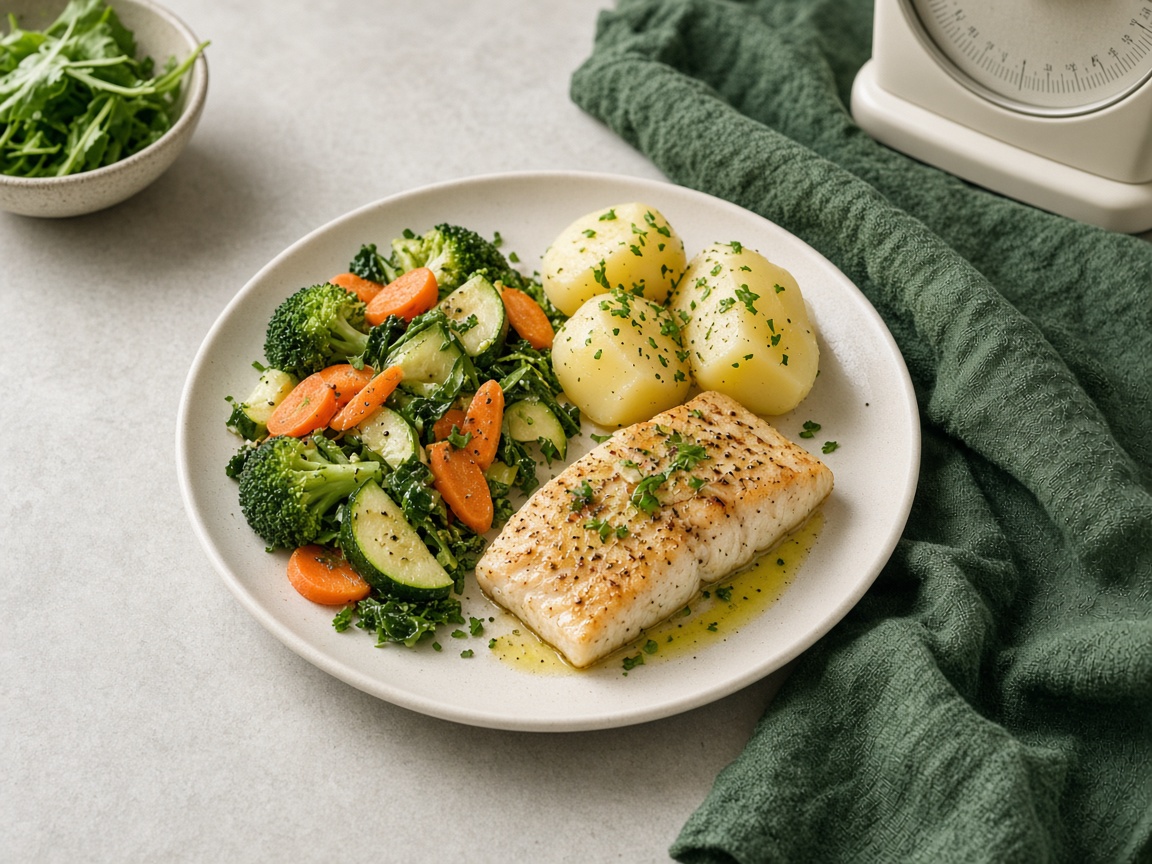
A plate can coincide with balance, or it can only look well built. Oil in the pan, sauce, and a drink easily stay outside the frame, even though they carry energy. The fact sheet does not offer a score for one dish and then close the subject of weight.
Beside energy, the same sheet places fruit and vegetables, free sugars, total fat, saturated fat, trans fat, and salt. Those lines describe the quality of intake. They do not replace the pair of intake and expenditure. A day can sit close to a familiar plate and still fail to meet the energy that goes out.
Expenditure is not a food coupon
Expenditure in this sentence is what intake is compared with, not permission to add a portion after a walk. For adults 18–64, WHO names at least 150–300 minutes of moderate aerobic activity a week, or 75–150 minutes vigorous, plus muscle-strengthening on two or more days. CDC keeps at least 150 minutes of moderate aerobic activity for adults, and muscle-strengthening on two or more days as well.
Some activity is better than none, and sedentary time is worth cutting. Those minutes describe the week’s movement and are not converted here into kilocalories of supper. From age 65, WHO adds balance and coordination on three or more days to the same guide: that is still about movement, not about an extra serving.
What the sheet does not prescribe
The fact sheet has no single kilocalorie figure for every adult, and this article does not derive one. Weight, as CDC writes, is affected by medicines, illness, stress, genes, hormones, environment, and age, so a population sentence is not a personal prescription. Questions about weight and medicines stay with a clinician.
A log of food and drinks shows what ordinary intake looked like, but it does not measure expenditure in a laboratory. If illness already sets a food plan, the WHO sentence does not replace that plan. Balance here is a way to read days in a row, not a promise that one well-built plate will hold weight by itself.
What this text draws on
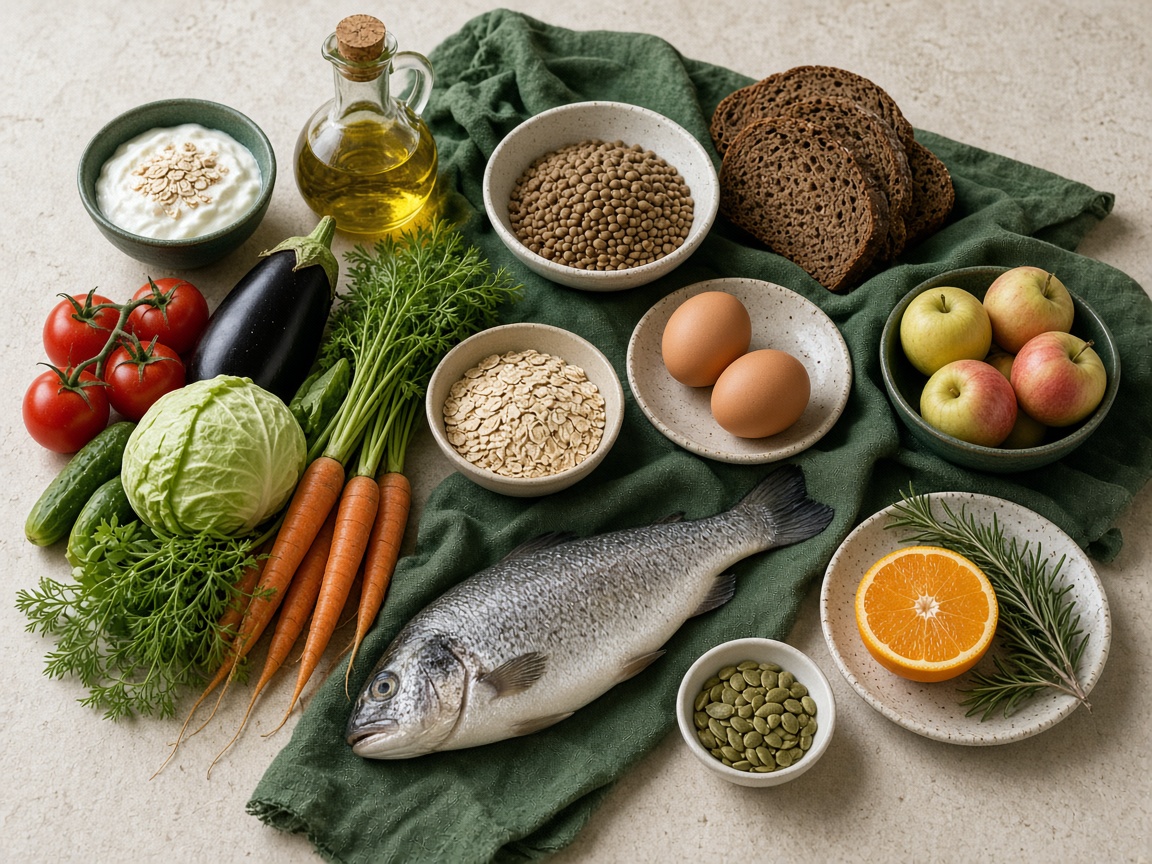
- WHO Healthy diet fact sheet: energy intake in balance with expenditure; fruit and vegetables ≥400 g/day; free sugars <10% of energy (below 5% for further benefit); fat <30%; saturated fat <10%; trans fat <1%; salt <5 g/day; unsaturated fats (fish, avocado, nuts, vegetable oils) preferred to saturated and industrial trans fats.
- WHO Physical activity fact sheet: adults 18–64 at least 150–300 minutes of moderate aerobic activity a week, or 75–150 minutes vigorous, plus muscle-strengthening on 2 or more days; some activity is better than none; sedentary time should be limited. From age 65, the same plus balance and coordination on 3 or more days.
- CDC, Adult Activity: at least 150 minutes of moderate aerobic activity a week and muscle-strengthening on 2 or more days.
- CDC, Steps for Losing Weight (January 17, 2025): a gradual pace of about 1 to 2 pounds a week is more likely to be kept than quicker loss; losing 20 pounds in 2 weeks is the example of an unrealistic goal. Modest loss, CDC’s example: 5% of 200 pounds is 10 pounds, can improve blood pressure, cholesterol, and blood sugar and could lower risk of heart disease, prediabetes, and type 2 diabetes — not a personal guarantee. Log food and drinks, activity, sleep, and stress. Goals are specific, two or three at a time; examples include water instead of a sugary drink, a 15-minute walk, a vegetable with supper. Setbacks are expected. Rewards are not food. Medicines, illness, stress, genes, hormones, environment, and age affect weight. Weight and medicine questions go to a clinician. Medicines and bariatric surgery are clinical options, not DIY.
A short paraphrase of open guides and reviews (WHO, national recommendations, peer‑reviewed summaries). Not a quotation and not a treatment protocol.
Short answers
Is energy balance a perfect lunch?
No. It is energy from food and drinks meeting expenditure across ordinary days. One successful lunch does not stand in for that run.
Can minutes of walking be traded for a larger supper?
This page does not make that trade. WHO and CDC minutes describe the week’s activity, and the fact sheet does not publish an exchange of minutes for food kilocalories.