Dinner does not have to repair the day
Dinner does not subtract what has already been eaten and drunk, and it is not obliged to pull the day inside the limits with one late dish. The check uses the whole sum: energy with expenditure, fruit and vegetables, free sugars, fat, and salt.

By dinner the sum already exists
By dinner the day already includes breakfast, lunch, snacks, and drinks, even when they are unpleasant to remember. In the WHO fact sheet, energy meets expenditure across that intake, not across the last plate. A late hunger does not erase the morning’s sugar and does not zero out the oil used at lunch.
The evening conversation therefore starts from what the sum already contains, not from how to repair the day. If vegetables were scarce, dinner can add one, and CDC does give a vegetable with supper as an example of a specific goal. That is an addition, not a subtraction.
The last plate does not subtract sugar
Free sugars are a share of the whole day’s energy, under 10%, with a share below 5% named as further benefit. An evening salad does not shrink that share if the day contained sugary drinks. It can move supper closer to vegetables, and that is all it does.
Fat and salt work the same way. Total fat under 30% of energy, saturated fat under 10%, trans fat under 1%, salt under 5 g a day. A plain piece of fish in the evening does not cancel a fatty lunch, and it does not grant permission to add salt “for taste” beyond what is already in the day. The limits do not run a trade between meals.
What actually gets checked
Beside fat and sugar stands the amount of fruit and vegetables, at least 400 g in the day. Dinner is often the last chance to add to that sum, but a zero in the morning and a zero at midday do not become a completed line because of one large bowl. Grams add up. They do not concentrate in the final hour.
The sodium line in the US guidelines, under 2,300 mg a day, is also read across the day, and this page does not convert it into grams of salt with a homemade formula. The two limits remain two documents. A log of food and drinks exists so that dinner does not have to argue with memory.
What dinner is still for
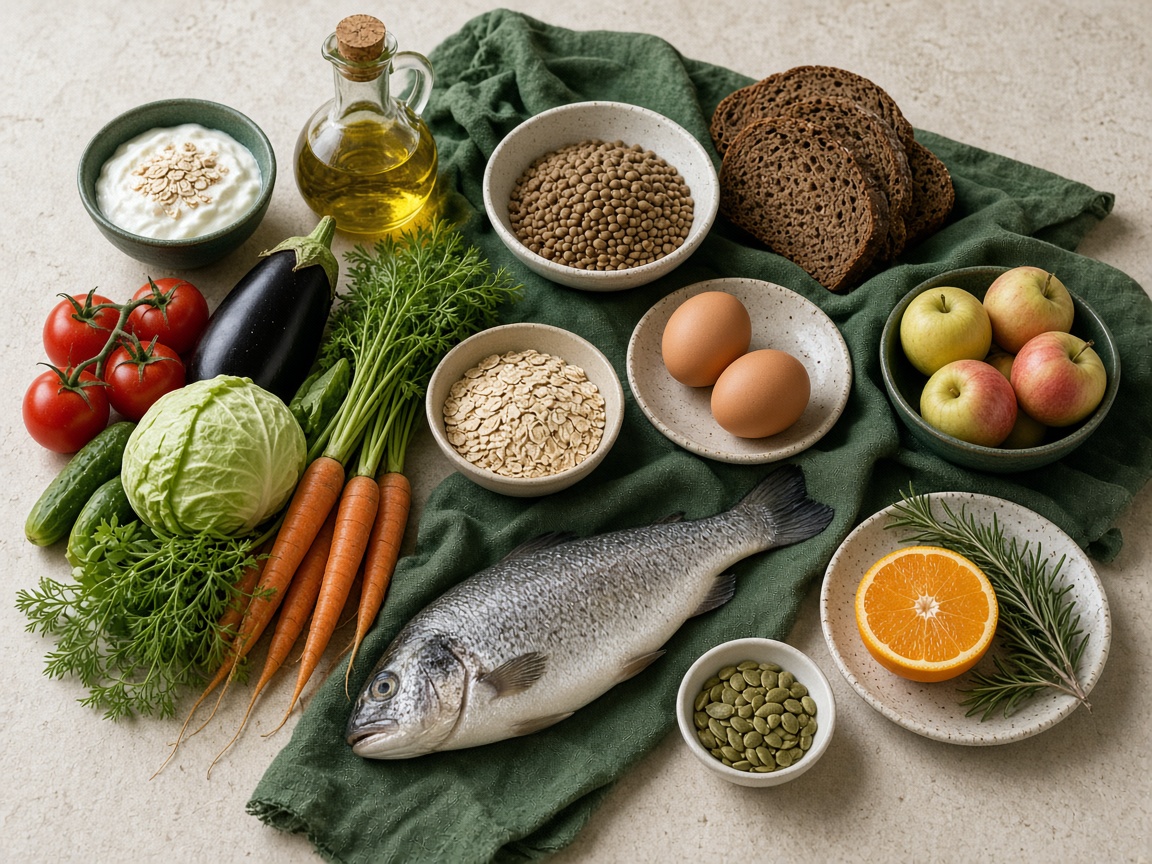
Dinner remains an ordinary meal. It can still hold a vegetable, a grain, a protein food, and a fat from the preferred unsaturated side: fish, vegetable oil, nuts, or avocado, inside the same shares. A household’s custom may make dinner the main meal of the day, and these texts do not forbid that.
The main meal does not receive a repair job. If the day has already moved far outside the limits, an honest note is more useful than a late punishment of hunger, which these pages do not prescribe. A setback is expected, and the next day starts again from ordinary food, not from an attempt to work off last night’s dinner.
What this text draws on
- WHO Healthy diet fact sheet: energy intake in balance with expenditure; fruit and vegetables ≥400 g/day; free sugars <10% of energy (below 5% for further benefit); fat <30%; saturated fat <10%; trans fat <1%; salt <5 g/day; unsaturated fats (fish, avocado, nuts, vegetable oils) preferred to saturated and industrial trans fats.
- CDC, Steps for Losing Weight (January 17, 2025): a gradual pace of about 1 to 2 pounds a week is more likely to be kept than quicker loss; losing 20 pounds in 2 weeks is the example of an unrealistic goal. Modest loss, CDC’s example: 5% of 200 pounds is 10 pounds, can improve blood pressure, cholesterol, and blood sugar and could lower risk of heart disease, prediabetes, and type 2 diabetes — not a personal guarantee. Log food and drinks, activity, sleep, and stress. Goals are specific, two or three at a time; examples include water instead of a sugary drink, a 15-minute walk, a vegetable with supper. Setbacks are expected. Rewards are not food. Medicines, illness, stress, genes, hormones, environment, and age affect weight. Weight and medicine questions go to a clinician. Medicines and bariatric surgery are clinical options, not DIY.
- Dietary Guidelines for Americans, 2020–2025, and USDA MyPlate: a nutrient-dense pattern shaped by culture and budget; added sugars <10% of calories from age 2; saturated fat <10%; sodium <2,300 mg/day; half the plate fruits and vegetables; half of grains whole; varied protein foods; low-fat or fat-free dairy or fortified soy. Drinking less is better than drinking more; not drinking is an option.
A short paraphrase of open guides and reviews (WHO, national recommendations, peer‑reviewed summaries). Not a quotation and not a treatment protocol.
Short answers
Can dinner repair a sugary day?
No. The free sugars are already part of the day’s energy, and the evening plate does not subtract them. Dinner can add a vegetable. It cannot erase the drink.
If dinner is the largest meal, does it outweigh the day?
No. Even the main meal stays part of the sum. Energy, fruit and vegetables, fat, and salt are read across the whole day.