
Which fat
The WHO fact sheet sets three ceilings at once: total fat under 30% of energy, saturated fat under 10%, trans fat under 1%. The preference goes to unsaturated fats from fish, avocado, nuts, and vegetable oils, rather than to saturated fats and industrial trans fats.
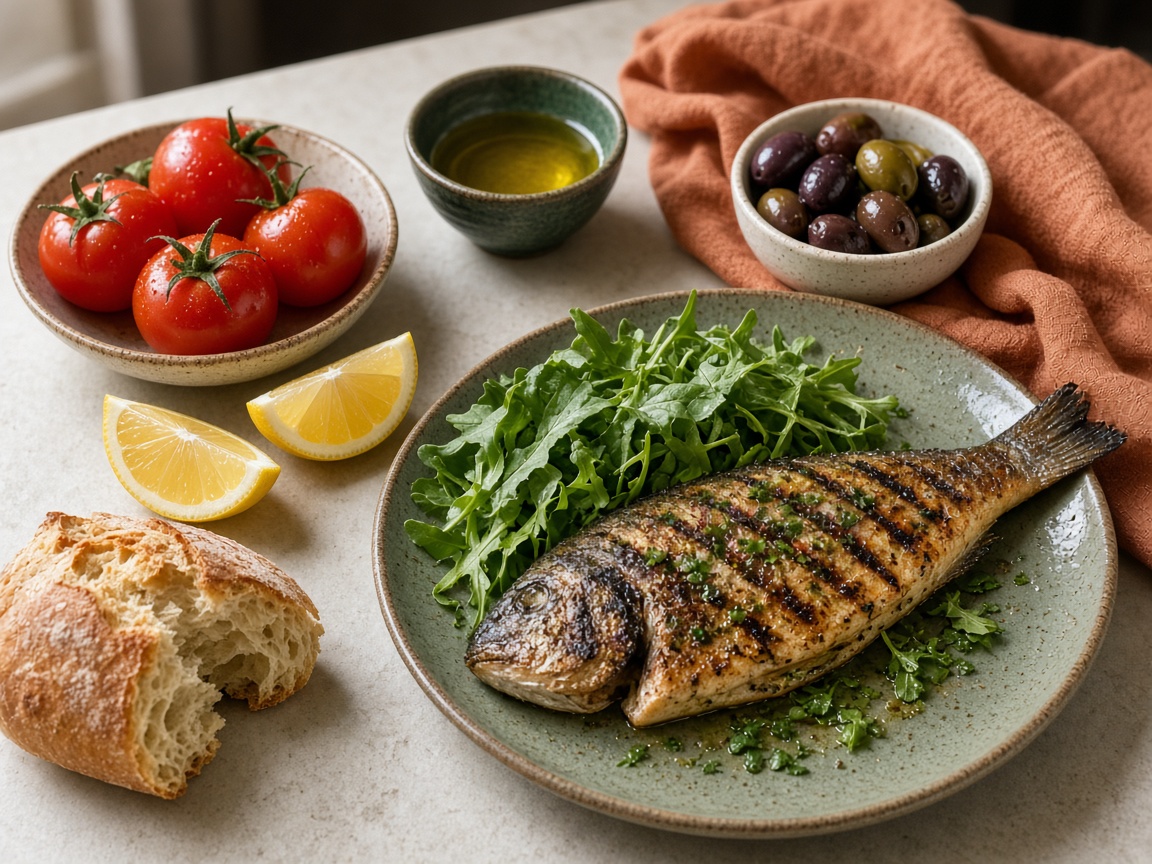
Three ceilings, not a ban on fat
Total fat under 30% of energy leaves fat a place in the day. Fish, a spoon of vegetable oil, avocado, and nuts are what occupy that place, if the day is not given over to a different fat. The fact sheet does not require zero fat, and an empty plate with no oil at all is not how the line is met.
The second ceiling is about kind: saturated fat under 10% of energy. The American guidelines repeat that same share of saturated fat, under 10%. The third ceiling is the narrowest: trans fat under 1% of energy, and the point is first of all the industrial trans fat of fried and packaged food.
Where an ordinary pan is shifted
The preferred side is named directly: fish, avocado, nuts, vegetable oils. On the other side is saturated fat, which in ordinary cooking more often comes with fatty meat, butter, cream, and cheese, and industrial trans fats. The shift is a change of source in habitual dishes, not a separate “fat day.”
Oil used for frying or dressing still sits inside the total ceiling under 30%. A preferred kind of fat does not make the portion invisible to energy balance. Nuts with tea and oil on a salad are written down with the rest of the food, or the fat share is counted only on what stayed on the fork.
Where trans fat and saturated fat overlap
The sheet links industrial trans fats with fried and packaged food. Those foods are often salty as well, but salt under 5 g is a separate line, and it is not a translation of the fat share. One package of biscuits can spend the narrow trans-fat ceiling, the day’s salt, and added sugar.
The DASH plan describes the same fork from its own side: less fatty meat, sweets, and sugary drinks, more fish, nuts, and vegetable oils. The plan was studied for blood pressure, not as permission to use oils without a ceiling. This page does not take millimeters of mercury, or a weight-loss promise, from that trial.
The share is read across the week
The three ceilings are about the habitual share of energy, not about one festive dish with sauce. If weekdays rest on deep-frying and fatty meat, vegetable oil on a Sunday salad does not rewrite the share. If weekdays rest on fish, beans, and a moderate amount of oil, a single rich supper is visible as an exception, not as the whole week.
A label helps compare two products by the serving, remembering that a package can contain several servings and that a serving is not always 100 g. This article does not prescribe grams of oil per person and does not translate 30%, 10%, and 1% into spoonfuls. With heart disease or with treatment, questions about fat and medicines stay with a clinician, as do other questions about weight.
What this text draws on
- WHO Healthy diet fact sheet: energy intake in balance with expenditure; fruit and vegetables ≥400 g/day; free sugars <10% of energy (below 5% for further benefit); fat <30%; saturated fat <10%; trans fat <1%; salt <5 g/day; unsaturated fats (fish, avocado, nuts, vegetable oils) preferred to saturated and industrial trans fats.
- Dietary Guidelines for Americans, 2020–2025, and USDA MyPlate: a nutrient-dense pattern shaped by culture and budget; added sugars <10% of calories from age 2; saturated fat <10%; sodium <2,300 mg/day; half the plate fruits and vegetables; half of grains whole; varied protein foods; low-fat or fat-free dairy or fortified soy. Drinking less is better than drinking more; not drinking is an option.
- NHLBI DASH Eating Plan: vegetables, fruits, whole grains, low-fat dairy, fish, poultry, beans, nuts, vegetable oils; less fatty meat, sweets, and sugary drinks; sodium 2,300 mg or a 1,500 mg version. Studied for blood pressure, not as a crash plan and not as permission to eat everything.
- FDA Nutrition Facts: energy is stated per labeled serving; a package can contain several servings. A labeled serving is not always 100 g.
- CDC, Steps for Losing Weight (January 17, 2025): a gradual pace of about 1 to 2 pounds a week is more likely to be kept than quicker loss; losing 20 pounds in 2 weeks is the example of an unrealistic goal. Modest loss, CDC’s example: 5% of 200 pounds is 10 pounds, can improve blood pressure, cholesterol, and blood sugar and could lower risk of heart disease, prediabetes, and type 2 diabetes — not a personal guarantee. Log food and drinks, activity, sleep, and stress. Goals are specific, two or three at a time; examples include water instead of a sugary drink, a 15-minute walk, a vegetable with supper. Setbacks are expected. Rewards are not food. Medicines, illness, stress, genes, hormones, environment, and age affect weight. Weight and medicine questions go to a clinician. Medicines and bariatric surgery are clinical options, not DIY.
A short paraphrase of open guides and reviews (WHO, national recommendations, peer‑reviewed summaries). Not a quotation and not a treatment protocol.
Short answers
Does fat have to be removed completely?
No. WHO limits total fat to a share under 30% of energy and asks for a shift toward unsaturated sources. The sheet does not require zero fat.
Can nuts be eaten without a limit because the fat is unsaturated?
No. Unsaturated fat is preferred, but it still sits inside total fat under 30% and inside the day’s energy. Preferring the kind does not cancel the share.
