
Gaining and the heart: the fat and salt limits stay
A surplus does not cancel the WHO fact sheet or the DASH plan. Saturated fat stays under 10% of energy, trans fat under 1%, salt under 5 g, and sodium in the U.S. guidelines under 2,300 mg. NHLBI builds a plate from that pattern and studied it for blood pressure: vegetables, fruits, whole grains, low-fat dairy, fish, poultry, beans, nuts, vegetable oils.
What should carry the calories
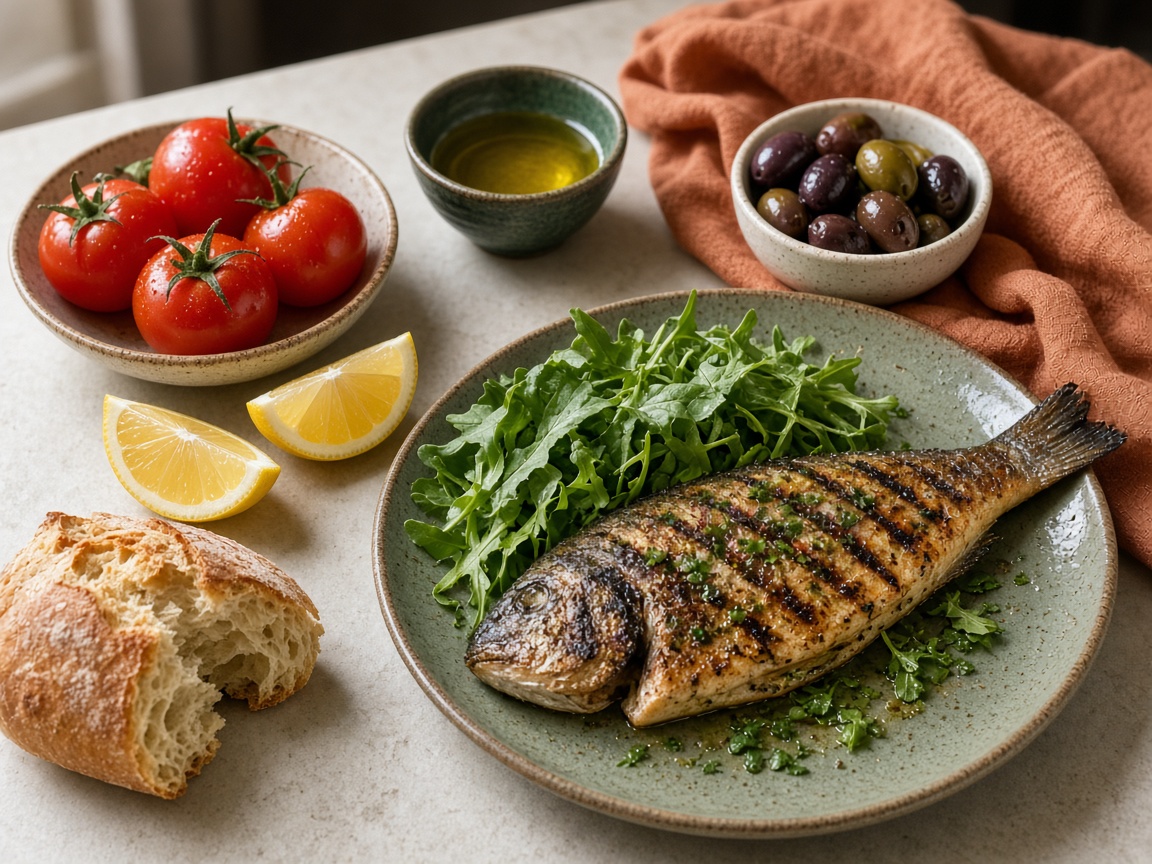
Olive and other vegetable oils, fish, nuts, and avocado provide energy and are not industrial trans fat. Fatty sausage, pastries made with palm oil, and sugary drinks provide calories at the cost of saturated fat, trans fat, sugar, and salt — the things WHO says to cut.
DASH does not ban meat. It shifts the plate toward poultry, fish, and beans and limits fatty meat and sweets. Someone whose blood pressure is already high should agree a gain with a clinician, not copy a “dirty” gym bulk.
Salt and the scale
WHO’s salt limit under 5 g and the Dietary Guidelines’ sodium limit under 2,300 mg are about blood pressure and habit, not about “water that counts as muscle.” A salty dinner raises the next morning’s weight. That is not proof the surplus worked.
NHLBI describes the 1,500 mg sodium DASH version as the stricter one. An article should not choose between 2,300 and 1,500 for a person who is ill. That is a clinician’s instruction.
Sweets as a way to “catch up”
WHO free sugars stay under 10% of energy, and a cut below 5% is described as a further benefit. A dessert every night “because this is a gain” spends that share before oil and grain do.
CDC gives a short goal as an example: drink water instead of a sugary drink. For a gain, water is not the problem if the energy came from food.
Who should not build a gain from an article
Coronary disease, heart failure, severe hypertension, lipids already under treatment — these are not the audience for a universal surplus. CDC asks you to discuss weight and medicines with a clinician.
A food log is useful in that conversation as a fact: what was on the plate. It does not replace a lipid test.
What this text draws on
- WHO Healthy diet fact sheet: energy intake in balance with expenditure; fruit and vegetables ≥400 g/day; free sugars <10% of energy (below 5% for further benefit); fat <30%; saturated fat <10%; trans fat <1%; salt <5 g/day.
- NHLBI DASH Eating Plan: vegetables, fruits, whole grains, low-fat dairy, fish, poultry, beans, nuts, and vegetable oils; less fatty meat, sweets, and sugary drinks; sodium 2,300 mg or a 1,500 mg version. Studied for blood pressure, not as a license to eat everything.
- Dietary Guidelines for Americans, 2020–2025, and USDA MyPlate: nutrient-dense foods; added sugars <10% of calories from age 2; saturated fat <10%; sodium <2,300 mg/day; half the plate fruits and vegetables, half of grains whole, varied protein foods, low-fat or fat-free dairy or fortified soy.
- CDC, Steps for Losing Weight (January 17, 2025): a gradual pace of about 1 to 2 pounds a week is more likely to be kept than quicker loss; medicines, conditions, stress, genes, hormones, environment, and age also affect weight; ask a clinician when unsure.
A short paraphrase of open guides and reviews (WHO, national recommendations, peer‑reviewed summaries). Not a quotation and not a treatment protocol.
Short answers
Are nuts and oil bad for the heart during a gain?
WHO recommends unsaturated fats in place of saturated and trans fats. Closing the gap with sausage and industrial pastry is the problem.
Can you ignore salt if the goal is weight?
No. The WHO salt limit and the U.S. sodium limit do not depend on whether you are losing or gaining.
