
25 g from food
The WHO carbohydrate guideline of 2023 names at least 25 g of fiber a day for adults, and the source of that fiber is food. A powder poured onto an empty plate does not meet the line, because the line sits beside ordinary plant food, not in place of it.
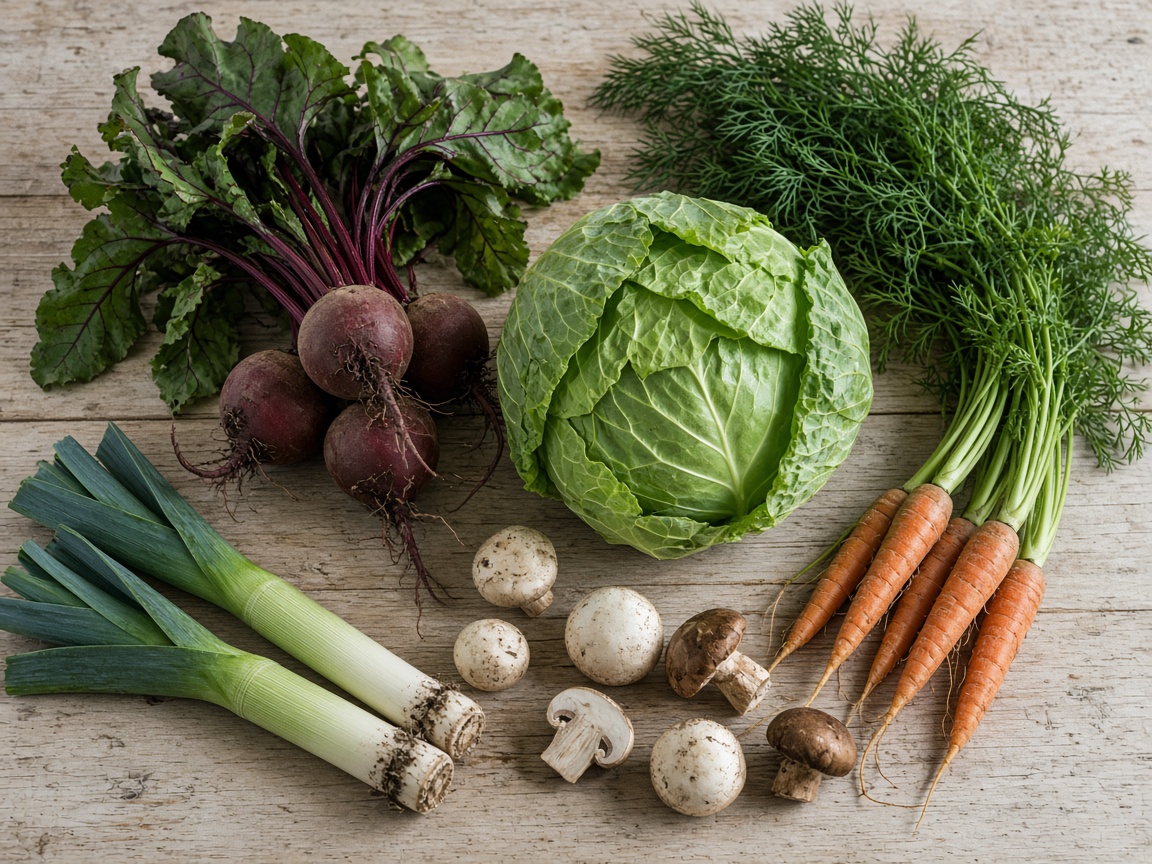
The 2023 line says “from food”
Twenty-five grams is a daily guide for adults, not a dose of a supplement and not a task for one meal. Fiber comes with vegetables, fruit, beans, and whole grains, the foods the other lines already ask to put on the plate. A separate powder in water replaces neither the 400 g of fruit and vegetables nor half the plate.
The phrase “from food” matters because it keeps fiber inside the diet, rather than moving it into a jar. If a day is a sugary drink, white bread, and fried food without vegetables, a powder does not turn that day into the diet in the guideline. The food that contains fiber comes first, and the 25 g is what that food adds up to.
Which ordinary dishes carry it
Oats, beans or lentils, an apple with the skin, a vegetable soup, and whole-grain bread are different contributions to one daily sum. This article assigns none of them its own gram share: the facts contain only the overall floor of 25 g from food. The point of the list is that fiber is spread through the day, not gathered into one heroic salad.
Frozen vegetables are still vegetables, and they carry fiber too when they are cooked into food rather than left in the freezer for show. Beans can fill the protein place on the plate and the plant part of the day at the same time. That overlap helps a budget, but it does not mean one bowl of beans equals the whole floor.
A powder does not repair an empty plate
A supplement can sit on a shelf, but the 2023 guideline describes fiber from food. A plate with no vegetables, fruit, beans, or whole grain stays empty in the sense of this line, even if a powder was dissolved in a glass beside it. The 25 g floor was not written as a way to avoid cooking.
Whole fruit and juice part company here the same way they do in the sugar discussion. Fruit carries fiber and goes toward the 400 g. Juice belongs with free sugars and does not take the fruit’s fiber with it. Replacing porridge and an apple with a sweet drink plus a powder loses both the food the guideline is talking about and the sugar limit.
Fiber does not cancel the other limits
A day with 25 g of fiber is still checked against energy, free sugars, fat, and salt. Nuts and vegetable oil can sit beside plant food, but their fat stays inside the share under 30%. Salt in a vegetable soup still counts toward 5 g of salt and does not become harmless because the soup contains fiber.
The safe protein level of 0.83 g per kg of body weight per day is a separate population guide and is not replaced by fiber. Kidney disease changes protein through a clinician, and a large serving of bran does not close that conversation. Fiber from food is one line of the diet, read together with the others, not instead of them.
What this text draws on
- WHO carbohydrate guideline, 2023: at least 25 g of fiber a day for adults, from food.
- WHO Healthy diet fact sheet: energy intake in balance with expenditure; fruit and vegetables ≥400 g/day; free sugars <10% of energy (below 5% for further benefit); fat <30%; saturated fat <10%; trans fat <1%; salt <5 g/day; unsaturated fats (fish, avocado, nuts, vegetable oils) preferred to saturated and industrial trans fats.
- Dietary Guidelines for Americans, 2020–2025, and USDA MyPlate: a nutrient-dense pattern shaped by culture and budget; added sugars <10% of calories from age 2; saturated fat <10%; sodium <2,300 mg/day; half the plate fruits and vegetables; half of grains whole; varied protein foods; low-fat or fat-free dairy or fortified soy. Drinking less is better than drinking more; not drinking is an option.
- FAO/WHO/UNU, 2007: the safe protein level for adults is 0.83 g per kg body weight per day. A population figure, not a muscle-gain plan. Kidney disease changes it through a clinician.
A short paraphrase of open guides and reviews (WHO, national recommendations, peer‑reviewed summaries). Not a quotation and not a treatment protocol.
Short answers
Is a spoon of fiber in water enough?
No. The 2023 guideline says at least 25 g a day from food. A powder on an empty plate does not replace vegetables, fruit, beans, and whole grain.
Does one apple cover 25 g?
This article does not assign fiber grams to individual foods. The floor belongs to the day and adds up from varied plant food, not from one piece of fruit.