400 g of fruit and vegetables
The WHO fact sheet gives fruit and vegetables a daily amount: at least 400 g. The line is fruit and vegetables as the day’s food, and starchy tubers do not substitute for that line in the WHO wording.

The grams belong to the day
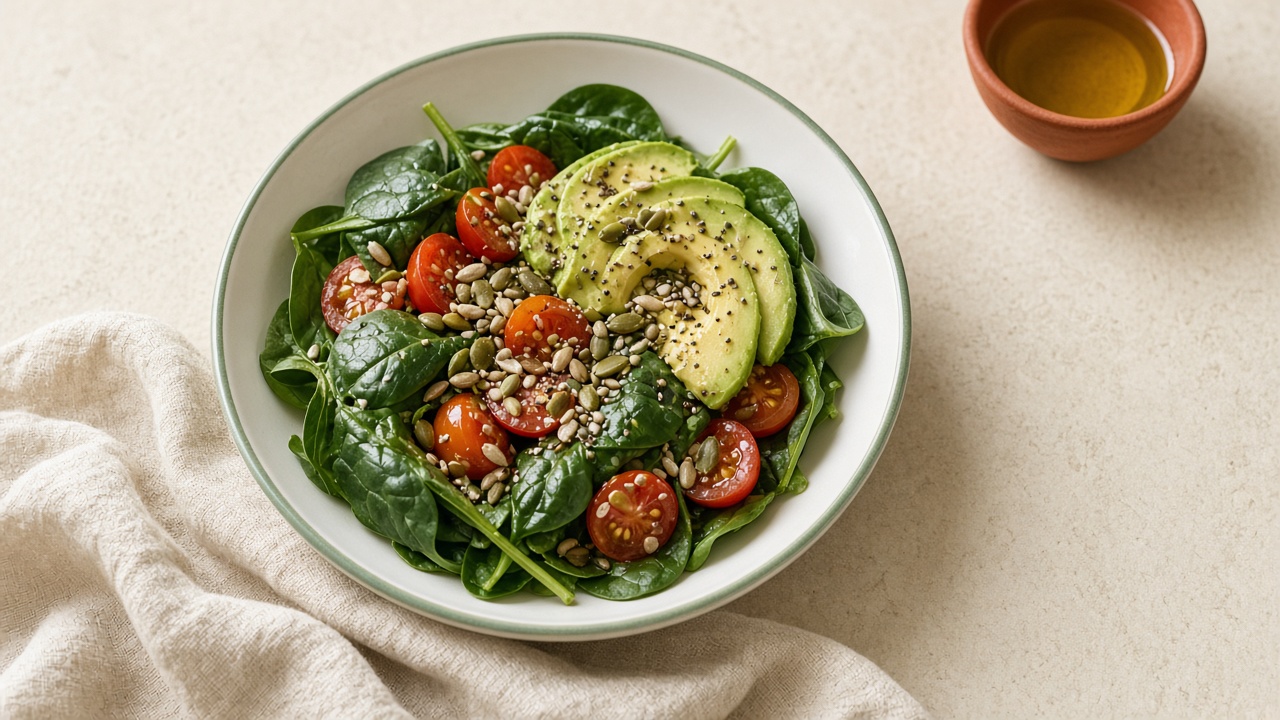
Four hundred grams is the day’s sum, not the size of one salad and not a decoration on the plate. Vegetables in a soup, a stewed side, a salad at lunch, and a piece of fruit later in the day add up. A large Sunday salad does not cover the line for the days when vegetables were barely there.
Half the plate in MyPlate is a different measure, the share of one meal. It helps build a lunch, but it is not equal to 400 g and does not replace the daily count. Several ordinary portions across the day sit closer to the WHO text than one showpiece meal. This article does not translate “half” into grams.
What the line is pointing at
The line takes vegetables and fruit: cabbage, carrot, greens, tomato, an apple, berries, a frozen vegetable mix if it was eaten. The form can be plain. What matters is the food, not how rare the product is and not whether it was served apart from the main dish.
Juice is not placed in this sum. It belongs with free sugars, even if the package shows a picture of fruit. Whole fruit remains fruit, and it also carries fiber, about which a separate guideline says at least 25 g from food. Dried fruit with added sugar needs a look at the sugar, not an automatic credit of the whole package toward the 400 g.
Tubers do not stand in for this line
Potatoes and other starchy tubers are not, in the WHO wording, a substitute for those 400 g of fruit and vegetables. Potato can be part of the plate as a starchy food, beside grain, and it provides energy. It does not close the vegetable line by taking up a lot of room on the plate.
A plate whose half is fried potato meets neither the vegetable half of MyPlate nor the day’s 400 g. Frying also raises the fat question: total fat under 30%, and the industrial trans fat of deep-frying under 1%. A vegetable side beside the potato is what the line is asking for, not the potato in place of the side.
How the sum adds up without heroics
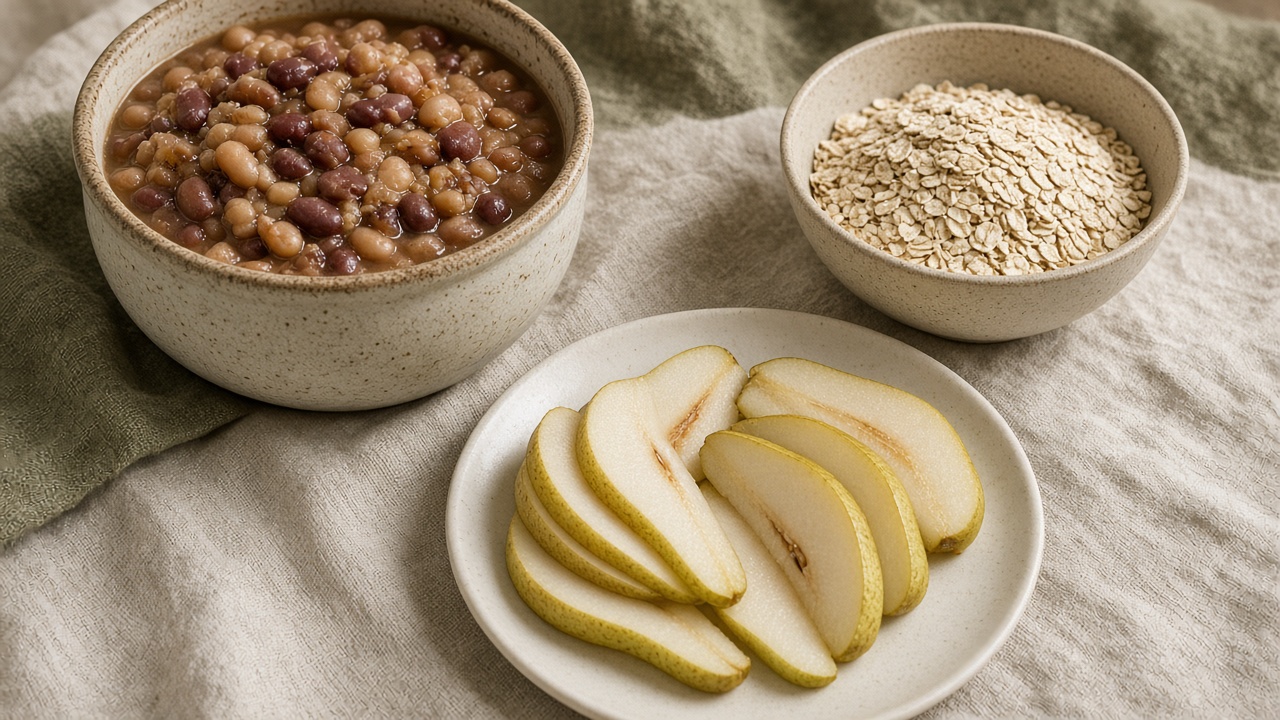
A day can look like this: vegetables in the soup, a salad or stewed vegetables at lunch, fruit with tea or with yogurt. Those are three ordinary places, not a separate project. Frozen vegetables and beans with vegetables count when they are eaten, and they also hold to a budget, which the guidelines explicitly allow to be taken into account.
Salt in a vegetable dish still goes toward the limit under 5 g of salt and is not cancelled by the volume of vegetables. Sodium on the label of a ready-made vegetable dish is a different line, under 2,300 mg, and this page does not set it equal to 5 g of salt. A few days of notes show whether the sum was closer to 400 g on weekdays, not only on the shopping day.
What this text draws on
- WHO Healthy diet fact sheet: energy intake in balance with expenditure; fruit and vegetables ≥400 g/day; free sugars <10% of energy (below 5% for further benefit); fat <30%; saturated fat <10%; trans fat <1%; salt <5 g/day; unsaturated fats (fish, avocado, nuts, vegetable oils) preferred to saturated and industrial trans fats.
- Dietary Guidelines for Americans, 2020–2025, and USDA MyPlate: a nutrient-dense pattern shaped by culture and budget; added sugars <10% of calories from age 2; saturated fat <10%; sodium <2,300 mg/day; half the plate fruits and vegetables; half of grains whole; varied protein foods; low-fat or fat-free dairy or fortified soy. Drinking less is better than drinking more; not drinking is an option.
- WHO carbohydrate guideline, 2023: at least 25 g of fiber a day for adults, from food.
A short paraphrase of open guides and reviews (WHO, national recommendations, peer‑reviewed summaries). Not a quotation and not a treatment protocol.
Short answers
Does potato count toward the 400 g of fruit and vegetables?
No. In the WHO wording, starchy tubers do not substitute for that line. Potato can be on the plate as a starchy food, while fruit and vegetables are counted separately.
Is one large salad a week enough?
No. Four hundred grams is a day’s amount. One successful day does not cover the days when fruit and vegetables were barely there.