
Guests
A guest evening is not the same as a weekday and does not have to pretend to be a perfect day. One specific goal is enough for it, a setback counts as expected, and the return happens on the next ordinary day, without a food reward and without paying the table back by going hungry.
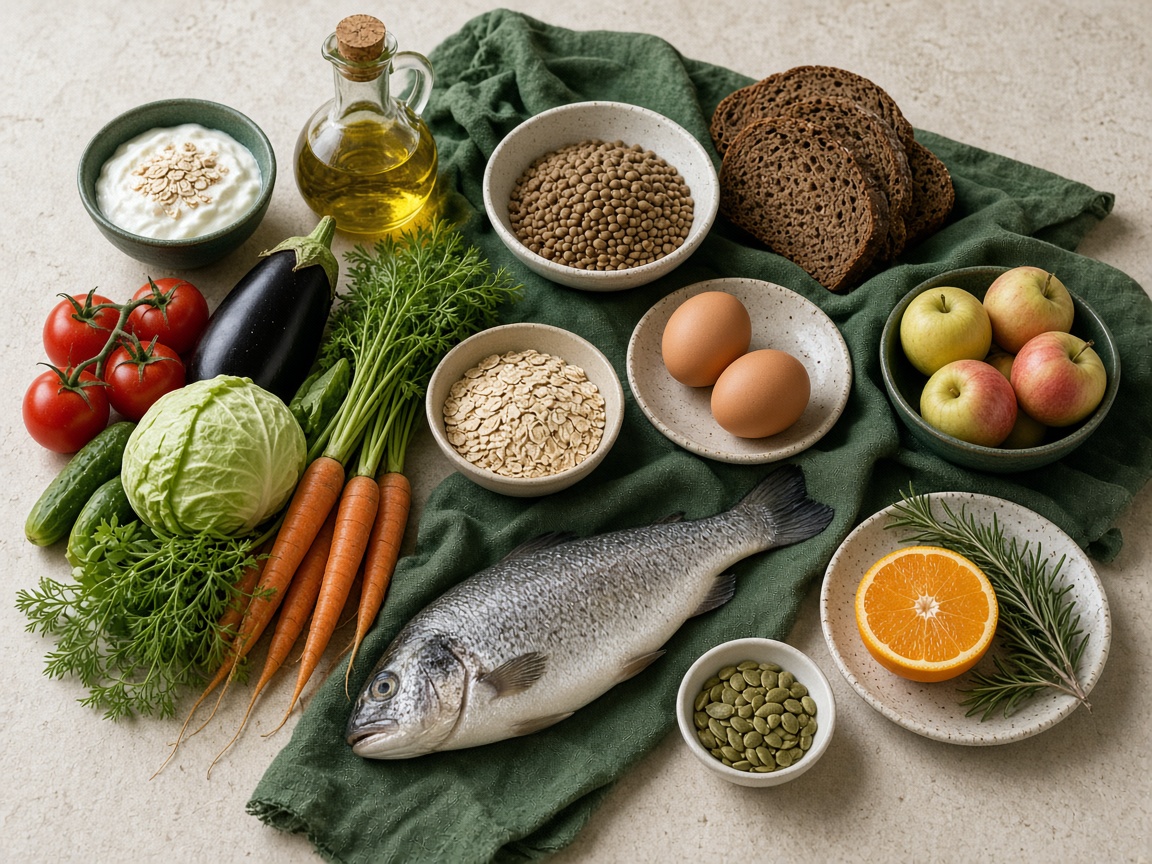
A table that is not the model for the week
Guests assemble a different table: more dishes, someone else’s salt, drinks that do not sit together on a weekday. The WHO fact sheet still describes habitual energy and habitual limits. It does not demand that a celebration disappear. One evening becomes neither the proof of the diet nor its cancellation.
Treating that table as the collapse of the weekdays does not help. CDC states outright that setbacks are expected, and that weight depends on more than one plate: medicines, illness, stress, genes, hormones, environment, and age all affect it. A guest dinner lands in the environment and the stress of the day, but this article does not turn that list into hormone figures and does not prescribe a compensation.
One specific goal for the evening
In an ordinary plan, CDC suggests two or three specific goals at a time, with examples such as water instead of a sugary drink, a fifteen-minute walk, or a vegetable with supper. A guest evening is a poor moment to launch all three from scratch. One clear goal is enough: for example, keep the drink in view and write it down, or put a vegetable beside the main dish.
The goal is named before the meal, briefly, and in a way that can be checked. “Eat perfectly” is not a goal, because it cannot be marked in a note. “Skip a second sugary drink” or “start with a vegetable” can be marked. The other dishes remain the evening’s food, not an exam.
A setback is already written into the text
Even the one goal may not be met, and that does not break the CDC page: setbacks are expected there. An evening with more sweetness, salt, or alcohol than intended is written down as something that happened, not as a reason to erase the week. Alcohol, if it was there, stays inside the line that drinking less is better than drinking more, and not drinking at all remains an available choice rather than a fine for the table.
The reward for meeting the goal should not be food. CDC says this directly: rewards are not food. A piece of cake “because the vegetable came first” does not follow from the text. The reverse punishment, skipping the next meal, does not follow either, and these pages do not prescribe hunger as payment.
The return on the next day
The next ordinary day brings back the usual food: fruit and vegetables, grains, varied protein foods, fat closer to the unsaturated side, salt again inside 5 g for the day. There is no need to “clear” the table with a cleansing menu, which these documents do not contain. The return is a repeat of weekdays, not a ritual to undo the guests.
A note on the guest evening is useful because it shows the drinks and the extra salt that memory smooths over. It does not grade character, and it does not require the next day to cut energy by an invented amount. If weight and how a person feels after a run of such evenings already involve a medicine or an illness, the questions go to a clinician, not to one more household ban.
What this text draws on
- CDC, Steps for Losing Weight (January 17, 2025): a gradual pace of about 1 to 2 pounds a week is more likely to be kept than quicker loss; losing 20 pounds in 2 weeks is the example of an unrealistic goal. Modest loss, CDC’s example: 5% of 200 pounds is 10 pounds, can improve blood pressure, cholesterol, and blood sugar and could lower risk of heart disease, prediabetes, and type 2 diabetes — not a personal guarantee. Log food and drinks, activity, sleep, and stress. Goals are specific, two or three at a time; examples include water instead of a sugary drink, a 15-minute walk, a vegetable with supper. Setbacks are expected. Rewards are not food. Medicines, illness, stress, genes, hormones, environment, and age affect weight. Weight and medicine questions go to a clinician. Medicines and bariatric surgery are clinical options, not DIY.
- WHO Healthy diet fact sheet: energy intake in balance with expenditure; fruit and vegetables ≥400 g/day; free sugars <10% of energy (below 5% for further benefit); fat <30%; saturated fat <10%; trans fat <1%; salt <5 g/day; unsaturated fats (fish, avocado, nuts, vegetable oils) preferred to saturated and industrial trans fats.
- Dietary Guidelines for Americans, 2020–2025, and USDA MyPlate: a nutrient-dense pattern shaped by culture and budget; added sugars <10% of calories from age 2; saturated fat <10%; sodium <2,300 mg/day; half the plate fruits and vegetables; half of grains whole; varied protein foods; low-fat or fat-free dairy or fortified soy. Drinking less is better than drinking more; not drinking is an option.
A short paraphrase of open guides and reviews (WHO, national recommendations, peer‑reviewed summaries). Not a quotation and not a treatment protocol.
Short answers
Do guests require weekday eating?
No. The evening does not have to copy the weekday plan. One specific goal is enough, a setback counts as expected, and the return is the next ordinary day.
What is the reward after a restrained evening?
Not food. CDC places the reward outside food. The next day simply returns to an ordinary plate, without paying the evening back by going hungry.

