A shift and a trip
A night shift and a trip do not cancel the limits on salt, sugar, and fat: those limits describe the food a person can actually get. WHO still looks at whether energy from food and drinks meets expenditure, not at whether the person is at home or on the road.

What can be assembled away from one’s own kitchen
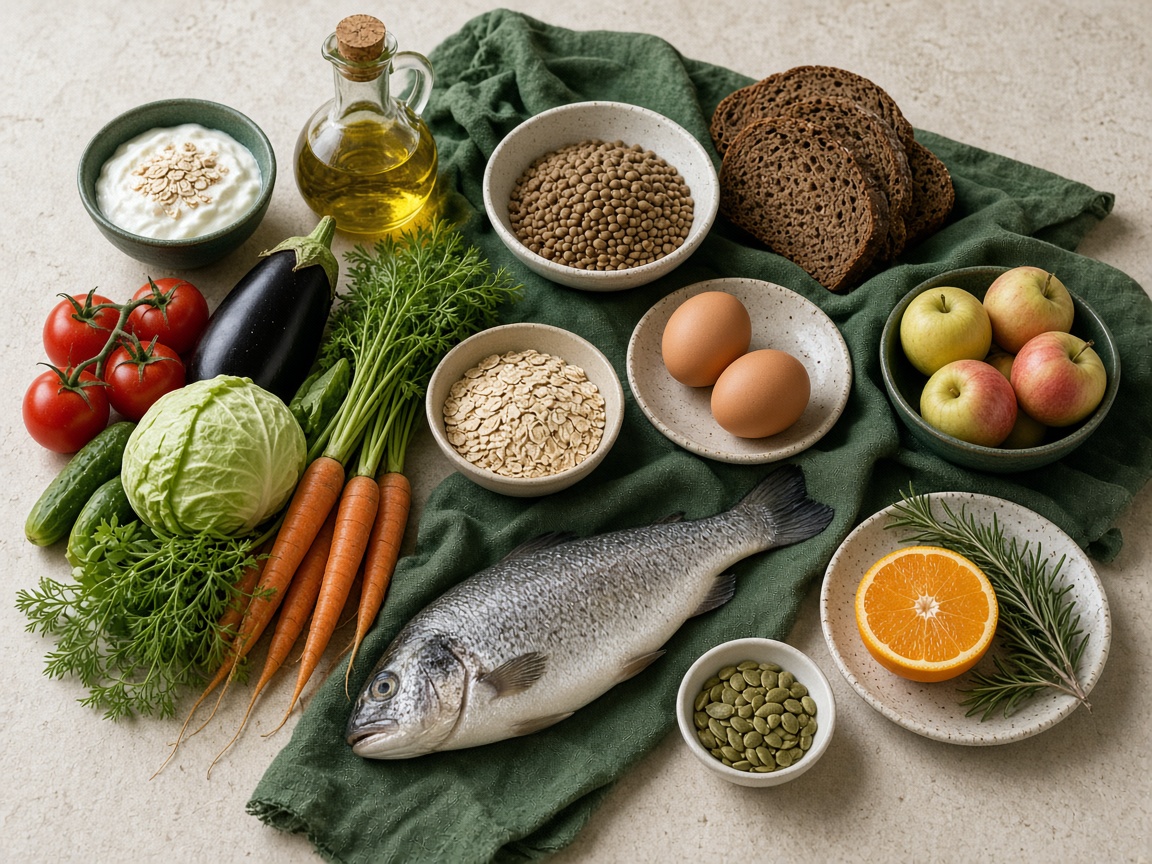
MyPlate is recognizable here too: a vegetable or a fruit, grain that is preferably whole, a protein food, a drink without extra sugar. A canteen, a station, and a fuel stop rarely offer a perfect half plate, but an apple, plain yogurt, and bread with fish or beans sit closer to the text than sweet pastry alone. Culture and budget stay in the guidelines, and food on the road can still be one’s own.
The vegetable and fruit amount is at least 400 g a day, and a starchy tuber does not replace it. Fries at a fuel stop do not close that line. A frozen or long-familiar vegetable a person brings along still counts. Adult fiber is still taken from food, at least 25 g, not from a powder in a bag instead of lunch.
A drink and the salt are easier to miss on the road
Sweet coffee, juice, and soda on a shift enter free sugars and the day’s energy. Water instead of a sugary drink is a ready-made CDC goal, and on the road it is more concrete than at home, because there are fewer forks in the choice. A bottle label can hold several servings. Finishing it is not “one serving on the way.”
Ready food is often salty. Salt under 5 g a day and sodium under 2,300 mg remain different sentences. A sausage bun and noodles from a cup spend them before a person sits down to an ordinary supper. Industrial trans fat under 1% and saturated fat under 10% do not wait for the return to one’s own kitchen either. Writing down what happened on the road is more honest than reconstructing the day from memory at night.
Sleep and the sitting time of a shift
CDC ties a weight log to more than food: activity, sleep, and stress enter it. For sleep, that same page names a regular bedtime and waking time, caffeine kept out of the afternoon and evening, and screens off at least thirty minutes before bed. A night shift does not cancel those tips, and it also does not turn the article into a shift roster. A number for “how long to sleep after a night” is not on the sheet.
WHO describes movement as at least 150–300 minutes of moderate activity a week or 75–150 vigorous, plus strength on two or more days. Some activity is better than none, and sedentary time is worth limiting. A shift at the wheel or at a screen does not issue a food coupon for being tired. A short walk remains activity, even when it is not a workout with a name.
When the road is neither an excuse nor a diagnosis
Two or three goals for such a week can be small: a vegetable of one’s own in the bag, water instead of sweet coffee, the drink written down at once rather than at night. A setback is expected, especially when the schedule breaks. The reward is not food. One careful day after the return does not erase four days of unlogged drinks.
Chest pain, dizziness, blood, vomiting, unexplained weight loss, and questions about medicines go to a clinician, whether the person is on a trip or at home. This article does not permit skipping food for a whole shift and does not prescribe a night meal. Pregnancy and adolescence are not copied from an adult paragraph about the road. A ScanDish photo stays a draft until the meal and the day are confirmed, and a station counter does not turn itself into grams.
What this text draws on
- WHO Healthy diet fact sheet: energy intake in balance with expenditure; fruit and vegetables ≥400 g/day; free sugars <10% of energy (below 5% for further benefit); fat <30%; saturated fat <10%; trans fat <1%; salt <5 g/day; unsaturated fats (fish, avocado, nuts, vegetable oils) preferred to saturated and industrial trans fats.
- Dietary Guidelines for Americans, 2020–2025, and USDA MyPlate: a nutrient-dense pattern shaped by culture and budget; added sugars <10% of calories from age 2; saturated fat <10%; sodium <2,300 mg/day; half the plate fruits and vegetables; half of grains whole; varied protein foods; low-fat or fat-free dairy or fortified soy. Drinking less is better than drinking more; not drinking is an option.
- CDC, Steps for Losing Weight (January 17, 2025): a gradual pace of about 1 to 2 pounds a week is more likely to be kept than quicker loss; losing 20 pounds in 2 weeks is the example of an unrealistic goal. Modest loss, CDC’s example: 5% of 200 pounds is 10 pounds, can improve blood pressure, cholesterol, and blood sugar and could lower risk of heart disease, prediabetes, and type 2 diabetes — not a personal guarantee. Log food and drinks, activity, sleep, and stress. Goals are specific, two or three at a time; examples include water instead of a sugary drink, a 15-minute walk, a vegetable with supper. Setbacks are expected. Rewards are not food. Medicines, illness, stress, genes, hormones, environment, and age affect weight. Weight and medicine questions go to a clinician. Medicines and bariatric surgery are clinical options, not DIY.
- WHO Physical activity fact sheet: adults 18–64 at least 150–300 minutes of moderate aerobic activity a week, or 75–150 minutes vigorous, plus muscle-strengthening on 2 or more days; some activity is better than none; sedentary time should be limited. From age 65, the same plus balance and coordination on 3 or more days.
- WHO carbohydrate guideline, 2023: at least 25 g of fiber a day for adults, from food.
A short paraphrase of open guides and reviews (WHO, national recommendations, peer‑reviewed summaries). Not a quotation and not a treatment protocol.
Short answers
Does a shift cancel the vegetable amount and the sugar limit?
No. Both the 400 g of vegetables and fruit and the free-sugar share describe the food a person can get, including away from home. Fries do not replace the vegetable amount, and a sugary drink enters the sugar share.
Does tiredness after a shift allow drinks to go unlogged?
No. Intake is food and drinks on any day. Writing the glass down is easier than reconstructing the shift from memory, and a short walk does not become a coupon for that glass.