
A lunch you can repeat
A lunch worth repeating is built from a vegetable or fruit, a grain, and a protein food, and the oil used to cook it goes into the day’s note. The plate is meant for an ordinary weekday, not for a single display meal, and it is still checked against energy, fat, and salt.
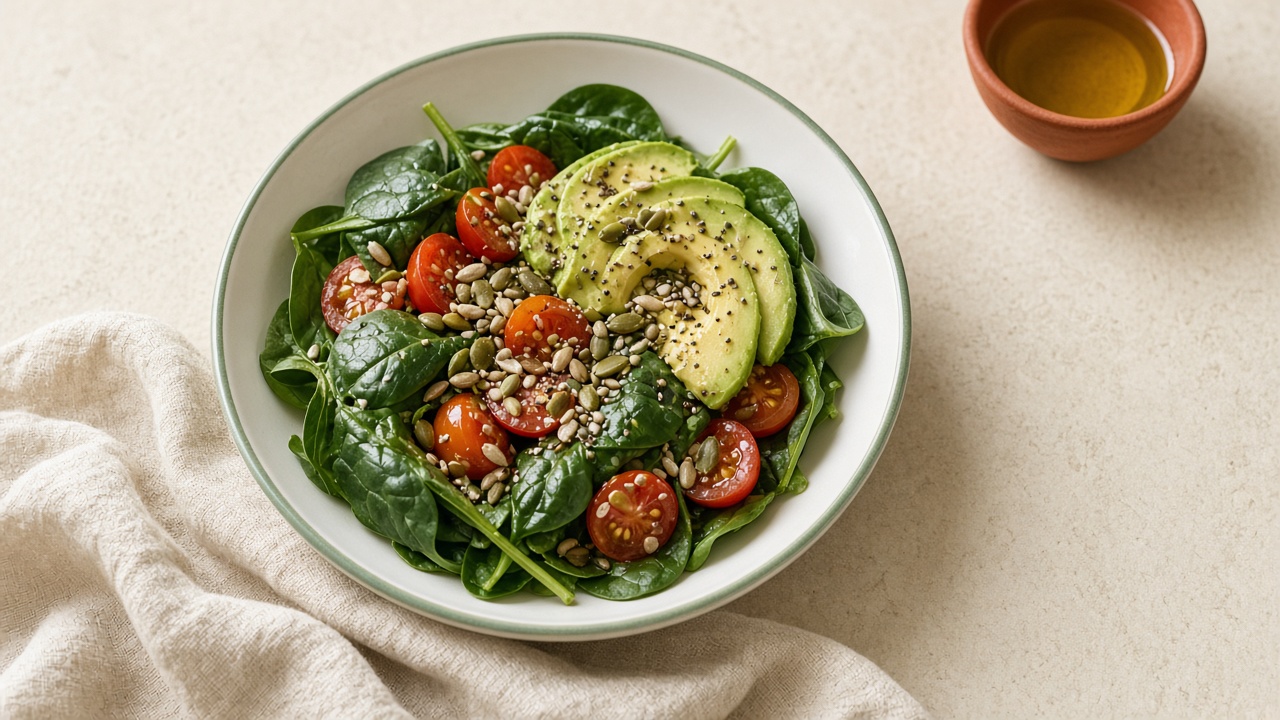
Food that is already around on weekdays
A lunch you can repeat starts from foods you do not have to hunt down for a single day. A vegetable, a grain or bread, and a protein food follow the same MyPlate picture as the rest of the pattern: half the plate closer to fruit and vegetables, the grain able to be whole, the protein foods kept varied. Culture and budget decide whether that is a bean soup, fish with grain, or an egg with salad.
A display lunch made of rare foods is weaker than this construction, because CDC describes goals as specific and small, two or three at a time, not as a perfect day. Repeatability is the way the vegetable survives the middle of the week. If the plate cannot be built again on Thursday, it is not doing the job this text gives to lunch.
Vegetable, grain, and a protein food
The vegetable on the lunch plate joins the day’s line of at least 400 g of fruit and vegetables. It is not a decoration. The grain takes its own place, and if it is whole it counts toward the half of grains MyPlate asks to keep whole. The protein food at this meal can be fish, beans, an egg, lean meat, or low-fat dairy, without any demand that one food cover the whole day’s protein.
The same frame carries different cuisines. Rice with lentils and braised cabbage, bread with low-fat dairy and cucumber, potatoes with fish and beet remain this kind of lunch. A sugary drink beside them does not become part of the frame: free sugars stay under 10% of energy, and a share below 5% is named as further benefit.
Oil that is easy to leave out of the note
Oil in the pan and in the dressing belongs to the day’s fat, even when the eye remembered only the vegetable. The fact sheet prefers unsaturated fats, and vegetable oil sits in that row with fish, avocado, and nuts, in place of saturated fats and industrial trans fats. Preference does not lift the spoon out of the share: total fat stays under 30% of energy, saturated fat under 10%, trans fat under 1%.
That is why the oil is written down with the lunch, the way CDC asks food to be logged, not only the part that looks like the main item. A spoon missing from the note makes the day’s check kinder than the lunch actually was. This page does not turn that spoon into kilocalories and does not assign a personal target.
What makes the lunch a weekday meal
Salt at lunch joins the same 5 g as salt at breakfast and dinner, and the day’s sodium is checked against the DGA limit under 2,300 mg, without folding those two measures into one homemade formula. If lunch was salty, the evening does not receive permission to salt “as usual” on top of what is already there. The note shows this before the evening plate does.
A repeatable lunch can shift a little with the season and with what is left at home, without dropping the three parts or the habit of writing down the oil. CDC treats a setback as expected, so one unstructured lunch does not cancel the construction for the next week. The return is to the same plate, not to a search for a new perfect menu.
What this text draws on
- Dietary Guidelines for Americans, 2020–2025, and USDA MyPlate: a nutrient-dense pattern shaped by culture and budget; added sugars <10% of calories from age 2; saturated fat <10%; sodium <2,300 mg/day; half the plate fruits and vegetables; half of grains whole; varied protein foods; low-fat or fat-free dairy or fortified soy. Drinking less is better than drinking more; not drinking is an option.
- WHO Healthy diet fact sheet: energy intake in balance with expenditure; fruit and vegetables ≥400 g/day; free sugars <10% of energy (below 5% for further benefit); fat <30%; saturated fat <10%; trans fat <1%; salt <5 g/day; unsaturated fats (fish, avocado, nuts, vegetable oils) preferred to saturated and industrial trans fats.
- CDC, Steps for Losing Weight (January 17, 2025): a gradual pace of about 1 to 2 pounds a week is more likely to be kept than quicker loss; losing 20 pounds in 2 weeks is the example of an unrealistic goal. Modest loss, CDC’s example: 5% of 200 pounds is 10 pounds, can improve blood pressure, cholesterol, and blood sugar and could lower risk of heart disease, prediabetes, and type 2 diabetes — not a personal guarantee. Log food and drinks, activity, sleep, and stress. Goals are specific, two or three at a time; examples include water instead of a sugary drink, a 15-minute walk, a vegetable with supper. Setbacks are expected. Rewards are not food. Medicines, illness, stress, genes, hormones, environment, and age affect weight. Weight and medicine questions go to a clinician. Medicines and bariatric surgery are clinical options, not DIY.
A short paraphrase of open guides and reviews (WHO, national recommendations, peer‑reviewed summaries). Not a quotation and not a treatment protocol.
Short answers
Does lunch have to look the same every day?
No. What repeats is the frame: fruit or vegetable, grain, a protein food, and the oil written down. The foods inside the frame change with cuisine and budget.
Can the oil stay off the note if the vegetables are there?
No. The oil is still part of the day’s fat and sits inside the shares for total fat, saturated fat, and trans fat. The vegetable does not cancel the spoon.

