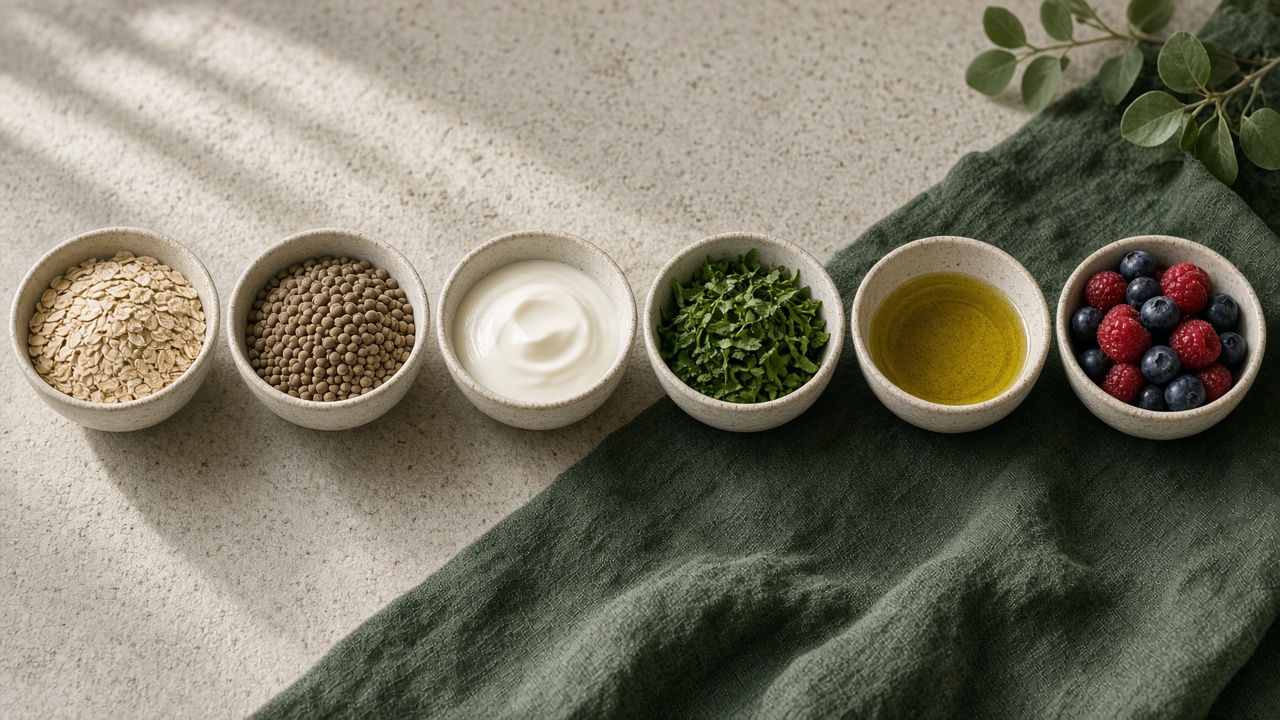
Oil and sauce as their own line
A vegetable in a photo looks light while oil and sauce hide inside the word “salad.” A separate line with an amount puts them back into energy intake, without declaring fat forbidden and without replacing the fat share with a personal calorie target.
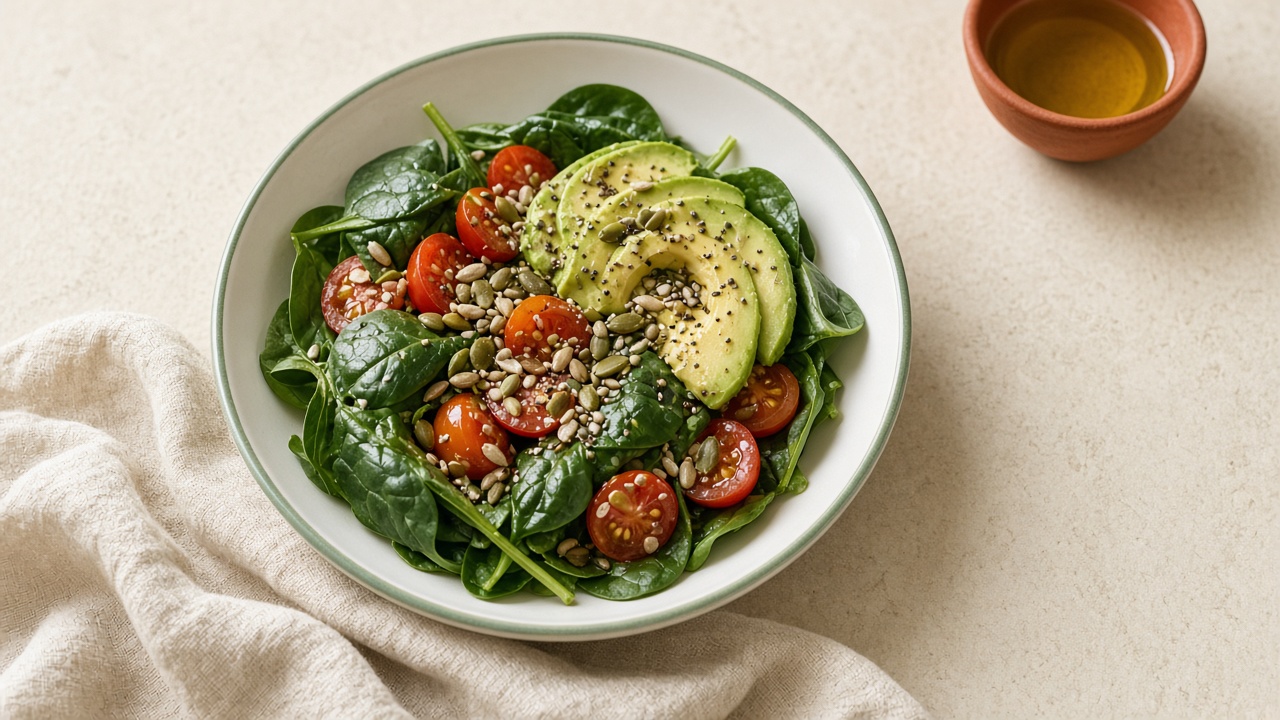
The spoon beside the vegetable
A plate of vegetables and the same plate with a spoon of oil are two different intakes, even when the top-down picture looks almost the same. Oil, dressing, and sauce do not become the vegetable because they sit on it. Leave them unnamed and the diary describes a different lunch, lighter than the one that was eaten.
CDC asks you to record food so that later you can see what the day actually contained. The spoon is part of that food, not a decoration on the photograph. The drink with the same plate stays its own line: sauce does not replace the glass, and the glass does not hide the sauce.
A share of fat, not a ban
The WHO fact sheet keeps fat under 30% of energy, saturated fat under 10%, and trans fat under 1%. Unsaturated fats are preferred: fish, avocado, nuts, and vegetable oils rather than saturated fats and industrial trans fats. A line for the spoon of oil is what lets you see which fat arrived, rather than crossing oil off food entirely.
A separate line is not permission to pour without noticing, and it is not a crash plan. It sits beside the vegetables and fruit the fact sheet asks for, at least 400 g a day. Salt in a sauce has its own ceiling too: under 5 g of salt a day, a population frame, not a verdict on one spoon.
An amount, without which the line is empty
The name “olive oil” without an amount is no different in the diary from the name “cream sauce.” A useful line names the food and a measure: grams if they were weighed, or a spoon if there was no scale. USDA FoodData Central gives guides per 100 g, and brands differ, so the table does not replace the measure the person actually saw.
A dry-food row in the table is not a cooked portion, because water changes the weight, but oil is hardly about water. It should not be guessed with a factor borrowed from some other food. An honest spoon, named on its own, is closer to the truth than a tidy guess at grams nobody weighed.
Someone else’s spoon is still your line
At someone else’s table and in ready food, another person often pours the oil. On your plate it is still part of your intake, and you write it down even if the recipe is not yours. The words “there was dressing” are already more honest than a blank, and a spoon or “generous” sharpens the measure without turning into a laboratory protocol.
That line is not a reason to make the next day a punishment. CDC treats setbacks as expected and does not tie the reward to food. If sauce is a standing question because of blood pressure, medicines, or illness, the conversation goes to a clinician, not through a stricter diary.
What this text draws on
- WHO Healthy diet fact sheet: energy intake in balance with expenditure; fruit and vegetables ≥400 g/day; free sugars <10% of energy (below 5% for further benefit); fat <30%; saturated fat <10%; trans fat <1%; salt <5 g/day; unsaturated fats (fish, avocado, nuts, vegetable oils) preferred to saturated and industrial trans fats.
- CDC, Steps for Losing Weight (January 17, 2025): a gradual pace of about 1 to 2 pounds a week is more likely to be kept than quicker loss; losing 20 pounds in 2 weeks is the example of an unrealistic goal. Modest loss, CDC’s example: 5% of 200 pounds is 10 pounds, can improve blood pressure, cholesterol, and blood sugar and could lower risk of heart disease, prediabetes, and type 2 diabetes — not a personal guarantee. Log food and drinks, activity, sleep, and stress. Goals are specific, two or three at a time; examples include water instead of a sugary drink, a 15-minute walk, a vegetable with supper. Setbacks are expected. Rewards are not food. Medicines, illness, stress, genes, hormones, environment, and age affect weight. Weight and medicine questions go to a clinician. Medicines and bariatric surgery are clinical options, not DIY.
- USDA FoodData Central: guides per 100 g; brands differ. A dry-food row is not a cooked portion, because water changes the weight. Do not use a “rice triples” factor.
A short paraphrase of open guides and reviews (WHO, national recommendations, peer‑reviewed summaries). Not a quotation and not a treatment protocol.
Short answers
Are a plain salad and a salad with a spoon of oil one line?
They are two different records. Name the vegetable on its own, and put the oil or sauce on its own line with an amount, or the picture of the vegetables understates intake.
Should vegetable oil be crossed off to meet the fat share?
The WHO fact sheet prefers unsaturated fats, including vegetable oils, fish, avocado, and nuts, to saturated fats and industrial trans fats. The line exists so you can see the share, not so you can ban the spoon.