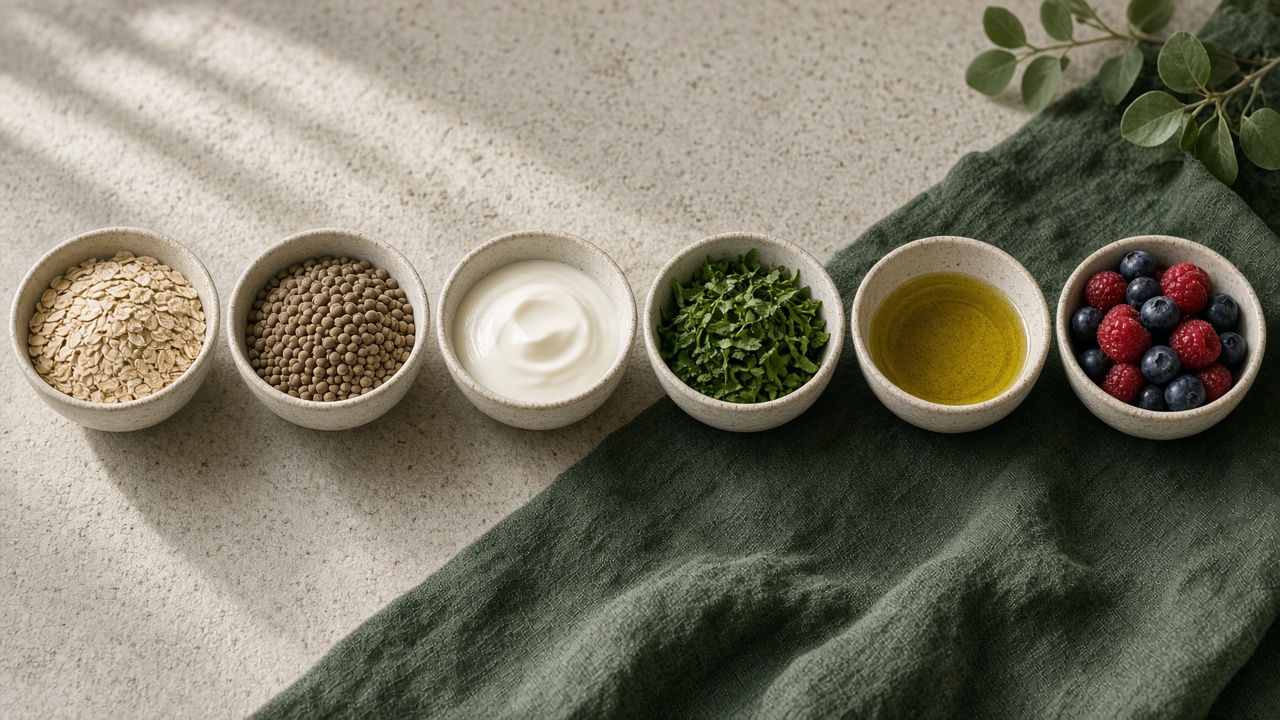
A recipe for four
A recipe for four describes the pot, not your plate. The day’s line is your share plus the oil that ended up on your plate, not a quarter of the card if the pot was divided differently.

The pot and what you took
The card divides the food by four only if four people received food and you took one part. If someone went back for more and someone else barely ate, your share is no longer a quarter of the card. CDC records what you ate, not the plan that put the pot on the stove.
While the share is not known even roughly, it is not translated into grams. “A plate of stew from the shared pot” is a sufficient line. Weight appears in it only if that plate was weighed, or if the division was plain: four equal plates and yours one of them.
The oil that stayed on your plate
Oil and sauce often live apart from the recipe line. A spoon added onto your own plate is not inside the quarter of the pot. It stands in your line beside the share, because that spoon was eaten, not “oil in general.”
WHO prefers unsaturated fats — fish, avocado, nuts, vegetable oils — to saturated and industrial trans fats, and keeps total fat under 30 percent of energy. That does not cancel the spoon. A spoon of vegetable oil is still part of intake if it was on your plate.
When the weight of the share is known
If the weight of your plate is known, the FoodData Central guide per 100 grams can be applied to that weight. A card for four does not itself replace the weight of the plate. For the actual packages that went into the pot, their labels are closer: brands differ from an average database row.
Dry grams of grain in the recipe are not the cooked porridge on the plate. Water changes the weight, and a dry row is not turned into a cooked portion by a factor. If you weighed the grain before cooking and know your share of the finished dish only by eye, the log keeps the distinction: what was weighed, and what is named in words.
Tomorrow’s plate is a new line
One recipe often feeds more than one supper. Tomorrow’s plate from the same pot is a new line, your share of that day again, not a copy of yesterday’s quarter. The food may have thickened, and you may have taken a different amount than yesterday.
In ScanDish a draft from a photo of the shared pot does not become your portion until you confirm your meal and the day. A picture of the pot reminds you of the dish. It does not divide the pot by four, and it does not see oil added later on the plate.
What this text draws on
- USDA FoodData Central: guides per 100 g; brands differ. A dry-food row is not a cooked portion, because water changes the weight. Do not use a “rice triples” factor.
- WHO Healthy diet fact sheet: energy intake in balance with expenditure; fruit and vegetables ≥400 g/day; free sugars <10% of energy (below 5% for further benefit); fat <30%; saturated fat <10%; trans fat <1%; salt <5 g/day; unsaturated fats (fish, avocado, nuts, vegetable oils) preferred to saturated and industrial trans fats.
- CDC, Steps for Losing Weight (January 17, 2025): a gradual pace of about 1 to 2 pounds a week is more likely to be kept than quicker loss; losing 20 pounds in 2 weeks is the example of an unrealistic goal. Modest loss, CDC’s example: 5% of 200 pounds is 10 pounds, can improve blood pressure, cholesterol, and blood sugar and could lower risk of heart disease, prediabetes, and type 2 diabetes — not a personal guarantee. Log food and drinks, activity, sleep, and stress. Goals are specific, two or three at a time; examples include water instead of a sugary drink, a 15-minute walk, a vegetable with supper. Setbacks are expected. Rewards are not food. Medicines, illness, stress, genes, hormones, environment, and age affect weight. Weight and medicine questions go to a clinician. Medicines and bariatric surgery are clinical options, not DIY.
A short paraphrase of open guides and reviews (WHO, national recommendations, peer‑reviewed summaries). Not a quotation and not a treatment protocol.
Short answers
Is my portion always a quarter of a recipe for four?
Only if the food was divided into four and you ate one part. A second helping, someone else’s nearly empty plate, and oil already on your plate change that quarter.
Where does the oil go, into the recipe or onto my plate?
Oil that went into the pot sits inside your share. Oil you poured separately onto your plate is written as a further part of your line.