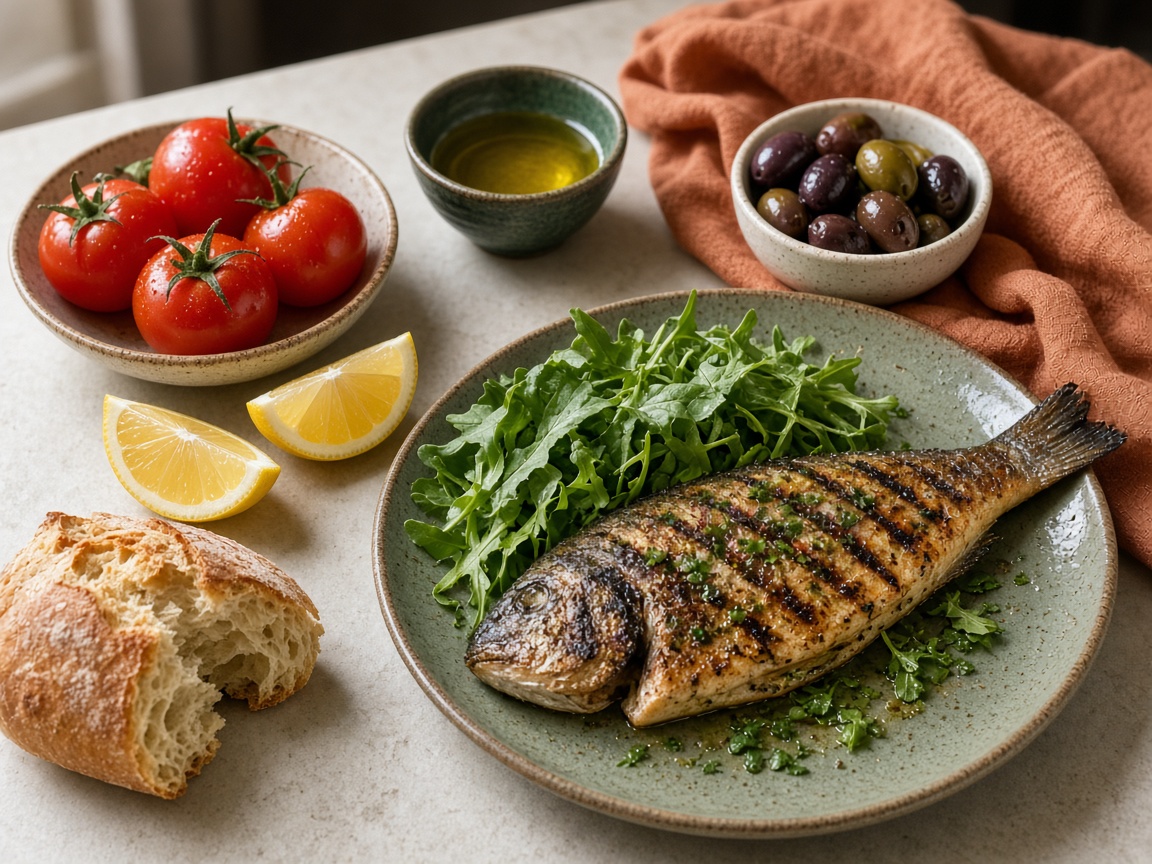
A heart-healthy plate when someone also wants weight to change
Wanting weight to change does not swap the limits around. The DASH pattern and the WHO limits stay in place for the makeup of the food and for blood pressure, salt, sugar, and fat. The CDC pace stays gradual, about 1 to 2 pounds a week, and an example such as 20 pounds in two weeks stays unrealistic. If blood pressure or lipids are already being treated, the pattern is not assembled from an article. That is a conversation with the clinician who runs the treatment.
What does not come off for the sake of the scale
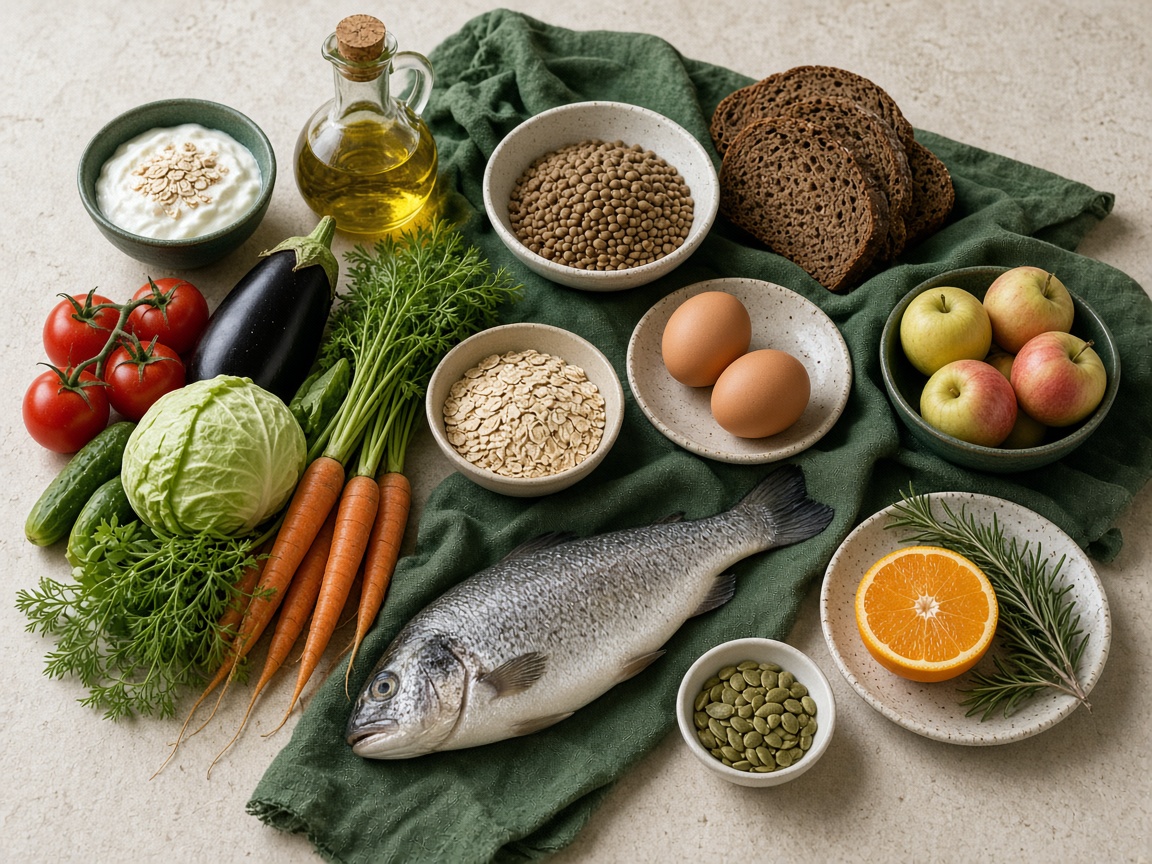
NHLBI describes DASH as a plan developed and studied to lower blood pressure, not as a crash diet. The plate still holds vegetables, fruits, whole grains, fat-free or low-fat dairy, fish, poultry, beans, nuts, and vegetable oils. Fatty meat, full-fat dairy, sweets, and sugary drinks stay limited. Sodium stays 2,300 mg in the standard version or 1,500 mg in the lower one. A weight goal does not pick only the convenient lines from that list.
The WHO fact sheet stays in place too. Vegetables and fruit at or above 400 g, with legumes, nuts, and whole grains beside them. Free sugars under 10% of energy, under 5% as further benefit. Fat under 30%, saturated fat under 10%, trans fat under 1%, salt under 5 g, unsaturated fats preferred. MyPlate still asks for half the plate as fruits and vegetables, half of grains whole, and varied protein, including legumes, fish, eggs, and lean meat. Weight loss, if it is a task at all, goes through that food, not instead of it.
The pace CDC leaves in force
CDC calls a goal such as losing 20 pounds in 2 weeks unrealistic and describes a gradual pace of about 1 to 2 pounds a week. That pace does not become a personal prescription from this article and it is not attributed to the DASH plan. It remains a reminder that a sprint and food quality argue with each other. A popular-diet promise that throws out vegetables, grain, and the salt limit for a fast number parts company with both CDC and WHO.
In a plain account, the DASH trial lowered blood pressure compared with a typical American control diet. PREDIMED was associated with fewer major cardiovascular events in adults who already had high risk, compared with advice to reduce fat. PREDIMED was not a weight-loss trial. DASH was studied for blood pressure, not as a crash diet. Putting them into a headline about kilograms changes the outcome. The size of those changes is still not stated on this page.
When blood pressure or lipids are already treated
If blood pressure or lipids are already on treatment, the plate is not rebuilt from an article and the medicines are not stopped on the day lunch moves closer to DASH. CDC asks that clinical questions go to a clinician. A food log is fit material for the visit: it shows whether vegetables, low-fat dairy, fish, or legumes were there, and how salty and sweet the day was. Decisions about tablets, about 1,500 mg of sodium, and about fat in the prescription belong to the person who runs the treatment.
The lower-sodium version of DASH is a version of the NHLBI plan, not a self-directed increase in therapy. The same is true of saturated fat under 10% and salt under 5 g: they are limits in documents about food, not a substitute for a lipid test. Pregnancy, kidney disease, and a prescribed therapeutic diet are outside this text. “I want weight to change and I want to look after my heart,” even without treatment already underway, still does not cancel the gradual pace and does not cancel the makeup of the plate.
What a week looks like without two different diets
There is no need for one diet “for the heart” and a second “for weight.” One day can combine what the documents already say together: vegetables and fruit on half the plate, whole grain, fish, poultry, or legumes, low-fat dairy or fortified soy, vegetable oil, little sugary drink, little fatty meat, salt inside the limits. Energy across the week and average weight are discussed apart from the plan’s name, at the calm pace CDC describes.
This article does not set a date, does not promise a number on the scale, and does not promise that blood pressure or lipids will change because of one paragraph. It leaves the DASH and WHO limits where they are and leaves the gradual pace where it is. If treatment is already underway, the next step is a clinician, not a stricter detox.
What this text draws on
- NHLBI DASH Eating Plan: vegetables, fruits, whole grains, fat-free or low-fat dairy, fish, poultry, beans, nuts, vegetable oils; limits fatty meats, full-fat dairy, sweets, and sugary drinks; sodium 2,300 mg in the standard plan or 1,500 mg in the lower version. Developed and studied to lower blood pressure, not as a crash diet.
- WHO Healthy diet fact sheet: vegetables and fruit ≥400 g/day, legumes, nuts, whole grains; free sugars <10% of energy (below 5% for further benefit); fat <30%; saturated fat <10%; trans fat <1%; salt <5 g/day; unsaturated fats preferred.
- CDC, Steps for Losing Weight: a goal such as losing 20 pounds in 2 weeks is unrealistic; a gradual pace is about 1 to 2 pounds a week; evaluate claims; see a clinician for medical conditions. Popular-diet promises that skip food quality contradict the WHO limits on sugar, fat, and salt.
- Dietary Guidelines for Americans, 2020–2025, and MyPlate: a nutrient-dense pattern, customized to culture and budget; added sugars <10% of calories from age 2; saturated fat <10%; sodium <2,300 mg/day; half the plate fruits and vegetables, half of grains whole; varied protein including beans, lentils, soy, nuts, seafood, eggs, and lean meat; low-fat dairy or fortified soy.
A short paraphrase of open guides and reviews (WHO, national recommendations, peer‑reviewed summaries). Not a quotation and not a treatment protocol.
Short answers
Can the salt and saturated-fat limits come off for a while because of weight?
No. DASH and the WHO fact sheet stay in place for the makeup of the food. The CDC pace, about 1 to 2 pounds a week, does not cancel salt, sugar, and saturated fat.
If blood pressure is already treated, can you adjust the tablets to the new plate yourself?
No. That is a conversation with a clinician. A food log can be brought to the visit. The article does not change treatment.