A Mediterranean plate as food
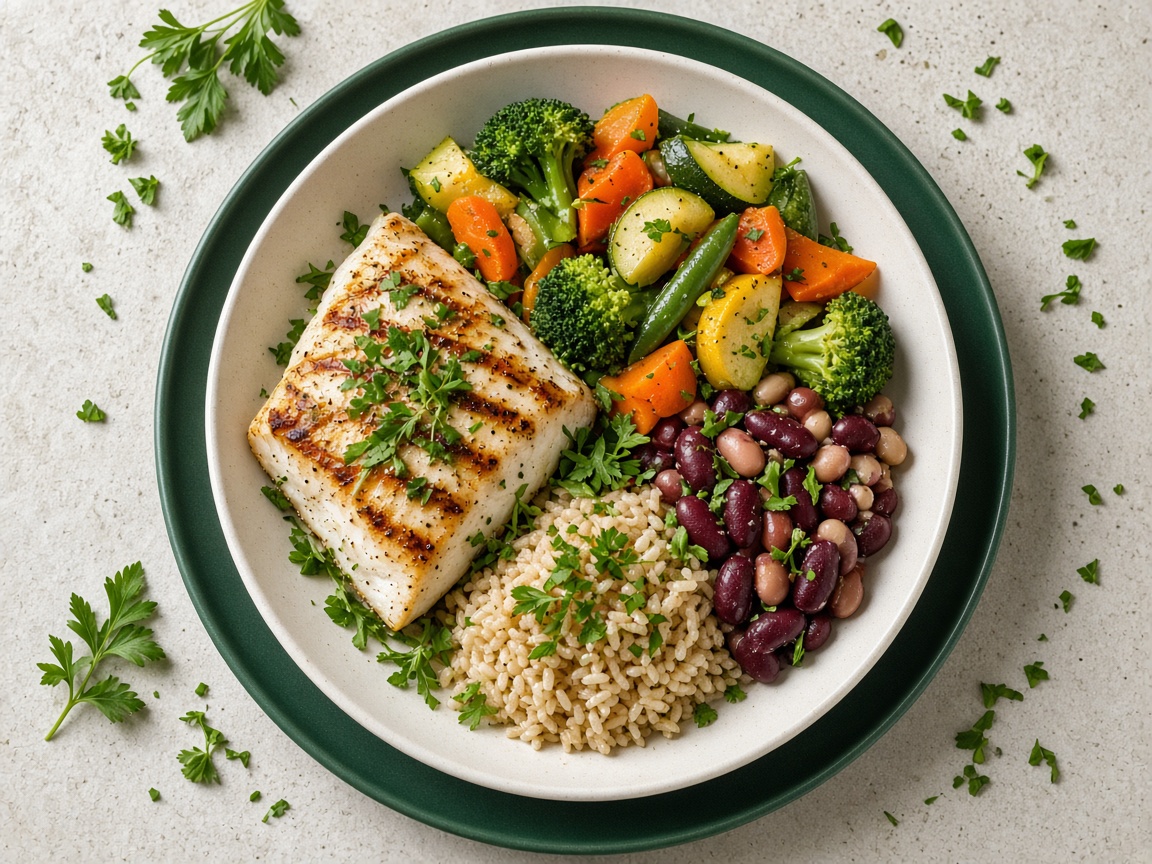
A Mediterranean plate, in this reading, is ordinary food that repeats: vegetables, fruit, legumes, whole grains, olive oil, fish, and nuts. PREDIMED followed major cardiovascular events in adults who already had high risk, and it was not a weight-loss trial.
What goes on the plate
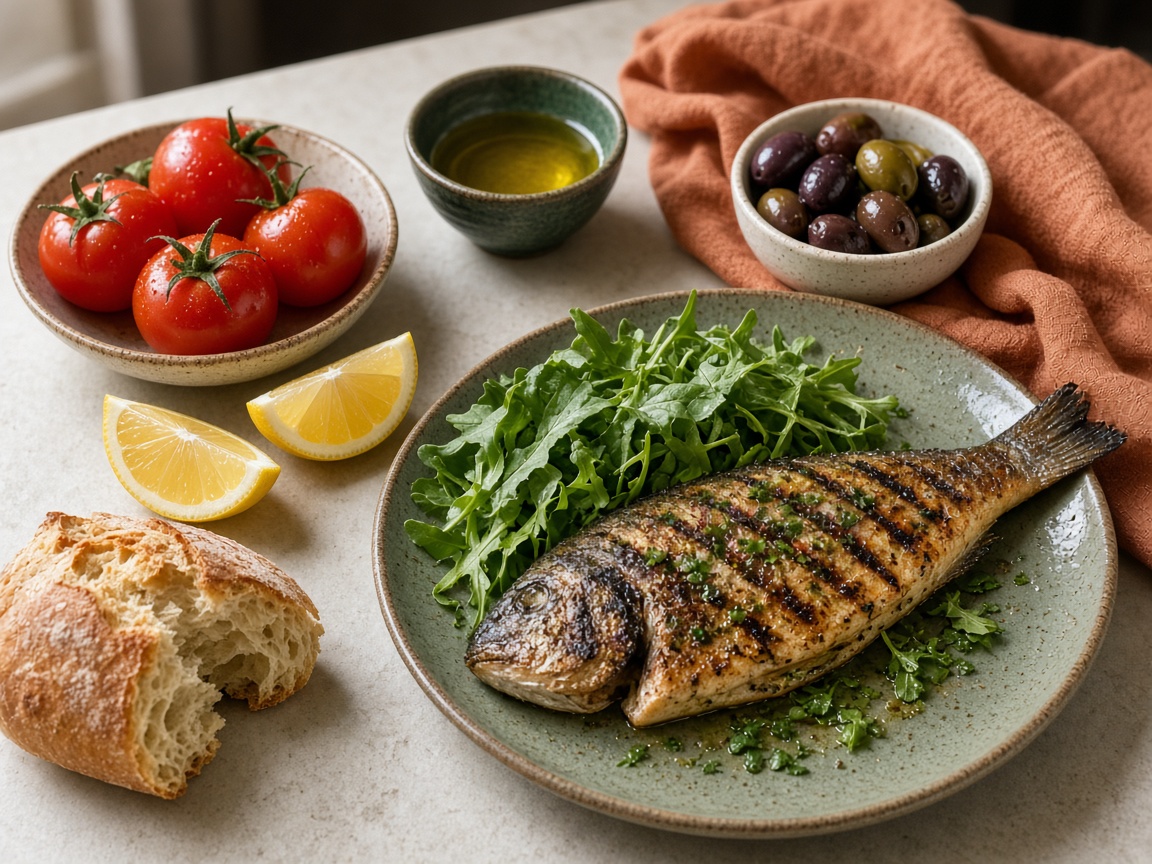
Vegetables and fruit take a visible share of the plate, grain or bread is more often whole, and protein comes from fish, legumes, eggs, or lean meat rather than from one fatty cut every day. Olive oil, nuts, avocado, and fish sit with the unsaturated fats that the WHO fact sheet prefers to saturated fats and to industrial trans fats. MyPlate draws the same geometry in other words: half the plate fruits and vegetables, half of grains whole, varied protein foods, and low-fat or fat-free dairy or fortified soy.
The combination can be cooked at home without a course name: it is a pattern of foods, not a seven-day cleanse. The WHO fact sheet keeps fruit and vegetables at or above 400 g a day and speaks of energy intake in balance with expenditure. Free sugars stay under 10% of energy, a level below 5% is described as further benefit, total fat stays under 30%, saturated fat under 10%, trans fat under 1%, and salt under 5 g a day.
The cuisine name does not lift the shares
A large pour of oil, a heavy handful of nuts, and cheese at every meal add energy quickly and can press against salt and saturated fat. Sweet pastries and a sugary drink spend the free-sugar share even when salad and fish are also on the table. The cultural name describes a set of foods, not a discount on the fact-sheet limits.
From age 2, the American guidelines keep added sugars under 10% of calories, saturated fat under 10%, and sodium under 2300 mg a day. The same document asks for a nutrient-dense pattern shaped by culture and budget, so fish with vegetables and a whole grain does not have to copy one tourist menu. Drinking less is better than drinking more, and not drinking is an option: this page does not put wine on the food list.
Where PREDIMED stops
The trial enrolled adults whose cardiovascular risk was already high, not every person who meets the word Mediterranean in a headline. A pattern with extra-virgin olive oil or with nuts was compared with advice to eat less fat. The Mediterranean groups had fewer major cardiovascular events, and the outcome was events, not kilograms.
The 2013 paper was retracted and republished in 2018 because of randomization problems, and the republication kept the finding of fewer events. The trial did not answer how much weight would leave in a week, and it did not compare a juice or a powder with ordinary food. This page does not give a percent of event reduction: a plain account does not need that figure.
An ordinary week, not a protocol
Across an ordinary week a vegetable or a fruit is visible in the main meal, grain is more often whole, fish or legumes show up more than once, and the fat is more often from plants. Sweets and salt do not fill the day, or the WHO shares and the American thresholds part company with what was actually eaten. That week matches the MyPlate groups and the WHO fact sheet, and it is not a home copy of the PREDIMED protocol.
A reader of this page does not become a trial participant and does not receive a promise of the same events. The text does not prescribe oil by the spoon, nuts by the gram, or a date by which the scale must move. If heart disease is already being treated, the name of a cuisine does not replace a clinician and does not rewrite the prescribed plan.
What this text draws on
- WHO Healthy diet fact sheet: energy intake in balance with expenditure; fruit and vegetables ≥400 g/day; free sugars <10% of energy (below 5% for further benefit); fat <30%; saturated fat <10%; trans fat <1%; salt <5 g/day; unsaturated fats (fish, avocado, nuts, vegetable oils) preferred to saturated and industrial trans fats.
- Dietary Guidelines for Americans, 2020–2025, and USDA MyPlate: a nutrient-dense pattern shaped by culture and budget; added sugars <10% of calories from age 2; saturated fat <10%; sodium <2,300 mg/day; half the plate fruits and vegetables; half of grains whole; varied protein foods; low-fat or fat-free dairy or fortified soy. Drinking less is better than drinking more; not drinking is an option.
- PREDIMED, Estruch et al., NEJM: adults who already had high cardiovascular risk. A Mediterranean pattern with extra-virgin olive oil or with nuts was compared with advice to eat less fat. The Mediterranean groups had fewer major cardiovascular events. The 2013 paper was retracted and republished in 2018 because of randomization problems; the republication kept the finding of fewer events. Not a weight-loss trial. Do not give a percent or a hazard ratio.
A short paraphrase of open guides and reviews (WHO, national recommendations, peer‑reviewed summaries). Not a quotation and not a treatment protocol.
Short answers
Did PREDIMED prove that this plate lowers weight?
No. It followed major cardiovascular events in adults who already had high risk. It was not a weight-loss trial, and this page does not give a percent of event reduction.
Can the oil be ignored because the cuisine is Mediterranean?
No. The oil is unsaturated fat in place of saturated fat, not an invisible extra. Energy intake still has to meet expenditure, and total fat stays under 30% of energy.