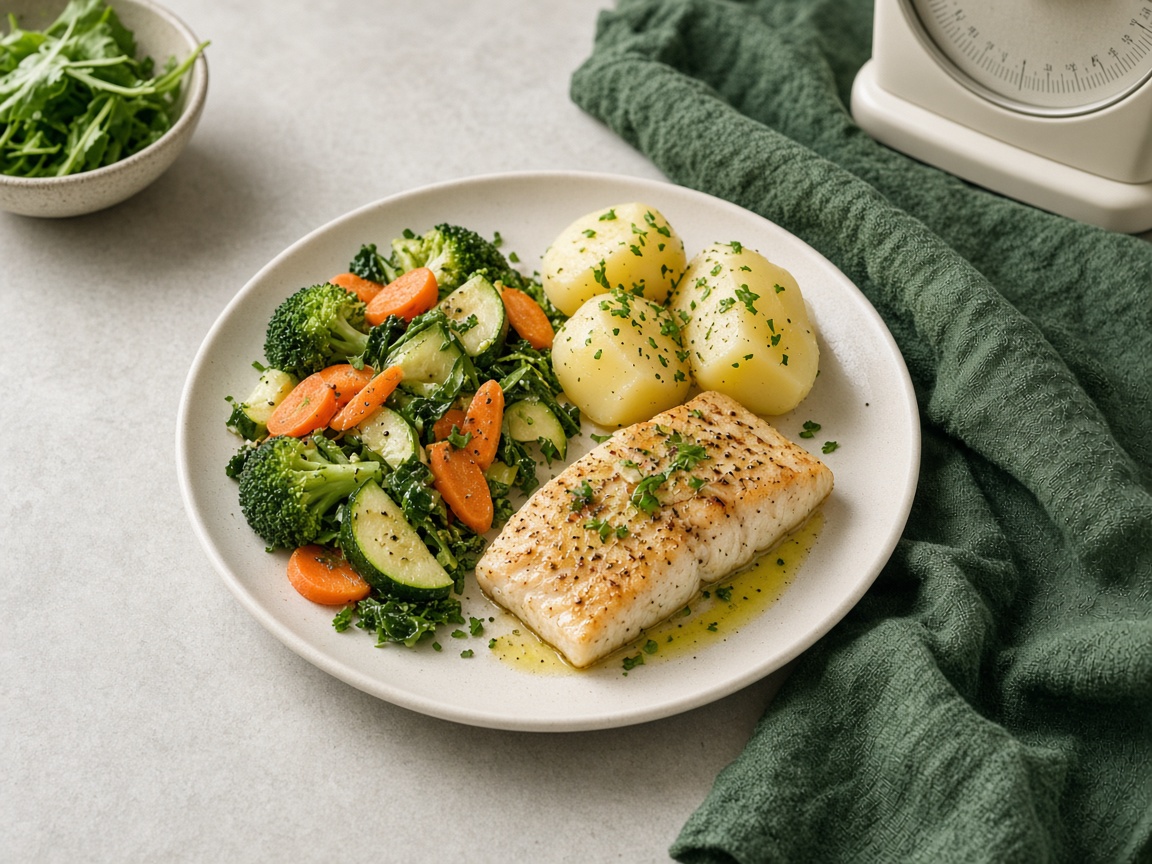
A promise of a huge drop in a week
A promise of a large loss in a single week, often advertised as a drop of five kilos, is not confirmed by a calculation of this page and is not translated into a norm. Beside that promise sits CDC's example: losing 20 pounds in 2 weeks is called an unrealistic goal, and the pace more likely to be kept is about 1 to 2 pounds a week.

Which pace is described
CDC writes that a gradual pace of about 1 to 2 pounds a week is more likely to be kept than a quicker loss. The unrealistic goal in the same text is losing 20 pounds in 2 weeks, and that is an example of a promise, not the reader's personal plan. This page sets the five-kilo-in-a-week slogan beside that example and does not add a kilogram standard of its own.
Modest loss in CDC's example looks different: 5% of 200 pounds is 10 pounds. That shift can improve blood pressure, cholesterol, and blood sugar and could lower the risk of heart disease, prediabetes, and type 2 diabetes. CDC says plainly that this is not a personal guarantee.
Why a workout does not rescue the slogan
Adult activity at CDC is at least 150 minutes of moderate aerobic activity a week and muscle-strengthening on 2 or more days. Those minutes are useful as their own health line, not as a coupon that makes an unrealistic goal realistic. Some activity is better than none, but the WHO physical-activity fact sheet does not contain a promise of five kilos in a week.
Sedentary time should be limited, and from age 65 the same aerobic and strengthening minutes are joined by balance and coordination on 3 or more days a week. None of those lines measures fat burned in order to justify a hungry week. An activity log shows whether the walking happened, and it does not turn an advertising pace into a medical one.
Food quality does not step aside
Even with a wish to lose weight, the WHO fact sheet keeps energy in balance with expenditure, fruit and vegetables at or above 400 g, free sugars under 10% of energy, fat under 30%, saturated fat under 10%, trans fat under 1%, and salt under 5 g. A fast slogan often throws those shares out for the sake of one number on the scale. Water instead of a sugary drink, a vegetable with supper, and a short walk are examples of specific CDC steps, not a hunger menu.
Goals in that advice are specific, and they are taken two or three at a time, not as twenty bans. Setbacks are expected, so the answer to a setback is a return to those steps, not a still harsher week as punishment. The reward is not food: a prize in the form of a forbidden supper confuses the goal with comfort again.
What else moves weight
CDC lists medicines, illness, stress, genes, hormones, environment, and age among the things that affect weight. A promise of exactly five kilos in seven days ignores that list and pretends the pace depends only on willpower. This page sends questions about weight and medicines to a clinician.
Medicines and bariatric surgery are named as clinical options, not as something to copy from a video. A log of food and drinks, activity, sleep, and stress shows the week more honestly than a memory of a hungry Monday. The article does not prescribe a calorie deficit and does not promise that the scale will repeat someone else's advertising chart.
What this text draws on
- CDC, Steps for Losing Weight (January 17, 2025): a gradual pace of about 1 to 2 pounds a week is more likely to be kept than quicker loss; losing 20 pounds in 2 weeks is the example of an unrealistic goal. Modest loss, CDC’s example: 5% of 200 pounds is 10 pounds, can improve blood pressure, cholesterol, and blood sugar and could lower risk of heart disease, prediabetes, and type 2 diabetes — not a personal guarantee. Log food and drinks, activity, sleep, and stress. Goals are specific, two or three at a time; examples include water instead of a sugary drink, a 15-minute walk, a vegetable with supper. Setbacks are expected. Rewards are not food. Medicines, illness, stress, genes, hormones, environment, and age affect weight. Weight and medicine questions go to a clinician. Medicines and bariatric surgery are clinical options, not DIY.
- CDC, Adult Activity: at least 150 minutes of moderate aerobic activity a week and muscle-strengthening on 2 or more days.
- WHO Healthy diet fact sheet: energy intake in balance with expenditure; fruit and vegetables ≥400 g/day; free sugars <10% of energy (below 5% for further benefit); fat <30%; saturated fat <10%; trans fat <1%; salt <5 g/day; unsaturated fats (fish, avocado, nuts, vegetable oils) preferred to saturated and industrial trans fats.
- WHO Physical activity fact sheet: adults 18–64 at least 150–300 minutes of moderate aerobic activity a week, or 75–150 minutes vigorous, plus muscle-strengthening on 2 or more days; some activity is better than none; sedentary time should be limited. From age 65, the same plus balance and coordination on 3 or more days.
A short paraphrase of open guides and reviews (WHO, national recommendations, peer‑reviewed summaries). Not a quotation and not a treatment protocol.
Short answers
Is five kilos in a week the pace CDC describes?
No. This page does not confirm that kilogram slogan with a calculation of its own. CDC's unrealistic goal is losing 20 pounds in 2 weeks, and the gradual pace is about 1 to 2 pounds a week.
If workouts are added, does a large loss in a week become normal?
No. Activity minutes are a separate health line. They do not turn the example of an unrealistic goal into a plan worth copying.