
A diet plus I'll burn it off
A workout does not pay for the plate: in these texts, activity and food are two different lines of the same week. Expenditure belongs in the energy balance, but it does not become a coupon that erases sugar, fat, or salt.
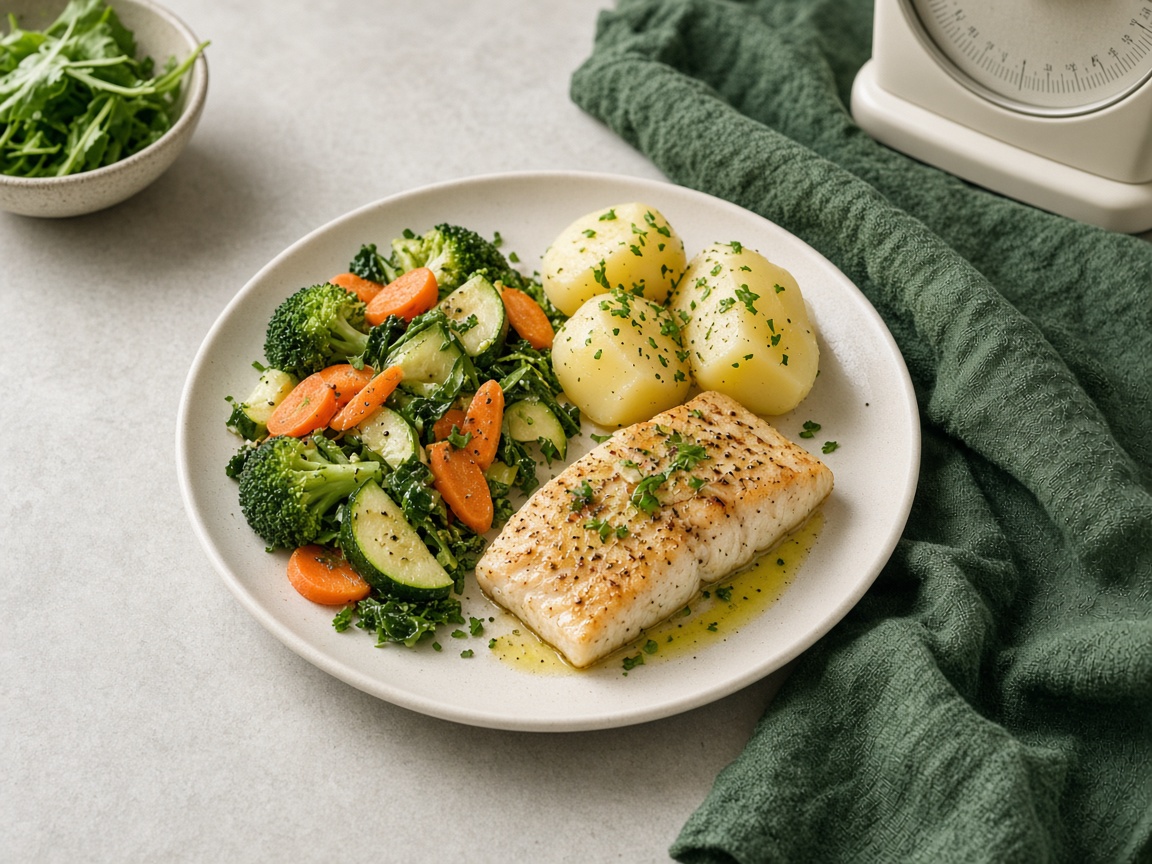
Two lines that do not merge
For adults aged 18 to 64, WHO writes at least 150 to 300 minutes of moderate aerobic activity a week, or 75 to 150 minutes of vigorous activity, plus muscle-strengthening on two or more days. Some activity is better than none, and sedentary time should be limited. CDC states its own adult minimum separately: at least 150 minutes of moderate aerobic activity a week and muscle-strengthening on two or more days.
Food lives in other documents: energy in balance with expenditure, at least 400 g of fruit and vegetables, the shares of sugar, fat, and salt, and half a plate. The minutes do not edit those lines. A finished workout does not subtract free sugars and does not raise the ceiling on saturated fat.
Why burn it off later does not follow from balance
Balance says that intake and expenditure meet, not that expenditure later cancels what was already eaten. A sugary drink after the gym still spends the free-sugar share under 10% of energy. A large portion of saturated fat still belongs to the share under 10%, however many minutes are on the calendar.
This page does not know, and will not invent, how much energy a particular workout burns. Without that figure it is not honest to say that the session covered a dessert. CDC keeps the food log and the activity log side by side precisely because they are different facts, not a payment and the change.
Strength days and age do not hide inside the cardio
Muscle-strengthening on two or more days is its own line at both WHO and CDC, not the tail of a sentence about having already gone for a run. Eating extra because there were squats does not fulfill that line. From age 65, WHO adds balance and coordination on three or more days a week to the same aerobic and strength minutes, and a food coupon does not appear there either.
A fifteen-minute walk in the CDC example is a specific activity goal, small on purpose. It is easy to mistake it for payment for supper, although in the text it is simply an action that can be repeated. The reward for that goal is not food.
How to keep the week without bargaining
The week fits together when the activity minutes stand on their own line and the plate on its own: vegetables, a whole grain or its half, a protein food, and visible oil inside the fat share. Two or three goals may mix food and movement, but they do not turn one into permission for the other. Water instead of a sugary drink remains a food goal even on a training day.
The pace of weight, if it is needed at all, stays about 1 to 2 pounds a week, not a speed-up from an extra session. Losing 20 pounds in 2 weeks does not become more realistic in a gym. Pain, illness, or a question about training while on medicines goes to a clinician, because the article does not issue a clearance.
What this text draws on
- WHO Physical activity fact sheet: adults 18–64 at least 150–300 minutes of moderate aerobic activity a week, or 75–150 minutes vigorous, plus muscle-strengthening on 2 or more days; some activity is better than none; sedentary time should be limited. From age 65, the same plus balance and coordination on 3 or more days.
- CDC, Adult Activity: at least 150 minutes of moderate aerobic activity a week and muscle-strengthening on 2 or more days.
- WHO Healthy diet fact sheet: energy intake in balance with expenditure; fruit and vegetables ≥400 g/day; free sugars <10% of energy (below 5% for further benefit); fat <30%; saturated fat <10%; trans fat <1%; salt <5 g/day; unsaturated fats (fish, avocado, nuts, vegetable oils) preferred to saturated and industrial trans fats.
- CDC, Steps for Losing Weight (January 17, 2025): a gradual pace of about 1 to 2 pounds a week is more likely to be kept than quicker loss; losing 20 pounds in 2 weeks is the example of an unrealistic goal. Modest loss, CDC’s example: 5% of 200 pounds is 10 pounds, can improve blood pressure, cholesterol, and blood sugar and could lower risk of heart disease, prediabetes, and type 2 diabetes — not a personal guarantee. Log food and drinks, activity, sleep, and stress. Goals are specific, two or three at a time; examples include water instead of a sugary drink, a 15-minute walk, a vegetable with supper. Setbacks are expected. Rewards are not food. Medicines, illness, stress, genes, hormones, environment, and age affect weight. Weight and medicine questions go to a clinician. Medicines and bariatric surgery are clinical options, not DIY.
A short paraphrase of open guides and reviews (WHO, national recommendations, peer‑reviewed summaries). Not a quotation and not a treatment protocol.
Short answers
Can the extra food be eaten if the workout is already done?
No: activity minutes do not erase the share of sugar, fat, or salt. Energy balance includes expenditure, but it does not turn a session into a coupon for food.
Do strength days sit inside the same aerobic minutes?
No: both WHO and CDC write muscle-strengthening separately, on two or more days. A run does not close that line and does not pay for the plate.
