A workout does not subtract calories from supper
CDC asks for food and drinks to be logged apart from activity. Neither the WHO fact sheet nor the CDC page gives a figure for calories burned per kilometer or per session, and this article does not invent that figure or subtract it from the plate.

What the source tells you to write down
On the CDC weight page, food and drinks, activity, sleep, and stress belong in one picture of the week. Activity there is part of that picture, not a discount on supper. Food stays food even when the day included a walk.
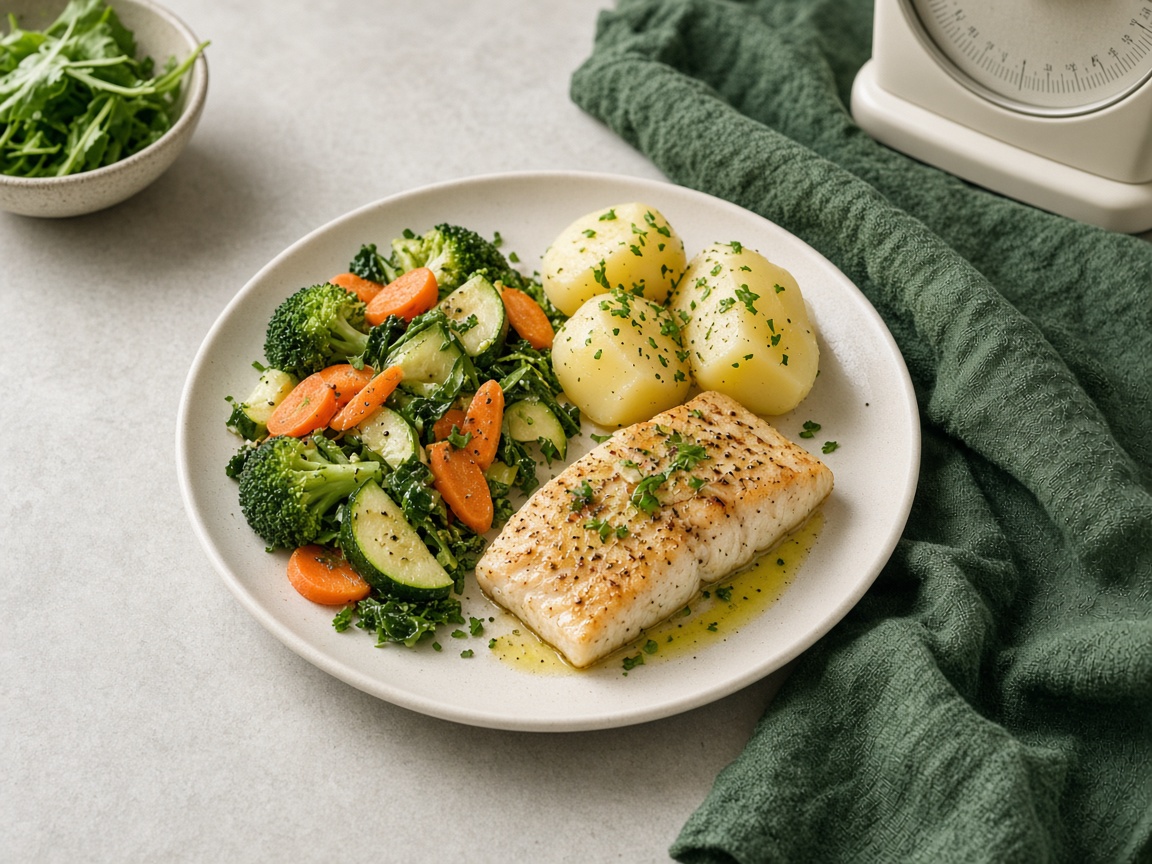
A photo of a plate in ScanDish is a draft of what was on it, and the draft is approximate until the person chooses the meal and the day. The picture does not measure the work of the legs and does not become “minus calories for the workout.” Water goes to the bot’s own counter. Juice, soda, and alcohol stay food.
Why there is no burn figure for a session
The WHO and CDC minutes describe how much moderate or vigorous work belongs in a week, and how many days are for strength. They do not turn a minute into kilocalories. The Mifflin equation beside them estimates rest from weight, height, and age, and it does not measure what was eaten or a run.
The day factors in ScanDish — 1.2, 1.375, 1.55, and 1.725 — are product settings next to the resting estimate. They are not taken from a WHO or CDC table and they are not “the calories today’s workout burned.” Substituting one for the other invents an expenditure.
The target floor does not move because of a workout
The lower edge of a daily target in the product is 1,500 kcal on a male profile and 1,200 kcal on a female profile. That is a ScanDish floor, not a WHO standard. A session does not license a target under that floor and does not raise the floor by itself: no such rule is in the sources.
The loss CDC describes is a gradual pace of about 1 to 2 pounds a week as more likely to be kept than a quicker one. The unrealistic goal in that text is losing 20 pounds in two weeks. Neither example reads as “subtract the workout and eat less.”
What two honest lines look like
One line is what was eaten and drunk, including oil and a drink that a photo easily loses. The other is whether there was activity, of which kind in the source’s words (moderate, vigorous, or strength), and how long it lasted. The second does not erase the first.
A setback on either line is expected. The reward is not food. If weight, pain, or medicines already need a clinician, CDC sends the question there, not toward a cleverer subtraction. Medicines and surgery in that text are clinical options, not DIY.
What this text draws on
- CDC, Steps for Losing Weight (January 17, 2025): a gradual pace of about 1 to 2 pounds a week is more likely to be kept than quicker loss; losing 20 pounds in 2 weeks is the example of an unrealistic goal. Modest loss, CDC’s example: 5% of 200 pounds is 10 pounds, can improve blood pressure, cholesterol, and blood sugar and could lower risk of heart disease, prediabetes, and type 2 diabetes — not a personal guarantee. Log food and drinks, activity, sleep, and stress. Goals are specific, two or three at a time; examples include water instead of a sugary drink, a 15-minute walk, a vegetable with supper. Setbacks are expected. Rewards are not food. Medicines, illness, stress, genes, hormones, environment, and age affect weight. Weight and medicine questions go to a clinician. Medicines and bariatric surgery are clinical options, not DIY.
- WHO Physical activity fact sheet: adults 18–64 at least 150–300 minutes of moderate aerobic activity a week, or 75–150 minutes vigorous, plus muscle-strengthening on 2 or more days; some activity is better than none; sedentary time should be limited. From age 65, the same plus balance and coordination on 3 or more days.
- Mifflin M. D. et al., Am J Clin Nutr, 1990; 51(2):241-247: a resting estimate. Men (10 × kg) + (6.25 × cm) − (5 × age) + 5. Women the same with −161 instead of +5. Not a measurement of what was eaten and not a prescription.
A short paraphrase of open guides and reviews (WHO, national recommendations, peer‑reviewed summaries). Not a quotation and not a treatment protocol.
Short answers
Can you subtract a workout’s calories from supper?
No. These sources have no expenditure figure for a session, and activity is logged apart from food. The plate does not shrink because of it.
Is the factor 1.55 the calories burned today?
No. It is a product setting next to the Mifflin resting estimate, not a measurement of a workout and not a WHO table.