
Fat when lipids are already treated
The fat shares in the WHO fact sheet describe an ordinary diet: total fat under 30% of energy, saturated fat under 10%, industrial trans fat under 1%, with unsaturated fats preferred. If lipids are already being treated, those shares stay background, not a new prescription in place of a clinician.
Which fats are named, and only those
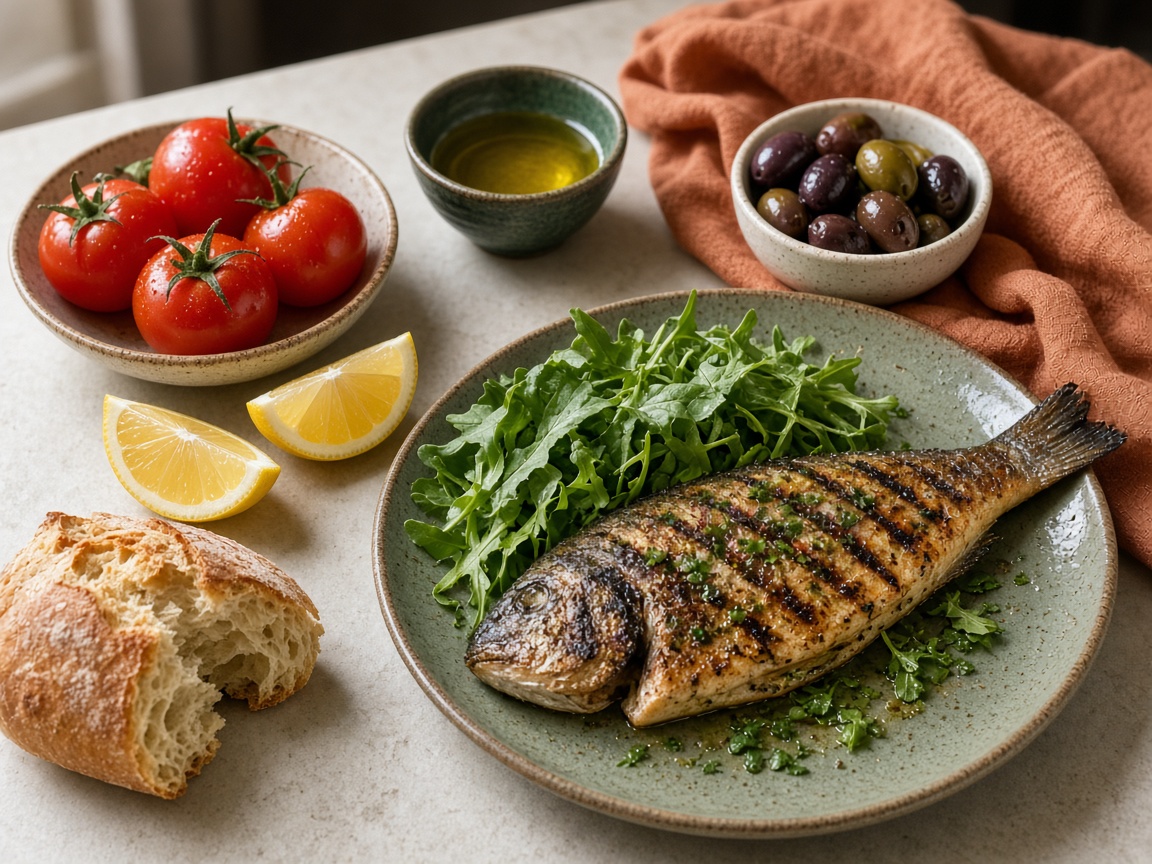
WHO prefers unsaturated fats to saturated fats and industrial trans fats and names fish, avocado, nuts, and vegetable oils, including olive and sunflower. That is a swap inside the fat share, not permission to pour oil without a limit. The overall 30% of energy does not disappear.
The American guidelines separately keep saturated fat under 10% of calories. Fatty meat, pastry, and high-fat dairy easily take that share. Fish, beans, and vegetable oil shift the plate the other way without becoming a drug. This page does not know and does not name a dose of a statin or of any other medicine.
The trials were not a drug prescription
PREDIMED looked at adults who already had high cardiovascular risk. A Mediterranean pattern with extra-virgin olive oil or with nuts was compared with advice to eat less fat. The Mediterranean groups had fewer major cardiovascular events. The 2013 paper was retracted and republished in 2018 because of randomization problems, and the republication kept the finding. It was not a weight-loss trial, and this page does not give a percent or a hazard ratio.
DASH, in the Appel trial of 1997, lowered blood pressure relative to a typical American diet through vegetables, fruit, low-fat dairy, and less saturated fat. Millimeters are not given here either. Neither PREDIMED nor DASH replaces lipid treatment already prescribed, and neither says which pill to keep. Both texts describe food.
Why the scheme cannot be assembled alone
CDC sends questions of weight and medicines to a clinician. The sources do not suggest stopping a drug on one’s own because fish appeared on the plate, or doubling it because supper was fatty. Medicines and surgery are named as clinical options. This article does not describe surgical technique and does not compare drugs.
If a wish to lose weight sits alongside, the pace stays the one CDC treats as more likely to be kept: about 1 to 2 pounds a week. Losing 20 pounds in two weeks is the example of an unrealistic goal. Modest loss, in the example 5% of 200 pounds, can improve cholesterol and blood pressure, but it is not a personal guarantee and not a substitute for treatment already underway.
Which food stays appropriate
While a clinician follows the lipids, an ordinary day can include fish, vegetables, whole grain, beans, nuts in a small handful, and vegetable oil instead of constant fatty meat and pastry. Salt under 5 g and free sugars under 10% of energy apply to that day the same way they apply to any other. That is not a new protocol. It is the absence of improvising.
A log of food and drinks helps the visit: it shows where the saturated fat went. The Mifflin resting equation does not see the fat that was eaten. Pregnancy, adolescents, and an illness in which fat is already prescribed by a clinician for another reason are not copied from this page. Chest pain and a sudden worsening are not a reason to reread the article. They are a reason to seek care.
What this text draws on
- WHO Healthy diet fact sheet: energy intake in balance with expenditure; fruit and vegetables ≥400 g/day; free sugars <10% of energy (below 5% for further benefit); fat <30%; saturated fat <10%; trans fat <1%; salt <5 g/day; unsaturated fats (fish, avocado, nuts, vegetable oils) preferred to saturated and industrial trans fats.
- Dietary Guidelines for Americans, 2020–2025, and USDA MyPlate: a nutrient-dense pattern shaped by culture and budget; added sugars <10% of calories from age 2; saturated fat <10%; sodium <2,300 mg/day; half the plate fruits and vegetables; half of grains whole; varied protein foods; low-fat or fat-free dairy or fortified soy. Drinking less is better than drinking more; not drinking is an option.
- CDC, Steps for Losing Weight (January 17, 2025): a gradual pace of about 1 to 2 pounds a week is more likely to be kept than quicker loss; losing 20 pounds in 2 weeks is the example of an unrealistic goal. Modest loss, CDC’s example: 5% of 200 pounds is 10 pounds, can improve blood pressure, cholesterol, and blood sugar and could lower risk of heart disease, prediabetes, and type 2 diabetes — not a personal guarantee. Log food and drinks, activity, sleep, and stress. Goals are specific, two or three at a time; examples include water instead of a sugary drink, a 15-minute walk, a vegetable with supper. Setbacks are expected. Rewards are not food. Medicines, illness, stress, genes, hormones, environment, and age affect weight. Weight and medicine questions go to a clinician. Medicines and bariatric surgery are clinical options, not DIY.
- PREDIMED, Estruch et al., NEJM: adults who already had high cardiovascular risk. A Mediterranean pattern with extra-virgin olive oil or with nuts was compared with advice to eat less fat. The Mediterranean groups had fewer major cardiovascular events. The 2013 paper was retracted and republished in 2018 because of randomization problems; the republication kept the finding of fewer events. Not a weight-loss trial. Do not give a percent or a hazard ratio.
- DASH, Appel et al., NEJM 1997: a pattern higher in vegetables, fruit, and low-fat dairy and lower in saturated fat lowered blood pressure compared with a typical American control diet. Do not give millimeters of mercury.
A short paraphrase of open guides and reviews (WHO, national recommendations, peer‑reviewed summaries). Not a quotation and not a treatment protocol.
Short answers
Do fish and olive oil replace a cholesterol medicine?
No. They are preferred unsaturated fats inside the ordinary shares of a diet. Treatment already prescribed is changed by a clinician, not by a swap of one food.
Can a percent of benefit from PREDIMED be quoted?
No. This page gives neither a percent nor a hazard ratio. The trial was not about weight loss, the 2013 paper was retracted and republished in 2018, and the republication kept the finding of fewer events.
