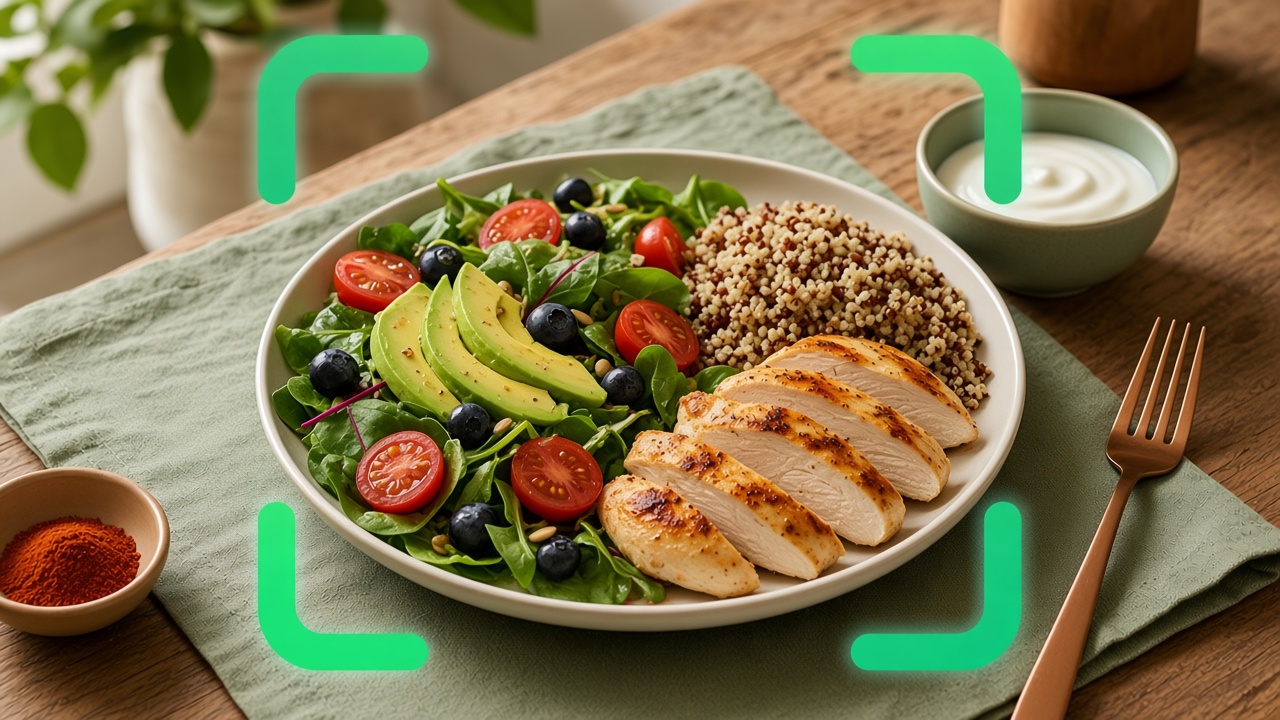
The plate method
Half the plate is vegetables, a quarter is protein, a quarter is grain or potato, and fat is an extra. A teaching gesture, not a calorie formula.
What it is for
Without a scale, the eye can still hold a proportion. Clinics and nutrition classes teach the plate method as a first picture. It does not know your height and it does not replace Mifflin–St Jeor.
The plate means an ordinary plate, not a pasta bowl the size of a knee. A deep bowl breaks the quarters: it can hold three portions of rice and still be called a quarter.
How to lay it out
Vegetables occupy half the visible area, not a leaf for decoration. Protein is fish, meat, eggs, tofu, legumes. The carbohydrate quarter is the rice, buckwheat, potato, or bread that is on the plate, not also the basket beside it.
Oil, sauce, and cheese do not land in the picture automatically. They are added by the spoon. Otherwise a “correct plate” quietly carries 400 kcal of fat.
Who needs more than a picture
On a hard training day an athlete may need more than a quarter of grain. A person with a small expenditure may find the same picture too large if the quarters are huge. ScanDish calculates a target from the profile first. The plate method helps you assemble that target with your hands.
With insulin and some diabetes plans, the carbohydrate quarter is still counted the way a clinician assigned. The picture does not cancel exchanges or counting if you need them.
The link with a diary
Photograph the plate from above. The quarters are visible to you and to the model. If carbohydrate is two quarters, do not call it the plate method in the note. Name it honestly, and the diary stays true.
What this text draws on
- USDA and HHS: Dietary Guidelines for Americans (periodic editions).
- MyPlate (USDA) — balanced plate: vegetables, fruits, grains, protein, dairy.
A short paraphrase of open guides and reviews (WHO, national recommendations, peer‑reviewed summaries). Not a quotation and not a treatment protocol.
Short answers
Does this count calories?
No. It is a proportion. Calories depend on what sits in the quarters and what it weighs.
Where does soup go?
Soup can be the vegetable half, or a first step of its own. Bread with the soup is already part of the carbohydrate quarter.