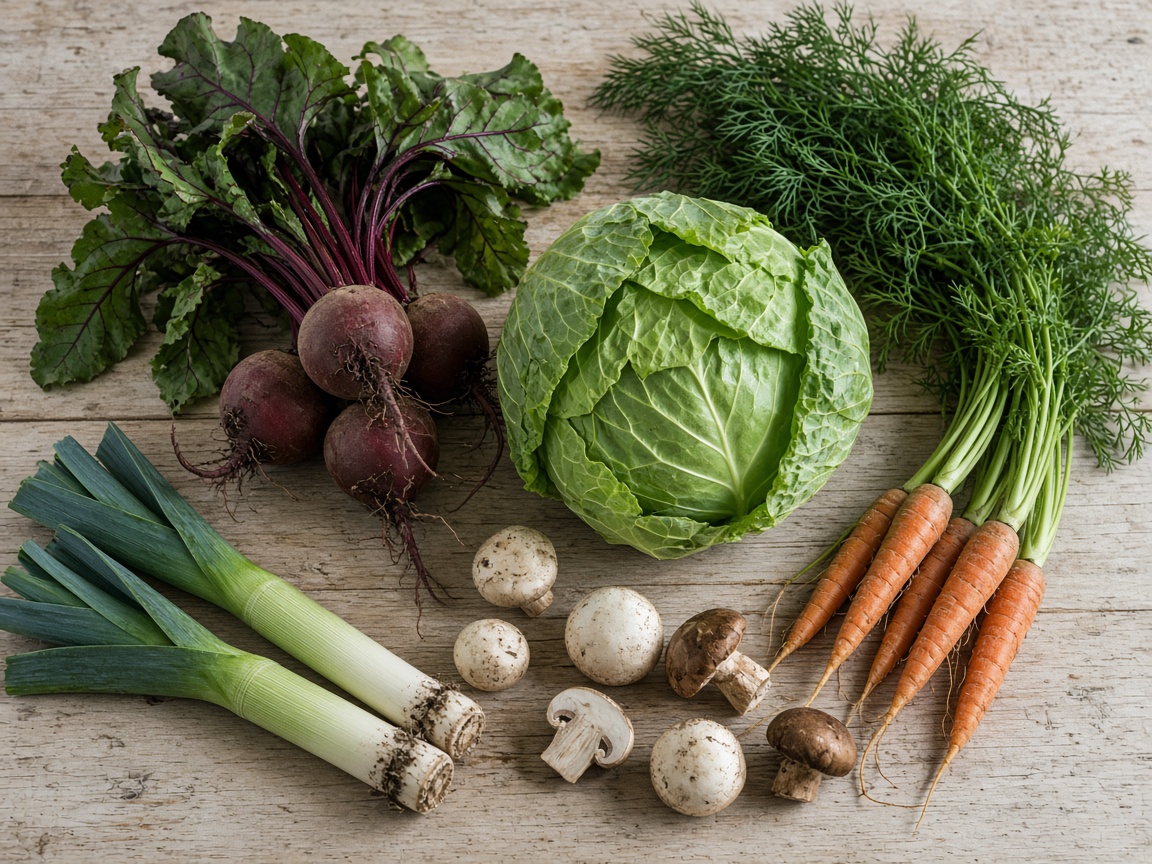
The vegan plate
No meat, fish, eggs, dairy, or honey. It is an assembled diet, not a salad in place of lunch. B12 is not optional here.
Protein without dairy
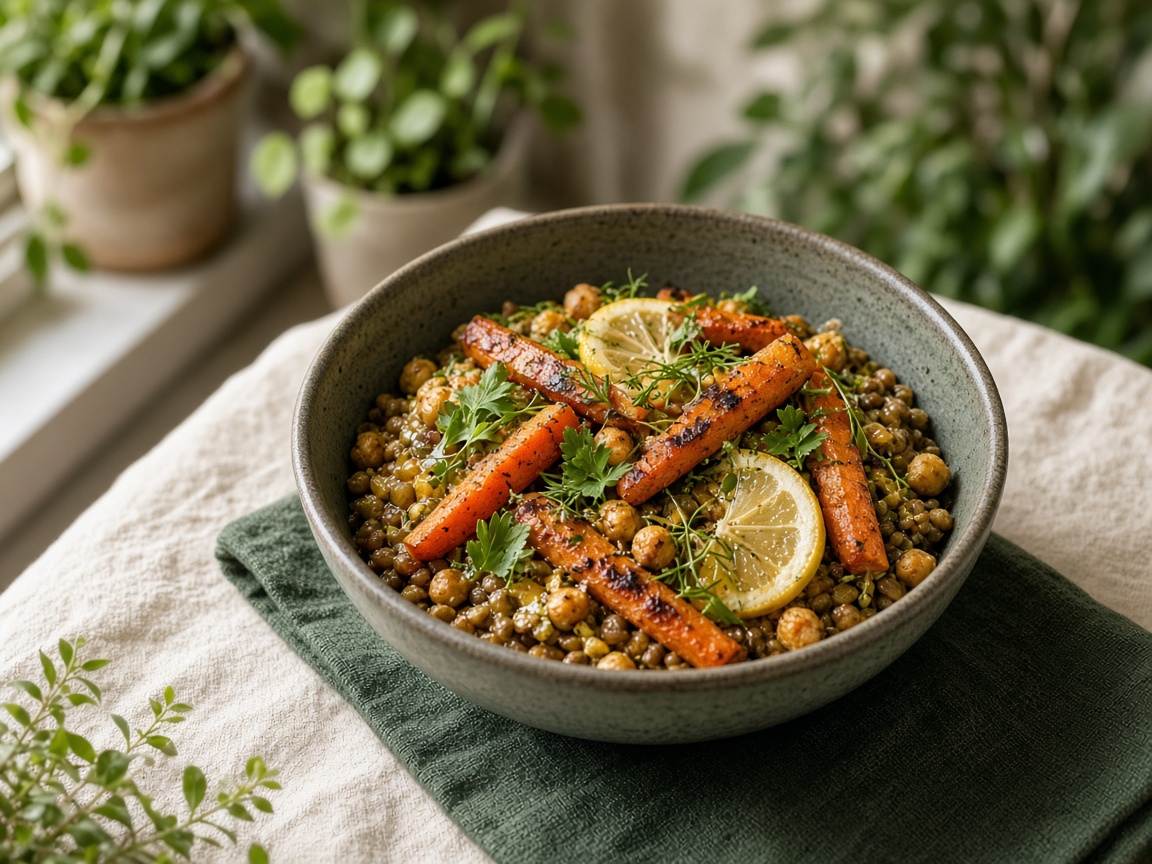
Tofu, tempeh, legumes, seitan if you tolerate gluten, soy yogurt with real protein rather than coconut cream wearing a breakfast costume. Grain adds to the day and does not carry it alone. Nuts are fat plus a little protein, not the main bet.
In a deficit, protein is worth keeping explicit. Around 1.6 g per kg and up is discussed for people who are losing weight and training, adjusted to the person. The bot’s “more protein” style starts at 2 g per kg and then shrinks protein and fat if they do not fit the calories. A plant plate may not reach 2 g without large portions of legumes and tofu. It is better to see that in the draft than to hide it.
B12, iodine, calcium, omega-3, vitamin D
Vitamin B12 on a fully plant plate has to come from fortified foods or a supplement. This is not a blogger’s argument. It is biochemistry: there is no reliable plant source. Deficiency shows up late.
Iodine depends on salt and on whether you eat anything from the sea. Iodized salt is a practical background. This site does not set a supplement dose. Read calcium on the plant milk and the tofu: the word almond does not guarantee calcium. Omega-3 from flax and walnuts is ALA. Conversion to EPA and DHA is modest. An algal source belongs in a talk with a clinician if there is no fish at all. Vitamin D is about sun and labs for everyone, not only on this plate.
Fullness and sweet stand-ins
Vegan biscuits, cheeses made from coconut oil, and sweet bars can be denser than the cottage cheese you removed. The per-100 g label puts the conversation back on the ground.
Fiber jumped in a single week causes bloating. Add legumes in steps and drink water. That is not a cleanse. It is the gut adapting.
Who should not start from this article
Pregnancy, breastfeeding, adolescence, an eating disorder, gut disease, a low body weight — reasons to build the diet with a clinician, not with a reading list. This site describes how the plate is built. It does not recruit anyone into vegan eating.
What this text draws on
- WHO: Healthy diet fact sheet — sugars <10% energy, fat ≤30%, salt <5 g/day, vegetables and fruit.
- WHO carbohydrate guideline, 2023 (NCBI Bookshelf NBK594788) — fiber ≥25 g/day for adults.
- USDA and HHS: Dietary Guidelines for Americans (periodic editions).
- Academy of Nutrition and Dietetics: vegan nutrition — B12, iron, calcium.
A short paraphrase of open guides and reviews (WHO, national recommendations, peer‑reviewed summaries). Not a quotation and not a treatment protocol.
Short answers
Is spirulina enough for B12?
No. It is not a source of active B12 to rely on.
Can you gain muscle?
Yes, if energy and protein are sufficient and training supports it. Greens and smoothies alone are not enough.