
Oil, nuts, fish — not sausage
When energy is short, the WHO fact sheet points to unsaturated fats — fish, avocado, nuts, and vegetable oils — rather than to saturated fats and industrial trans fats. Sausage and fatty meat do not become a gain method merely because they are energy-dense.
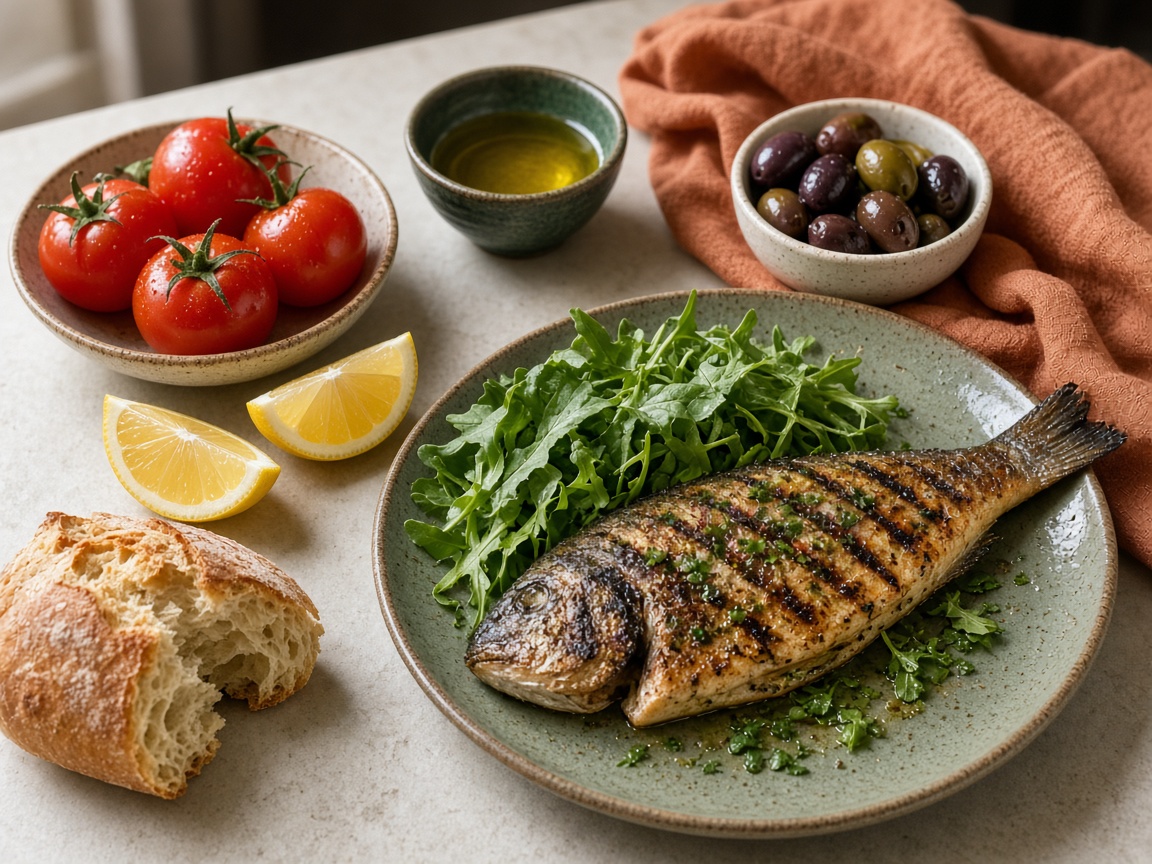
Which fat the sheet ranks higher
The preference in the fact sheet is stated directly: unsaturated fats in place of saturated fats and industrial trans fats. Fish, avocado, nuts, and vegetable oils are the named examples of the first group. That is not a ban on every animal food and not an order to eat oil by the spoon without limit. It is an order of choice when energy is added to the plate.
The same sheet keeps total fat under 30% of energy, saturated fat under 10%, and trans fat under 1%. Gaining weight does not widen those shares. Oil added to porridge or vegetables still lives inside the fat share, not in a separate column “for mass.”
Why not sausage
Sausage usually carries both saturated fat and salt, which means two limits the sheet does not lift: saturated fat under 10% of energy and salt under 5 g a day. The DASH plan separately asks for less fatty meat, sweets, and sugary drinks. Replacing fish or a handful of nuts with sausage moves against both texts at once.
Salt does not become muscle, even if the morning scale moved after a salty supper. A morning shift is a poor witness of tissue. If the goal is more energy, the sheet offers a recognizable unsaturated fat, not a saltier plate of sliced meat.
Nuts and oil inside the share
A handful of nuts or a spoon of vegetable oil is energy-dense food the fact sheet already recognizes. It is not unlimited: total fat stays under 30% of energy, and the saturated part stays under 10%. Oil and nuts need to be written down as honestly as the main dish, or the day on paper will be leaner than the plate.
Avocado belongs to the same list of unsaturated sources. It is not hidden behind the word “healthy” and not placed outside the fat share. A kitchen’s own custom can keep a familiar oil when that oil is a vegetable oil, not a reason to add industrial trans fat from fried and packaged food.
The heart is not postponed
PREDIMED compared a Mediterranean pattern with extra-virgin olive oil or with nuts, and advice to eat less fat, in adults whose cardiovascular risk was already high. The Mediterranean groups had fewer major events. The 2013 paper was retracted and republished in 2018 because of randomization problems, and the republication kept the finding of fewer events.
It is not a weight-loss trial and not permission to eat everything in pursuit of a gain. No percent and no hazard ratio are given here. For an ordinary week the practical point is this: oil and nuts can be a source of energy, and sausage does not receive a special pass merely because someone wants to weigh more.
What this text draws on
- WHO Healthy diet fact sheet: energy intake in balance with expenditure; fruit and vegetables ≥400 g/day; free sugars <10% of energy (below 5% for further benefit); fat <30%; saturated fat <10%; trans fat <1%; salt <5 g/day; unsaturated fats (fish, avocado, nuts, vegetable oils) preferred to saturated and industrial trans fats.
- NHLBI DASH Eating Plan: vegetables, fruits, whole grains, low-fat dairy, fish, poultry, beans, nuts, vegetable oils; less fatty meat, sweets, and sugary drinks; sodium 2,300 mg or a 1,500 mg version. Studied for blood pressure, not as a crash plan and not as permission to eat everything.
- PREDIMED, Estruch et al., NEJM: adults who already had high cardiovascular risk. A Mediterranean pattern with extra-virgin olive oil or with nuts was compared with advice to eat less fat. The Mediterranean groups had fewer major cardiovascular events. The 2013 paper was retracted and republished in 2018 because of randomization problems; the republication kept the finding of fewer events. Not a weight-loss trial. Do not give a percent or a hazard ratio.
A short paraphrase of open guides and reviews (WHO, national recommendations, peer‑reviewed summaries). Not a quotation and not a treatment protocol.
Short answers
Can weight be gained on sausage if oil “does not appeal”?
The sheet is not built that way. It prefers unsaturated fats and keeps saturated fat under 10% of energy and salt under 5 g a day. Sausage presses on both fat and salt.
Does the fat limit lift when the goal is a gain?
No. Total fat stays under 30% of energy, saturated fat under 10%, and trans fat under 1%. Oil and nuts live inside those shares.
