Pain in training
Pain in training is a reason to stop and see a clinician, not a signal to add food. A calorie does not treat a joint, and neither CDC nor WHO suggests eating through pain.
Stop first
If a movement hurts, the repetition stops. This article does not teach you to endure the set, and it does not offer a heavier dinner as a substitute for the pain. Training pain in this text is a clinical question, not a hole in energy.
Added porridge, dessert, or a salty “recovery” snack is not treatment. It changes the plate. A joint, a muscle, or how you feel does not receive a diagnosis from that swap, and does not receive help this article does not have.
Where the question belongs
CDC sends weight and medicine questions to a clinician. Pain that stops a session belongs in the same line: it is not a do-it-yourself project. Medicines and surgery, if they are discussed at all, remain clinical options, not a decision from an article about gaining.
Medicines, illness, stress, genes, hormones, environment, and age affect weight. Pain can coincide with any of those factors. A clinician can sort the coincidence out, given a note of how you feel and an honest account of the load, not a new portion of food.
The activity guideline assumes it can be done
WHO describes 150–300 minutes of moderate activity or 75–150 minutes of vigorous activity, and muscle-strengthening on two or more days, for adults who can tolerate that work. The sentence “some activity is better than none” does not mean working through pain. Sedentary time should be cut in a way the person is already allowed.
CDC repeats the minimum: 150 minutes of moderate aerobic activity and muscle-strengthening on two or more days. If a clinician has limited the load, the pamphlet minimum yields to that limit. A home version of the same movement also stops when it hurts: changing the address of the session does not cancel the pain.
The plate on these days stays ordinary
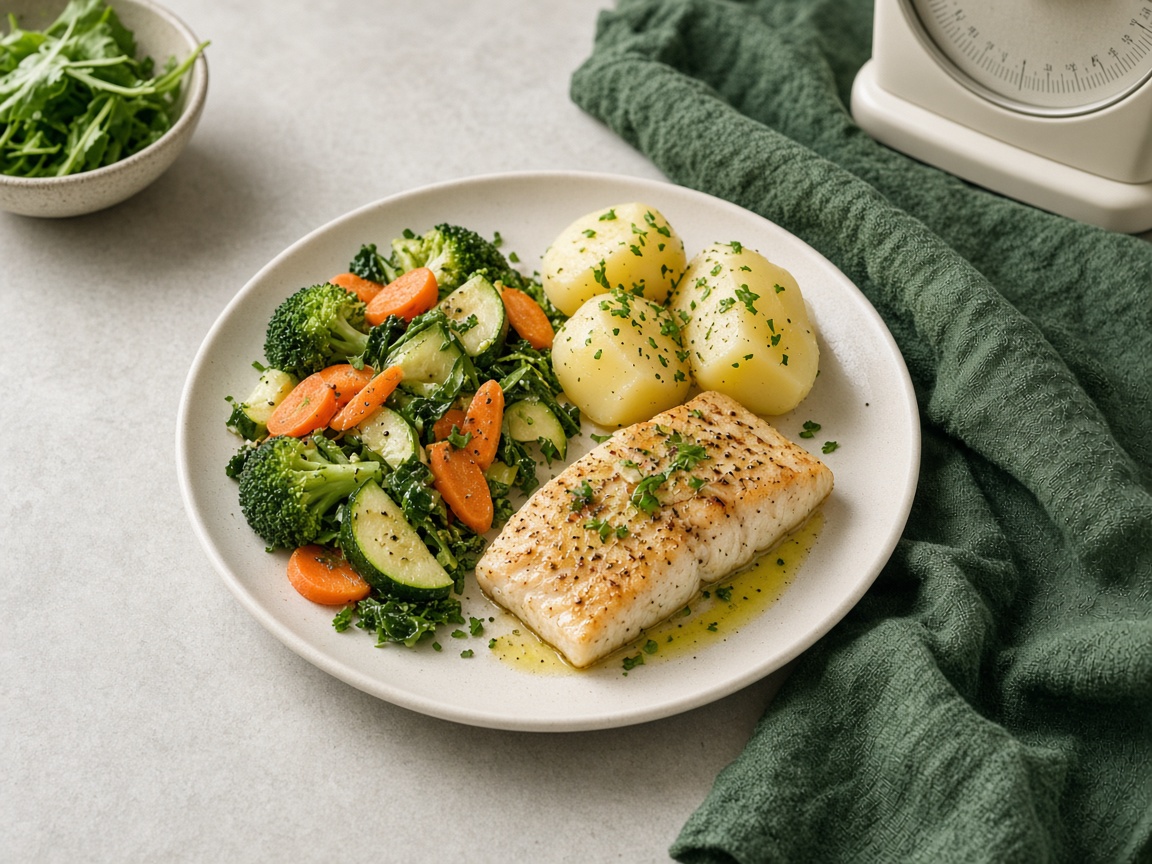
While training is stopped, the WHO fact sheet does not suggest eating everything. Free sugars under 10% of energy, fat under 30%, saturated fat under 10%, salt under 5 g, fruit and vegetables at least 400 g. Ordinary food carries the day. It is not a plaster for pain.
A log of food, drinks, sleep, and stress is still useful as an honest background for a clinician, if the person can keep it calmly. It does not replace an examination. Food is not the reward for enduring pain, and CDC already says in another context that rewards are not food: here food is even less a treatment.
What this text draws on
- CDC, Steps for Losing Weight (January 17, 2025): a gradual pace of about 1 to 2 pounds a week is more likely to be kept than quicker loss; losing 20 pounds in 2 weeks is the example of an unrealistic goal. Modest loss, CDC’s example: 5% of 200 pounds is 10 pounds, can improve blood pressure, cholesterol, and blood sugar and could lower risk of heart disease, prediabetes, and type 2 diabetes — not a personal guarantee. Log food and drinks, activity, sleep, and stress. Goals are specific, two or three at a time; examples include water instead of a sugary drink, a 15-minute walk, a vegetable with supper. Setbacks are expected. Rewards are not food. Medicines, illness, stress, genes, hormones, environment, and age affect weight. Weight and medicine questions go to a clinician. Medicines and bariatric surgery are clinical options, not DIY.
- WHO Physical activity fact sheet: adults 18–64 at least 150–300 minutes of moderate aerobic activity a week, or 75–150 minutes vigorous, plus muscle-strengthening on 2 or more days; some activity is better than none; sedentary time should be limited. From age 65, the same plus balance and coordination on 3 or more days.
- CDC, Adult Activity: at least 150 minutes of moderate aerobic activity a week and muscle-strengthening on 2 or more days.
A short paraphrase of open guides and reviews (WHO, national recommendations, peer‑reviewed summaries). Not a quotation and not a treatment protocol.
Short answers
If a set hurts, should you eat more and continue?
No. The set stops. The question belongs with a clinician. Extra food does not treat pain.
Can a movement a clinician forbade be replaced by a higher-calorie dinner?
No. A limit on load is clinical. Dinner neither performs that limit nor cancels it.