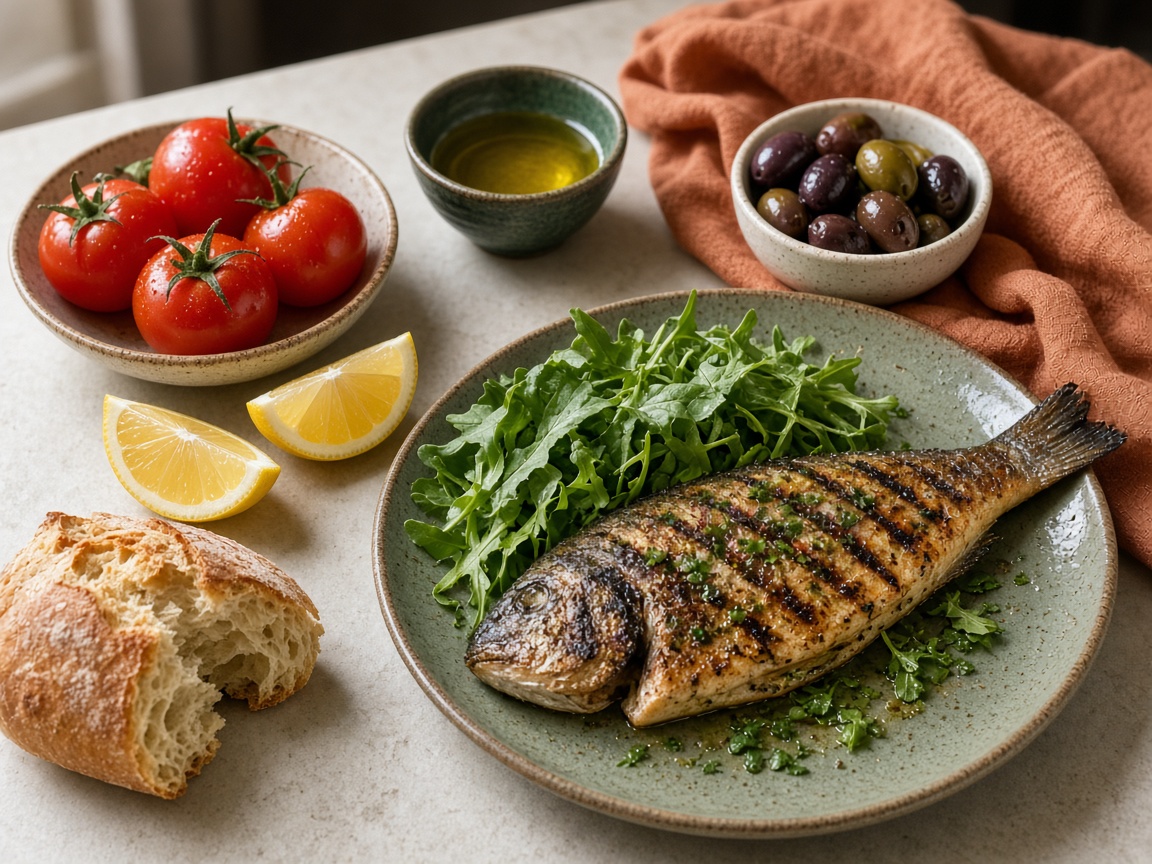
Protein foods, not a powder
MyPlate asks for varied protein foods, and the safe level of 0.83 g per kg per day remains a population figure for adults, not a “bulk” target and not an assignment for a powder. A tub does not replace fish, beans, poultry, nuts, and the dairy group.

What the pattern lists
Varied protein foods in the American guidelines sit beside half a plate of vegetables and fruit and half of grains as whole grains. The DASH plan names fish, poultry, beans, and nuts, plus low-fat dairy. Fortified soy covers the dairy group when dairy is absent. That is a list of food, not an instruction to buy a powder.
Nuts and fish also belong with the unsaturated fats WHO prefers to saturated fats and industrial trans fats. A plate can therefore carry both protein and a better-fitting fat when fish is chosen instead of sausage. A powder does not perform that substitution in the sheets.
0.83 g/kg is not a bulk target
FAO/WHO/UNU, 2007, names 0.83 g of protein per kg of body weight per day as the safe level for adults. The next sentence of the source matters more than any tub: it is a population figure, not a muscle-gain plan. This article does not raise the figure, because these sheets do not contain another adult figure.
Kidney disease changes protein through a clinician, and a powder does not shorten that route. Strength days — two or more a week in WHO and CDC — remain muscle work, not a reason to rewrite 0.83 as an “athlete’s quota.” The repetitions on those days are visible in a notebook. A tub does not replace them.
A week of different foods
Variety means that not every day has to look the same: fish, beans, poultry, nuts, dairy, or fortified soy take turns within a budget. The sheets do not give a separate quota for each of these foods. A kitchen’s own custom keeps a familiar dish, as long as the week is not reduced to one salty meat.
At least 25 g of fiber a day comes from food, and beans with whole grain help that more than an isolated powder on an empty plate. Vegetables are not removed to “free a space for protein.” The 400 g of fruit and vegetables stay in the day, even when the goal is a more filling week.
B12 and powder are different doors
If animal food is scarce or absent, a reliable source of vitamin B12 is needed: a fortified food or a supplement. Plants do not contain B12. This article does not prescribe a dose. A powder does not itself become that source unless it carries a separate, confirmed fortification, and even then an encyclopedia does not write the dose.
A week’s log shows whether varied protein foods were on the table or only one tub. The second does not fulfill the MyPlate wording. Questions about kidneys, supplements, and unexplained weight go to a clinician. An ordinary filling day is assembled from the foods on the list, not from an assignment that 0.83 g/kg does not contain.
What this text draws on
- FAO/WHO/UNU, 2007: the safe protein level for adults is 0.83 g per kg body weight per day. A population figure, not a muscle-gain plan. Kidney disease changes it through a clinician.
- Dietary Guidelines for Americans, 2020–2025, and USDA MyPlate: a nutrient-dense pattern shaped by culture and budget; added sugars <10% of calories from age 2; saturated fat <10%; sodium <2,300 mg/day; half the plate fruits and vegetables; half of grains whole; varied protein foods; low-fat or fat-free dairy or fortified soy. Drinking less is better than drinking more; not drinking is an option.
- NHLBI DASH Eating Plan: vegetables, fruits, whole grains, low-fat dairy, fish, poultry, beans, nuts, vegetable oils; less fatty meat, sweets, and sugary drinks; sodium 2,300 mg or a 1,500 mg version. Studied for blood pressure, not as a crash plan and not as permission to eat everything.
- NIH Office of Dietary Supplements, vitamin B12: people who eat little or no animal food need a reliable B12 source, a fortified food or a supplement. Plants do not contain B12. This article does not prescribe a dose.
- WHO carbohydrate guideline, 2023: at least 25 g of fiber a day for adults, from food.
A short paraphrase of open guides and reviews (WHO, national recommendations, peer‑reviewed summaries). Not a quotation and not a treatment protocol.
Short answers
Is a powder required in order to meet 0.83 g/kg?
No. 0.83 g per kg is a population safe level for adults, not a gain plan and not a reason to replace food with powder. The sheets list foods, not a tub.
Where does B12 come from if animal food is almost absent?
From a fortified food or a supplement. Plants do not contain B12. This article does not prescribe a dose. That is a conversation with a clinician, not a property of every powder.