Holidays and travel: a short goal, a MyPlate plate, drinks in the log
A holiday and a trip do not cancel maintenance. CDC asks for a specific short goal and a log, including drinks. MyPlate on someone else’s stove and on the road stays the same pattern: half the plate fruits and vegetables. The average across the weeks after you return shows whether balance moved.

One short goal for these days
CDC places specific goals above a general intention to “be careful.” For a holiday week or a trip the goal is short and checkable: write down the drinks, keep vegetables and an ordinary protein in one meal, choose water instead of a sugary drink on the plane or at the table. Three goals at once usually means none of them gets done. One, written beforehand, gets done more often.
The CDC text already treats a setback on these days as expected. If the goal did not happen, the plan is revised for the next week, not announced as a failed maintenance trip. The reward for a short goal that did happen is not food: a walk in a new place, a visit, a quiet hour. Dessert as a prize adds free sugars to a day that is already denser than usual.
MyPlate does not stay home
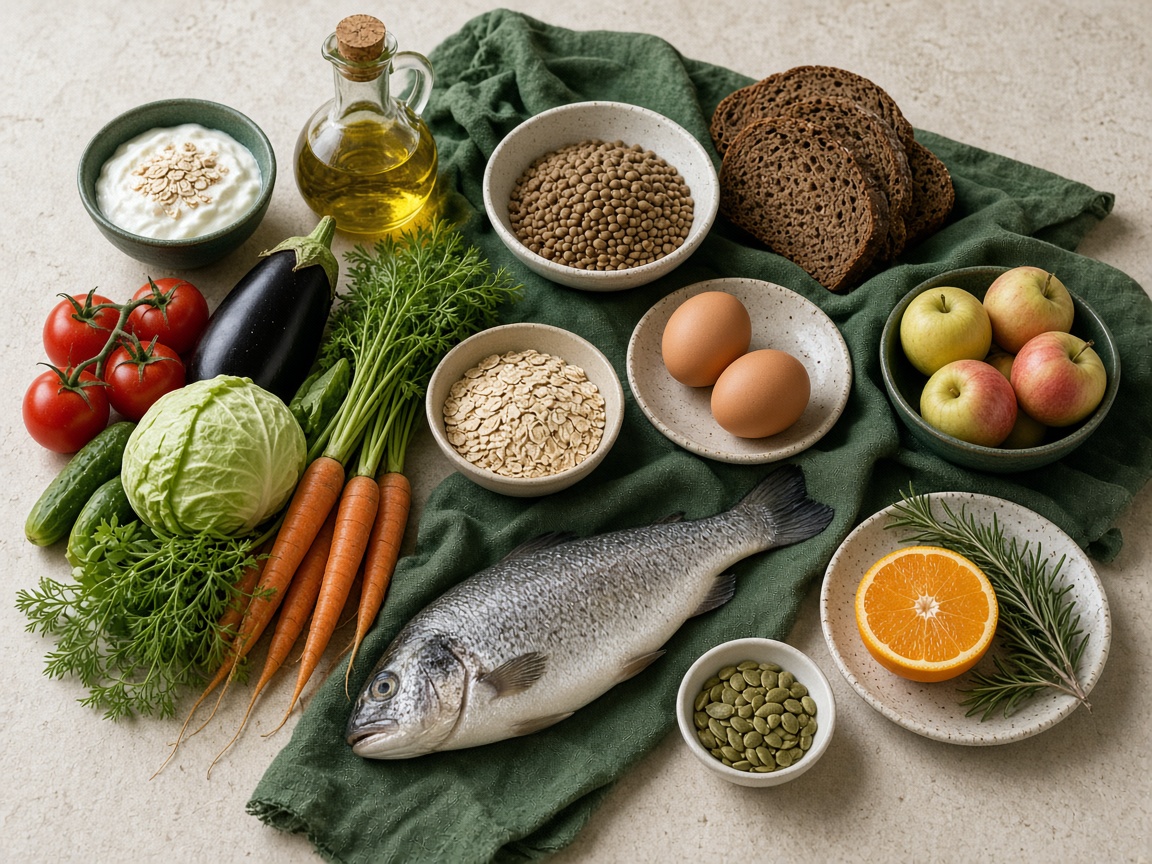
The U.S. guidelines describe a pattern you can continue, and they explicitly include fitting it to culture, budget, and taste. A holiday table from another kitchen belongs in that fitting. Half the plate can still be fruits and vegetables, the grain can be the familiar grain or bread, preferably whole, and the protein can be whatever that table has: fish, beans, meat, eggs, soy. Low-fat or fat-free dairy or fortified soy stays an option when it is there, and it does not become an airport obligation.
WHO does not lift, for a trip, the amount of fruit and vegetables, a guide of at least 400 g on an ordinary day, and it does not lift the limits: free sugars under 10% of energy, fat under 30%, saturated fat under 10%, trans fat under 1%, salt under 5 g. A market, a shop, and a plain vegetable dinner sit closer to that pattern than a day of pastry alone. Sodium in the U.S. guidelines is a separate line, under 2,300 mg. You do not get that line by translating salt grams “by eye.”
Drinks are a required line
CDC includes drinks in the log because they are easy not to feel as food. Juice, sweet coffee, soda, wine, and beer at a celebration and on the road provide energy and often occupy the free-sugar share before dessert does. Writing down at least how many drinks the evening held leaves the day visible. An empty date is later explained as “one dinner,” when the drinks were a separate part of intake.
WHO reads a stable weight as intake in balance with expenditure. An unlogged drink breaks that check: expenditure for the day is remembered from steps, intake is remembered without the glasses. Water and food, not a sweet solution, fit both the short CDC goal and the sugar limit better. Alcohol in the log is a line of energy and a line of the evening, not a separate moral.
After the return, read the average
One morning after a flight and salty food is almost always about water and schedule, not about the trip’s result. Average weight across 10–14 days after the return, set beside an ordinary two weeks before it, shows whether balance held. A formula such as Mifflin does not explain that morning: it estimates rest, not the table and not the road.
If the average quietly returns to the usual line, a separate “diet after the holiday” does not start. If the average stays higher and the log shows that drinks and scarce vegetables have become the new pattern at home, the plan is revised: a specific goal again, MyPlate again, the log again. Sudden illness, swelling, questions about medicines on the road belong with a clinician, as CDC frames them, not with a drier week as punishment.
What this text draws on
- CDC, Steps for Losing Weight (January 17, 2025): habits that produce a gradual loss of about 1 to 2 pounds a week are more likely to be kept; monitor progress and revise the plan; setbacks are expected; track food, drinks, activity, sleep, and stress; use specific goals; rewards are not food; medicines, illness, stress, genes, hormones, environment, and age affect weight; talk with a clinician.
- Dietary Guidelines for Americans, 2020–2025, and USDA MyPlate: a nutrient-dense pattern you can keep; added sugars <10% of calories; saturated fat <10%; sodium <2,300 mg/day; half the plate fruits and vegetables, half of grains whole, varied protein foods, low-fat or fat-free dairy or fortified soy. Customizing to culture, budget, and preference is part of the guidelines. Salt grams and sodium milligrams are not one line.
- WHO Healthy diet fact sheet: energy intake in balance with expenditure keeps weight stable; fruit and vegetables ≥400 g/day; free sugars <10% of energy (below 5% for further benefit); fat <30%; saturated fat <10%; trans fat <1%; salt <5 g/day.
- A formula such as Mifflin estimates resting expenditure. It is not a measurement of what a person ate. Maintenance is checked by average weight over weeks of an honest log, not by one morning on the scale.
A short paraphrase of open guides and reviews (WHO, national recommendations, peer‑reviewed summaries). Not a quotation and not a treatment protocol.
Short answers
Should you eat less than you want from the morning of a holiday?
A short goal is more useful than hunger. CDC asks for a concrete step: drinks in the log, one plate closer to MyPlate, water instead of a sugary drink.
Is the weight after a flight already a reason for a new diet?
Start with the 10–14 day average and the log. One morning after salt and travel is a weak reason to change the whole pattern.