
A holiday without cancelling the plate
A holiday table cancels neither MyPlate nor the free-sugar limit: the day is still described by the plate and by the share of sweetness. The week around the holiday sits inside energy balance, and a setback, if it happens, is what CDC calls expected, not the end of the habit.
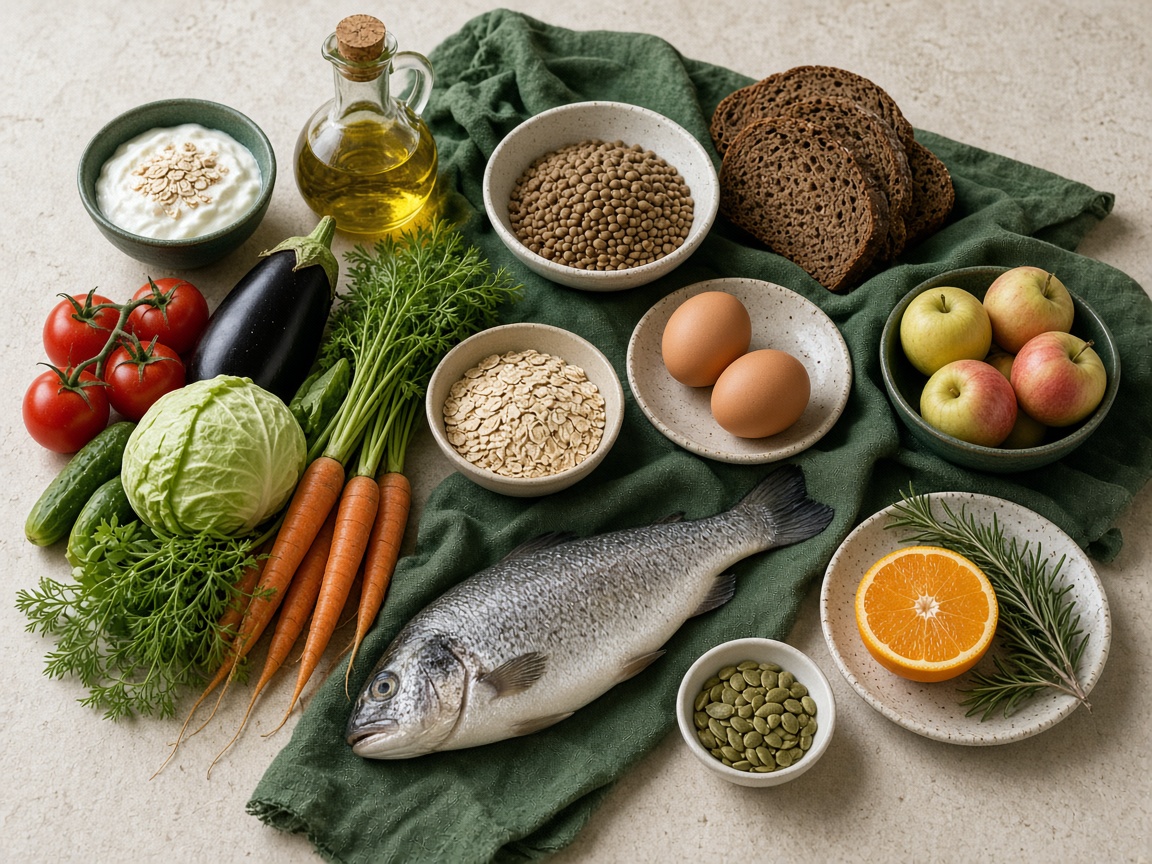
The plate still describes a feast day
MyPlate in the 2020–2025 US guidelines does not make a holiday exception. Half the plate is still fruits and vegetables, half of grains are whole, protein foods are varied, and dairy is low-fat or fat-free, or fortified soy. A feast dish can sit inside that layout if a vegetable is beside it, not only sweets and fatty meat.
The guidelines ask for a nutrient-dense pattern continued with culture and budget in mind, and a holiday kitchen is culture. Fitting the table to the family’s taste is part of the advice, not a breach. Cancelling the vegetables “because today is a holiday” changes the day more than one piece of pie on a plate that is already built.
Sweets stay inside the share
WHO keeps free sugars under 10% of energy and calls a cut below 5% a further benefit. Added sugars in the US guidelines are under 10% of calories from age 2. A holiday drink, a cake, and a sweet spend that share first, even if the rest of the food is ordinary.
Water instead of a sugary drink is one of CDC’s examples of a specific goal, and it fits a holiday where drinks are plentiful. It is not a ban on dessert and not a separate “clean-up” the next day. It is a way to keep the sugar share readable while the table is still a celebration.
Fat, salt, and fiber do not take the day off
The WHO fact sheet still keeps fat under 30% of energy, saturated fat under 10%, trans fat under 1%, and salt under 5 g a day. Unsaturated fats — fish, avocado, nuts, vegetable oils — are preferred to saturated fats and industrial trans fats. Sauce and sausage at a holiday still belong on those lines; they are not set outside the brackets of a “special day.”
The WHO carbohydrate guideline of 2023 asks adults for at least 25 g of fiber a day from food. A vegetable and a whole grain on the holiday plate feed that line, and do not only “take up space.” Sodium in the US guidelines stays under 2,300 mg, and that is not the same figure as 5 g of salt: the units are not mixed.
The week holds one day
WHO energy balance looks at intake and expenditure, not at a single banquet as a cancellation of the rules. One holiday sits inside the week: if the other days are built to the plate, the day does not rewrite the whole stretch. If holidays come in a row, that is already a run of days, and it shows in the log of food and drinks.
CDC calls setbacks expected and asks for specific goals, two or three at a time. On a holiday week a short list is enough: a vegetable with supper, water instead of a sugary drink, a 15-minute walk. The reward for that list is not food; the evening that was the holiday is the mark.
What this text draws on
- Dietary Guidelines for Americans, 2020–2025, and USDA MyPlate: a nutrient-dense pattern shaped by culture and budget; added sugars <10% of calories from age 2; saturated fat <10%; sodium <2,300 mg/day; half the plate fruits and vegetables; half of grains whole; varied protein foods; low-fat or fat-free dairy or fortified soy. Drinking less is better than drinking more; not drinking is an option.
- WHO Healthy diet fact sheet: energy intake in balance with expenditure; fruit and vegetables ≥400 g/day; free sugars <10% of energy (below 5% for further benefit); fat <30%; saturated fat <10%; trans fat <1%; salt <5 g/day; unsaturated fats (fish, avocado, nuts, vegetable oils) preferred to saturated and industrial trans fats.
- CDC, Steps for Losing Weight (January 17, 2025): a gradual pace of about 1 to 2 pounds a week is more likely to be kept than quicker loss; losing 20 pounds in 2 weeks is the example of an unrealistic goal. Modest loss, CDC’s example: 5% of 200 pounds is 10 pounds, can improve blood pressure, cholesterol, and blood sugar and could lower risk of heart disease, prediabetes, and type 2 diabetes — not a personal guarantee. Log food and drinks, activity, sleep, and stress. Goals are specific, two or three at a time; examples include water instead of a sugary drink, a 15-minute walk, a vegetable with supper. Setbacks are expected. Rewards are not food. Medicines, illness, stress, genes, hormones, environment, and age affect weight. Weight and medicine questions go to a clinician. Medicines and bariatric surgery are clinical options, not DIY.
- WHO carbohydrate guideline, 2023: at least 25 g of fiber a day for adults, from food.
A short paraphrase of open guides and reviews (WHO, national recommendations, peer‑reviewed summaries). Not a quotation and not a treatment protocol.
Short answers
Does a holiday reset the sugar limit for that day?
No. WHO free sugars and the US added-sugar line describe the day’s energy, holiday included. The drink and the cake sit in the same share.
Is a restriction day required the next morning?
CDC does not suggest a penalty for one day and calls setbacks expected. The week is what gets read, and the ordinary plate returns, not a separate hungry protocol.