Family
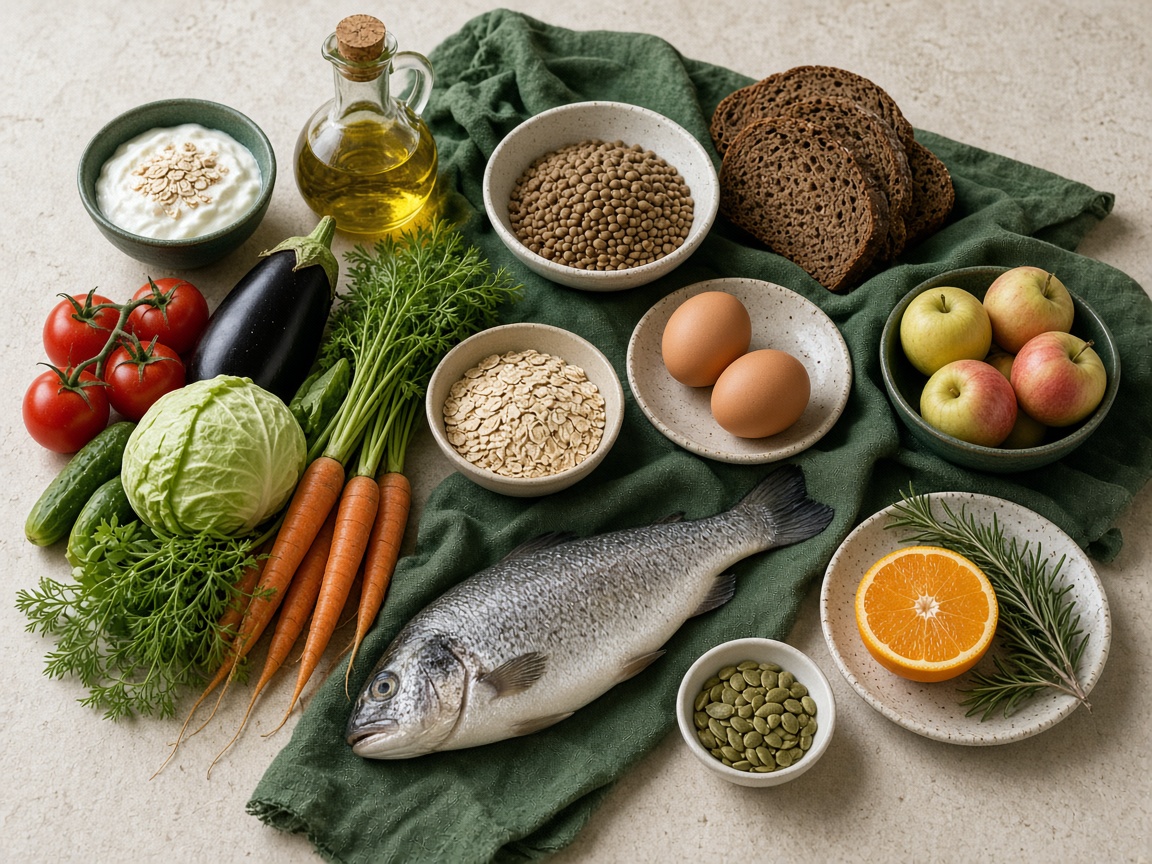
An adult’s maintenance does not need a second, separate pot. The shared table can be the same MyPlate: half fruit and vegetables, whole grains, varied protein foods, shaped by the family’s culture and budget.

One meal for the adults
A separate “maintenance menu” beside the family supper usually does not survive a second week. The habit holds where the adult eats the food already on the table, built as a nutrient-dense plate. The guidelines explicitly allow the culture of the dish and the budget, so a family recipe does not have to be thrown out for the pattern to start.
Half the plate is fruit and vegetables, half of the grains are whole, and the protein foods are varied. Low-fat dairy or fortified soy covers its group when the household has it. The adult serves that picture from the shared dish, rather than carrying a different plate back to the kitchen in secret.
What stays a shared limit
Free sugars under 10% of energy, salt under 5 g a day, fat under 30%, saturated fat under 10%, trans fat under 1%. Those lines from the WHO fact sheet do not become private to the person who is “on a program.” A sugary drink on the shared table and a salty dressing sit in the shares of the adult who eats and drinks them.
The DASH plan describes similar food: vegetables, fruit, whole grains, low-fat dairy, fish, poultry, beans, nuts, and vegetable oils, with less fatty meat, sweets, and sugary drinks. It was studied for blood pressure. It is not a crash plan and not permission to eat everything. Sodium there is stated as 2,300 mg or a 1,500 mg version, and that line is not equated with 5 g of salt.
A child’s plate is not set by this article
This article describes adult maintenance. A portion for a child, a teenager, or a pregnant person is not copied from the plate of an adult who is keeping a stable weight. Added sugars under 10% of calories from age 2 is a diet-quality line in the guidelines, not permission to move an adult weight plan onto the whole family.
If the table raises a question about a child’s weight, about medicines, or about illness, that question goes to a clinician. CDC keeps those questions apart from homemade rules. A shared table helps the adult avoid living on two menus, and it does not replace clinical advice for someone else at that same table.
The habit of one supper
A habit settles by repetition, not by announcing a new system. Two or three specific goals, as CDC frames them, can be a vegetable in the shared supper, water instead of a sugary drink, and a 15-minute walk after the table. The reward for that week is not food.
A lapse at the shared supper is expected: guests, fatigue, a day without cooking. It does not cancel the next ordinary table and does not require punishment by a stricter plate the next day. Energy balance is read across the week, which includes both the steady days and the days that slipped.
What this text draws on
- Dietary Guidelines for Americans, 2020–2025, and USDA MyPlate: a nutrient-dense pattern shaped by culture and budget; added sugars <10% of calories from age 2; saturated fat <10%; sodium <2,300 mg/day; half the plate fruits and vegetables; half of grains whole; varied protein foods; low-fat or fat-free dairy or fortified soy. Drinking less is better than drinking more; not drinking is an option.
- WHO Healthy diet fact sheet: energy intake in balance with expenditure; fruit and vegetables ≥400 g/day; free sugars <10% of energy (below 5% for further benefit); fat <30%; saturated fat <10%; trans fat <1%; salt <5 g/day; unsaturated fats (fish, avocado, nuts, vegetable oils) preferred to saturated and industrial trans fats.
- NHLBI DASH Eating Plan: vegetables, fruits, whole grains, low-fat dairy, fish, poultry, beans, nuts, vegetable oils; less fatty meat, sweets, and sugary drinks; sodium 2,300 mg or a 1,500 mg version. Studied for blood pressure, not as a crash plan and not as permission to eat everything.
- CDC, Steps for Losing Weight (January 17, 2025): a gradual pace of about 1 to 2 pounds a week is more likely to be kept than quicker loss; losing 20 pounds in 2 weeks is the example of an unrealistic goal. Modest loss, CDC’s example: 5% of 200 pounds is 10 pounds, can improve blood pressure, cholesterol, and blood sugar and could lower risk of heart disease, prediabetes, and type 2 diabetes — not a personal guarantee. Log food and drinks, activity, sleep, and stress. Goals are specific, two or three at a time; examples include water instead of a sugary drink, a 15-minute walk, a vegetable with supper. Setbacks are expected. Rewards are not food. Medicines, illness, stress, genes, hormones, environment, and age affect weight. Weight and medicine questions go to a clinician. Medicines and bariatric surgery are clinical options, not DIY.
A short paraphrase of open guides and reviews (WHO, national recommendations, peer‑reviewed summaries). Not a quotation and not a treatment protocol.
Short answers
Do you need a separate pot if the family eats differently?
A separate pot rarely lasts. The adult can build a plate from what is already on the table: more fruit and vegetables, a whole grain when it is there, an ordinary protein food. The culture of the dish stays. What changes is the layout of the plate, not the name of the supper.
Does DASH at the table mean everything is allowed if vegetables are present?
No. The DASH plan specifically means less fatty meat, sweets, and sugary drinks, and it was studied for blood pressure, not as permission for every extra. This article does not give millimeters of mercury. Salt and sodium remain two different limits.