After the loss, the habits stay
CDC treats a pace of about 1 to 2 pounds a week as more likely to be kept precisely because the habits do not end on the day the scale slows. A loss that lived on a separate regime “until a date” leaves that page: what gets kept is what can continue.

Why the gradual version is easier not to drop
The page compares not the beauty of a promise but the chance of keeping the change. A quick loss loses to a gradual one because a quick regime is hard to continue as ordinary life. When the loss has “ended” and the habits were only a regime, what returns is what was there before it.
Food, activity, sleep, and stress management stand as one list on the page. Taking food and activity off that list in the week when weight is already near what you wanted means removing the very things the pace rested on. A log of food and drinks does not become unnecessary that week.
What actually continues
Adult activity is not cancelled together with the loss phase: at least 150 minutes of moderate aerobic work a week and muscle-strengthening on two or more days. For ages 18 to 64, WHO speaks of 150 to 300 minutes of moderate activity, or 75 to 150 minutes of vigorous activity, and of muscle-strengthening on two or more days. Those lines are not marked “only while weight is falling.”
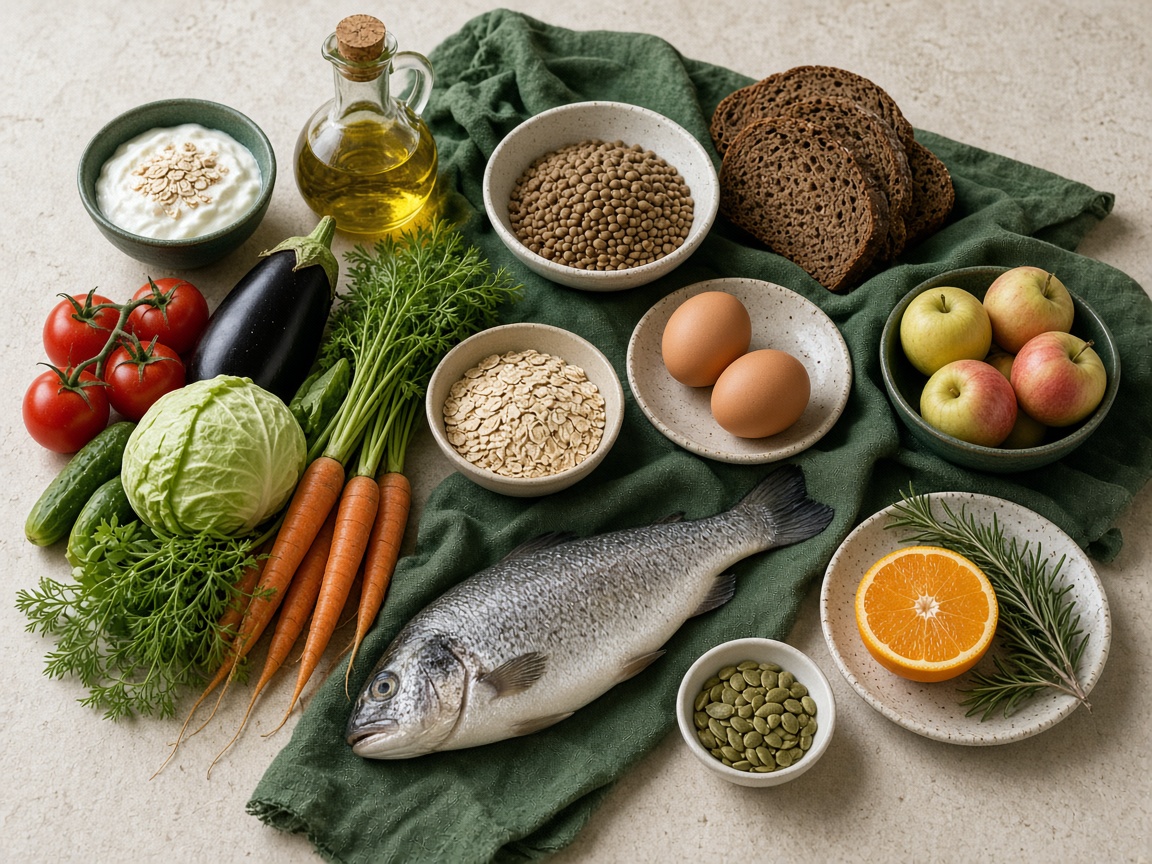
The plate also stays a plate. Half is fruit and vegetables, half of the grains are whole, protein varies, and dairy is low-fat or fat-free or fortified soy. Free sugars under 10% of energy, fat under 30%, and salt under 5 g do not get a holiday in honor of a number reached on the scale.
Balance is a meeting, not a permanent regime
The WHO fact sheet speaks of energy intake in balance with expenditure when the subject is a stable weight. Keeping, in that language, is that meeting, not a separate protocol of phases and percents, which the sources do not contain. This article does not prescribe an add-on or a new number to subtract “after the finish.”
CDC’s modest example, 5% of 200 pounds as 10 pounds, stays an example with the word “can,” not a diploma after which the food rules go dark. Blood pressure, cholesterol, and blood sugar, if they were the reason, are still looked at with a clinician. Weight is still moved by medicines, illness, stress, genes, hormones, environment, and age.
A setback after the “end” is still the page’s setback
Setbacks are expected both before a goal and after it. The page’s instruction is to get back to the plan, not to announce that the plan is over and there is no need to return. Rewards are not food: a cake “for the finish” as a system contradicts that line, even when one supper remains simply a supper in the log.
Goals stay specific, and there are still two or three of them. Water instead of a sugary drink, a 15-minute walk, and a vegetable with supper do not lose their sense when loss is no longer the main word. Support from family, a program, a dietitian, or a clinician also does not end on a calendar day the person has named as the finish.
What this text draws on
- CDC, Steps for Losing Weight (January 17, 2025): a gradual pace of about 1 to 2 pounds a week is more likely to be kept than quicker loss; losing 20 pounds in 2 weeks is the example of an unrealistic goal. Modest loss, CDC’s example: 5% of 200 pounds is 10 pounds, can improve blood pressure, cholesterol, and blood sugar and could lower risk of heart disease, prediabetes, and type 2 diabetes — not a personal guarantee. Log food and drinks, activity, sleep, and stress. Goals are specific, two or three at a time; examples include water instead of a sugary drink, a 15-minute walk, a vegetable with supper. Setbacks are expected. Rewards are not food. Medicines, illness, stress, genes, hormones, environment, and age affect weight. Weight and medicine questions go to a clinician. Medicines and bariatric surgery are clinical options, not DIY.
- CDC, Adult Activity: at least 150 minutes of moderate aerobic activity a week and muscle-strengthening on 2 or more days.
- WHO Physical activity fact sheet: adults 18–64 at least 150–300 minutes of moderate aerobic activity a week, or 75–150 minutes vigorous, plus muscle-strengthening on 2 or more days; some activity is better than none; sedentary time should be limited. From age 65, the same plus balance and coordination on 3 or more days.
A short paraphrase of open guides and reviews (WHO, national recommendations, peer‑reviewed summaries). Not a quotation and not a treatment protocol.
Short answers
When weight stops falling, can you stop logging food?
No. CDC ties keeping weight to habits that continue, and it asks for a log of food and drinks. The end of a quick drop does not cancel the log.
Does maintenance mean a new strict regime?
No. In WHO’s language a stable weight is energy intake in balance with expenditure. This article does not assign phases, percents, or a new number to subtract.