
A holiday table
A holiday table remains one day inside the same limits, and one specific goal is enough for it, not a cancelled week. The CDC page’s example of such a goal is water instead of a sugary drink, and that example fits a table where drinks easily become the main line.
One goal, not a rewritten holiday
The page asks for specific goals and keeps two or three at a time, not the whole of life. At a holiday it is reasonable to keep one that is actually visible: water instead of a sugary drink. The second and third can already belong to an ordinary week, such as a 15-minute walk or a vegetable with supper, if they do not turn the table into an exam.
The page treats setbacks as expected. A day that did not follow that one goal is not declared a failed year and is not “worked off” the next day with an empty plate. Rewards are not food: the page’s text does not need a separate prize for the drink having been water.
Sugar and fat limits do not take the day off
Free sugars stay under 10% of energy on a weekday and at a holiday table. A sugary drink, juice, and dessert enter that share, and a share below 5% on the fact sheet is linked with further benefit, not with permission on a special date. Added sugars in the United States guidelines are also under 10% of calories.
Fat stays under 30% of energy, saturated fat under 10%, industrial trans fat under 1%. A holiday dish can be fatty, and then it occupies the fat share of that day, not a “separate pocket.” Salt under 5 g and sodium under 2,300 mg are not paused for the length of the meal either.
The plate is still recognizable
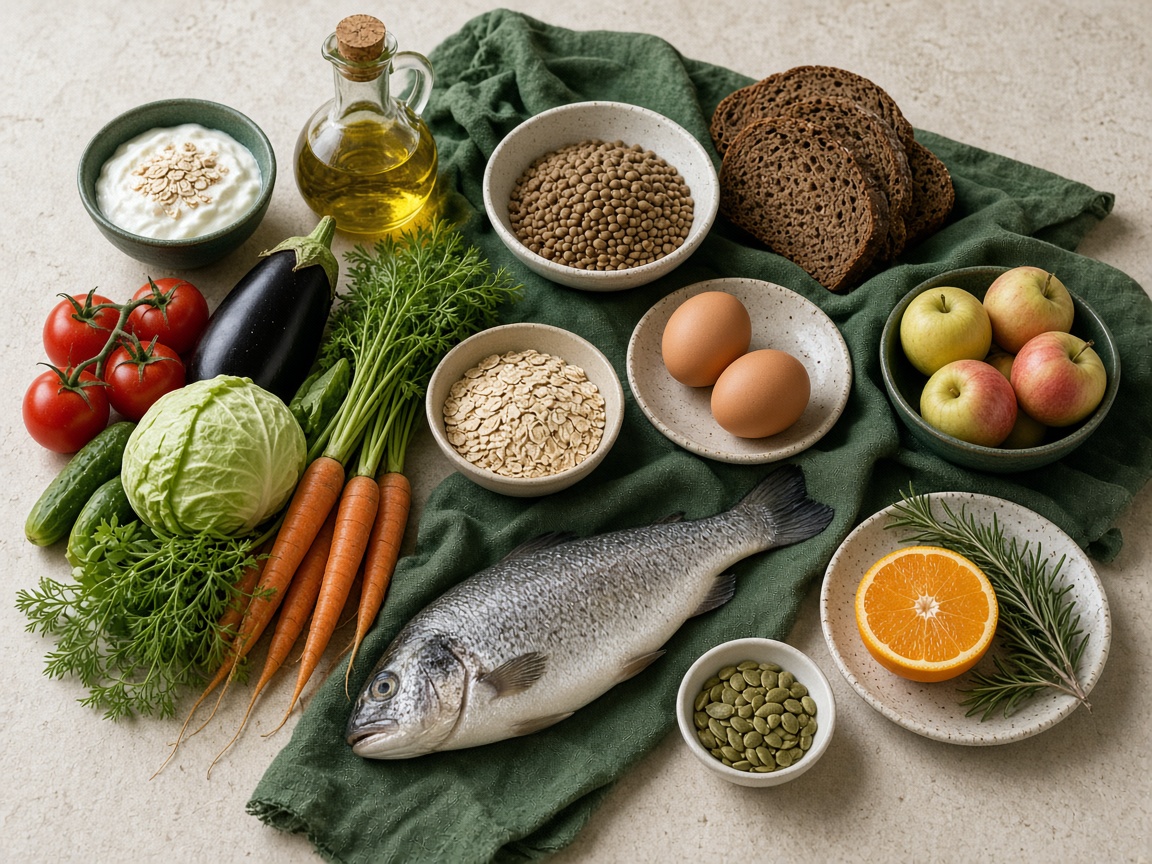
MyPlate is not cancelled for a holiday: half the plate fruit and vegetables, half of the grains whole, varied protein. A vegetable on a holiday table is the same specific goal, “a vegetable with supper,” only the table is longer. Culture and budget still shape the dishes, so the pattern does not demand a stranger’s menu in place of the family’s.
The guide of at least 400 g of fruit and vegetables a day does not require the whole holiday to be made of vegetables. It asks that fruit and vegetables exist on that day, rather than disappear under dessert. At least 25 g of fiber from food is gathered the same way: from the food that was there, not from a promise of “starting Monday.”
The week around one table
One holiday sits inside a week, and CDC looks at a log of several days, not at one heroic evening. If food, drinks, sleep, and stress are written around that date, it is visible whether the table was a single setback or whether the whole week was already made of it. A gradual pace of about 1 to 2 pounds a week is not decided by one meal and is not automatically broken by it.
Environment, age, and stress affect weight, and a holiday is part of the environment. A question about medicines on those days still goes to a clinician if there is one. Support from people nearby is more useful than a decision to get through the table on willpower alone, which the page does not assign as the method.
What this text draws on
- CDC, Steps for Losing Weight (January 17, 2025): a gradual pace of about 1 to 2 pounds a week is more likely to be kept than quicker loss; losing 20 pounds in 2 weeks is the example of an unrealistic goal. Modest loss, CDC’s example: 5% of 200 pounds is 10 pounds, can improve blood pressure, cholesterol, and blood sugar and could lower risk of heart disease, prediabetes, and type 2 diabetes — not a personal guarantee. Log food and drinks, activity, sleep, and stress. Goals are specific, two or three at a time; examples include water instead of a sugary drink, a 15-minute walk, a vegetable with supper. Setbacks are expected. Rewards are not food. Medicines, illness, stress, genes, hormones, environment, and age affect weight. Weight and medicine questions go to a clinician. Medicines and bariatric surgery are clinical options, not DIY.
- WHO Healthy diet fact sheet: energy intake in balance with expenditure; fruit and vegetables ≥400 g/day; free sugars <10% of energy (below 5% for further benefit); fat <30%; saturated fat <10%; trans fat <1%; salt <5 g/day; unsaturated fats (fish, avocado, nuts, vegetable oils) preferred to saturated and industrial trans fats.
- Dietary Guidelines for Americans, 2020–2025, and USDA MyPlate: a nutrient-dense pattern shaped by culture and budget; added sugars <10% of calories from age 2; saturated fat <10%; sodium <2,300 mg/day; half the plate fruits and vegetables; half of grains whole; varied protein foods; low-fat or fat-free dairy or fortified soy. Drinking less is better than drinking more; not drinking is an option.
A short paraphrase of open guides and reviews (WHO, national recommendations, peer‑reviewed summaries). Not a quotation and not a treatment protocol.
Short answers
Does the whole holiday table have to be cancelled?
No. The CDC page asks for a specific goal, and the example is water instead of a sugary drink. One such goal sits closer to the text than a ban on the whole evening or a cancelled week.
Does a sweet holiday drink not count because the day is special?
It counts. Free sugars stay under 10% of energy with no day off for a holiday. The drink enters the log the same way it does on a weekday.